Region: Trans-Fly ecosystem of southern Papua New Guinea and West Papua along with northern parts of Australia.
The frill-necked lizardChlamydosaurus kingii, also known as the frilled dragons or frill-neck lizards, are famous for their impressive neck frill that fans out dramatically when they feel threatened. The Trans-Fly savannahs of southern
Region: Trans-Fly ecosystem of southern Papua New Guinea and West Papua along with northern parts of Australia.
The frill-necked lizardChlamydosaurus kingii, also known as the frilled dragons or frill-neck lizards, are famous for their impressive neck frill that fans out dramatically when they feel threatened. The Trans-Fly savannahs of southern Papua New Guinea and Indonesian-occupied West Papua, have come increasingly under threat over the past decade by climate change-related extreme weather and deforestation. Anthropogenic threats include habitat destruction for timber and palm oil, climate change-related fires, expanding agricultural zones, road and infrastructure building and capture for the exotic pet trade. In Australia, these lizards eat poisonous cane toads that are deadly once ingested. This along with large-scale bushfires pose threats to Frill-necked #Lizards. Once abundant, these striking reptiles are now losing their ecosystems. Use your wallet as a weapon for them by defending New Guinea’s forests. Choose palm oil-free products and boycott the pet trade. #BoycottPalmOil #Boycott4Wildlife
With their iconic neck frill, long limbs and ability to sprint upright on two legs, frill-necked lizards are one of the most distinctive reptiles in the world. New Guinean individuals typically feature vivid yellow frills that flare outward like a sunburst when they feel threatened—often accompanied by a hiss and an open mouth to appear larger than life. Their frill can reach up to 30 cm across, supported by hyoid bones and cartilage that fan the skin out in a flash. Colouration is variable, and in New Guinea, these lizards lean towards paler hues with distinctive white markings accenting their yellow frills.
Primarily arboreal, they spend over 90% of their time in the trees. They are solitary, territorial, and highly dependent on their frill to communicate and intimidate. During the wet season, they descend closer to the ground in search of food, only to retreat to the higher canopy during the dry months when food is scarce.
This species is found in northern Australia and across southern New Guinea, including both Papua New Guinea and Indonesian-occupied West Papua. In New Guinea, they inhabit the Trans-Fly savannah region—a unique landscape of seasonal woodlands and dry forests. These lizards avoid low-lying Melaleuca-dominated swamps and prefer elevated areas with well-drained soils and diverse tree species. However, their range in New Guinea is far more restricted than in Australia, making local threats far more significant to their survival.
Diet
Frill-necked lizards are insectivorous ambush predators. They rely on their sharp eyesight and camouflage to spot prey from high in the trees. Their diet consists mainly of insects like termites, cicadas, beetles, ants, and centipedes. During the dry season, termites are especially important, while the wet season sees them shifting to moth larvae. Occasionally, they will consume spiders, small rodents, and other lizards.
Mating and Reproduction
Mating occurs during the late dry and early wet seasons. Males engage in dramatic frill displays and combat to win over females. Females dig a shallow burrow where they lay 1–2 clutches of 4–20 eggs. Temperature plays a critical role in determining the sex of hatchlings—warmer nests produce more males, while cooler ones yield more females. Young frillies are independent within 10 days of hatching and can deploy their frills almost immediately.
FAQs
How many Frill-necked lizards are left in New Guinea?
There is no precise population estimate for New Guinea, but while the species is locally common in parts of Australia, their populations in the Trans-Fly region are under pressure. Their limited range, coupled with the impacts of deforestation and trade, may mean local declines are already occurring.
How long do Frill-necked lizards live in the wild?
Frill-necked lizards in the wild can live up to 6 years for males and around 4 years for females. Hatchlings grow rapidly during the wet season and reach sexual maturity by about two years of age.
Do Frill-necked lizards make good pets?
Absolutely not. These sensitive reptiles are wild animals with complex needs. They are difficult to breed in captivity, meaning many sold in pet markets are likely wild-caught, contributing directly to population declines. Keeping them as pets fuels this harmful trade and leads to suffering. If you care about frill-necked lizards, do not support the exotic pet industry.
Support Frill-Necked Lizards by going vegan and boycotting palm oil in the supermarket, it’s the #Boycott4Wildlife
Support the conservation of this species
This animal has no protections in place. Read about other forgotten species here. Create art to support this forgotten animal or raise awareness about them by sharing this post and using the #Boycottpalmoil #Boycott4Wildlife hashtags on social media. Also you can boycott palm oil in the supermarket.
Further Information
O’Shea, M., Allison, A., Tallowin, O., Wilson, S. & Melville, J. 2017. Chlamydosaurus kingii. The IUCN Red List of Threatened Species 2017: e.T170384A21644690. dx.doi.org/10.2305/IUCN.UK.201…. Accessed on 06 April 2025.
Harlow, P. S., & Shine, R. (1999). Temperature-dependent sex determination in reptiles: insights from frillneck lizards. Biological Journal of the Linnean Society, 68(3), 197–211. jstor.org/stable/3893081
1. Join the #Boycott4Wildlife on social media and subscribe to stay in the loop: Share posts from this website to your own network on Twitter, Mastadon, Instagram, Facebook and Youtube using the hashtags #Boycottpalmoil #Boycott4Wildlife.
2. Contribute stories: Academics, conservationists, scientists, indigenous rights advocates and animal rights advocates working to expose the corruption of the palm oil industry or to save animals can contribute stories to the website.
3. Supermarket sleuthing: Next time you’re in the supermarket, take photos of products containing palm oil. Share these to social media along with the hashtags to call out the greenwashing and ecocide of the brands who use palm oil. You can also take photos of palm oil free products and congratulate brands when they go palm oil free.
4. Take to the streets: Get in touch with Palm Oil Detectives to find out more.
5. Donate: Make a one-off or monthly donation to Palm Oil Detectives as a way of saying thank you and to help pay for ongoing running costs of the website and social media campaigns. Donate here
A 2019 World Health Organisation (WHO) report into the palm oil industry and RSPO finds extensive greenwashing of palm oil deforestation and the murder of endangered animals (i.e. biodiversity loss)
Beyond Cute: All Animals Can Become Social Media Sensations
In the age of cutesy #mammal sensations like pygmy hippo #MooDeng the chubby, pink-cheeked pygmy #hippo baby – many people believe that social media shares are correlated to cuteness. They are wrong, according to a recent study, more obscure and unusual animals like #insects, #amphibians, #reptiles and #insects can enjoy a generous portion of the social media limelight. Help them every time you shop and #BoycottPalmOil #Boycott4Wildlife
Cutesy or not: animals can be showcased on social media with the right storytelling and still gain big audience engagement
Remember the popularity contests of high school? Often our athletic, genetically gifted classmates got the most attention: the school captain, the footy team captain, the prom queen. But popularity contests don’t just exist in school. And in the world of conservation, it can be a matter of survival for the “winners” and “losers”.
If we asked you to list every animal species you can think of, chances are that list would be full of mammals and birds, with very few reptiles, fish, amphibians and invertebrates. So why do we focus so much on some species and so little on others?
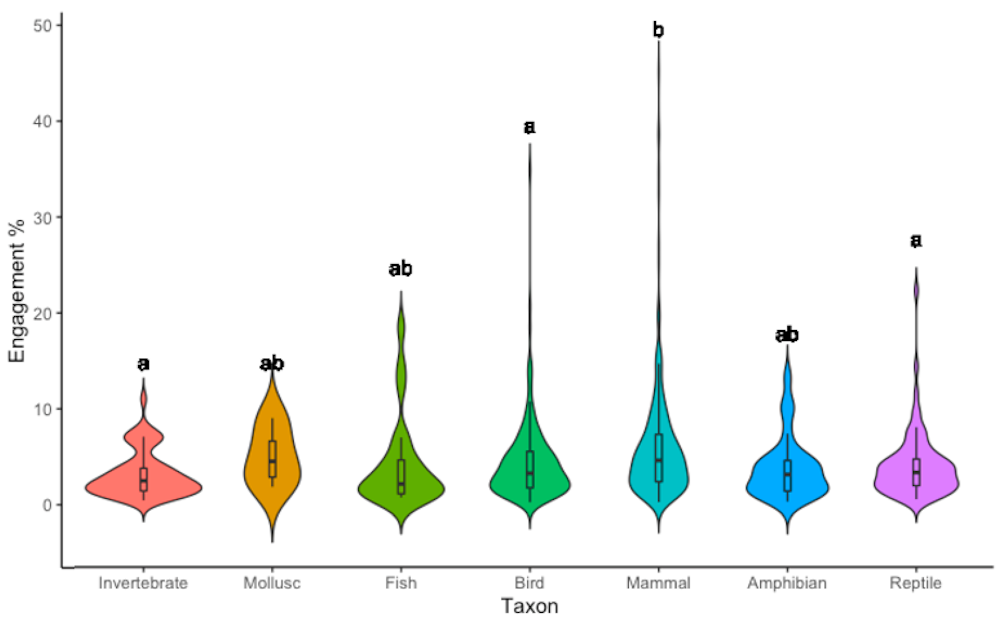
Our recent study challenges assumptions that people simply find mammals and birds much more engaging than other species. When these neglected species were posted to Instagram by wildlife organisations and researchers, there were no great differences in the likes they attracted.
This has implications for which species we focus on to enlist public support for conservation. A more complete picture of the wildlife around us would help reduce glaring imbalances in conservation outcomes.
Our cognitive bias towards the cutest and fluffiest
However, mammals and birds make up less than 10% of all animals on Earth. With the media we’re consuming, we’re just not getting an accurate picture of the world of wildlife that surrounds us. Where this gets worrying is in the fight for species survival. Our planet is in an extinction crisis, with species becoming extinct at extraordinary rates.
However, our focus on mammals and birds means cute and fluffy animals receive more research attention and funding. Conservation outcomes for these species are better than for reptiles, amphibians and invertebrates. Tellingly, 94% of all threatened species on the IUCN Red List are reptiles, fish, amphibians and invertebrates.
Do people really prefer charismatic megafauna?
Our study suggests this issue may be more complex than first thought. Many Australian conservation organisations use social media platforms, such as Instagram, to share their work and connect communities with wildlife. But in the busy, ever-updating world of Instagram feeds, which images are the most effective at grabbing someone’s attention?
We set out to examine which Australian wildlife species were most often posted to Instagram and which had the highest levels of engagement. Based on the belief that people will engage more with charismatic megafauna, we expected mammals and birds to be shown more frequently and to elicit higher engagement than the “creepy crawlies” such as amphibians and insects.
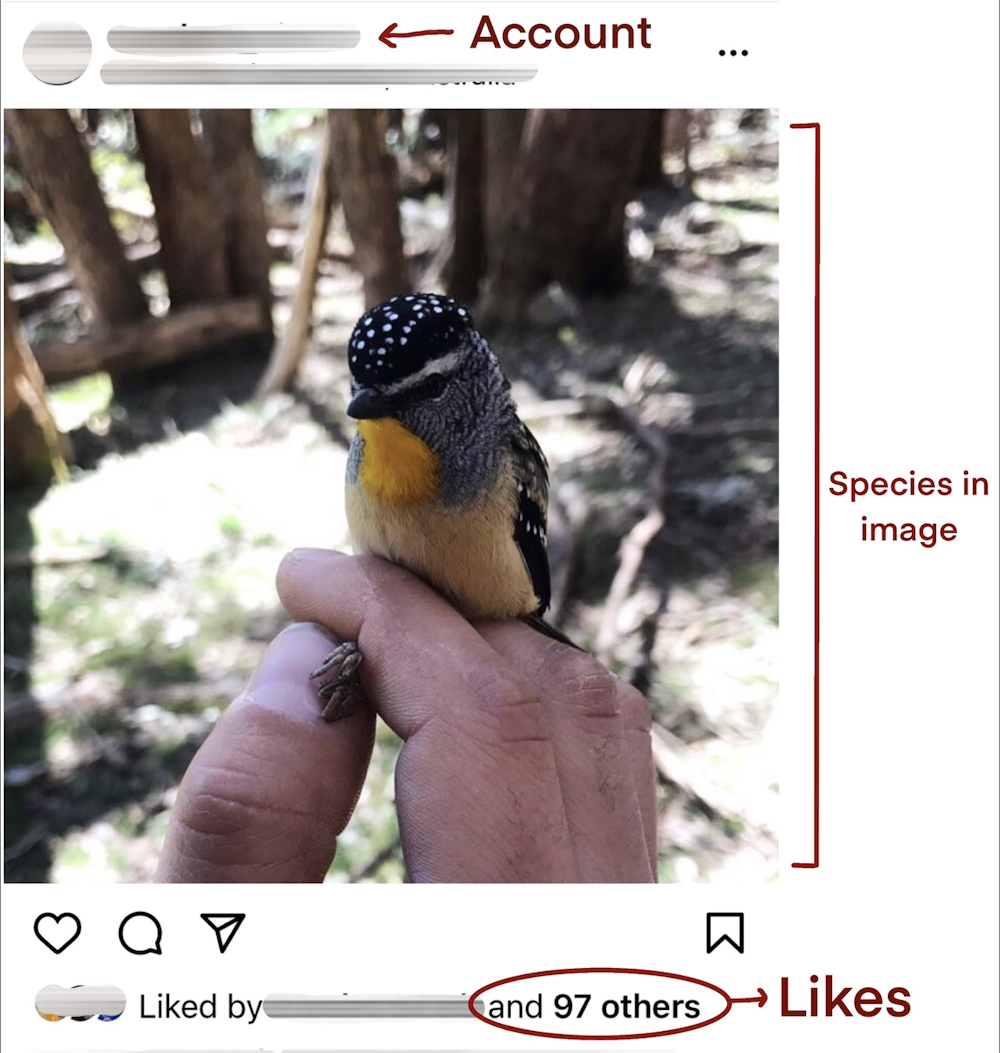
We analysed 670 wildlife images posted to Instagram by wildlife organisations and research group accounts in 2020 and 2021. For each image, we noted the species posted in the image. As a measure of engagement, we recorded the number of “likes” the image received in proportion to each organisation’s follower count. An example of the Instagram posts that were analysed, and the information collected. Meghan Shaw, CC BY
What did the study find?
Our results were surprising and provide hope for the future of underrepresented wildlife.
Although the majority of wildlife images posted to Instagram by these conservation organisations were of mammals and birds (73.7% to be precise), our analysis of image engagement uncovered a surprising and promising trend. Mammals were, indeed, more engaging than other species, but only by a tiny amount. We found birds, reptiles, invertebrates, amphibians and fish were all equally as engaging for Instagram users. The amount of engagement posts featuring each group of animal (taxon) received. Categories that do not share letters are significantly different from each other, e.g. mammals (b) received higher engagement than invertebrates, birds and reptiles (a) but not molluscs, fish or amphibians (ab). All significant differences were relatively small (1-2%). Author provided, CC BY
Are we ready to sympathise with weird bugs?
Perhaps it is time to give our creepy crawlies more of the media limelight. The more we see a wide diversity of animals, the more likely we are to support their conservation.
The Theory of Repeated Messaging suggests when we are repeatedly exposed to something, we are more likely to become familiar with, engage with and support it. Research has shown when we put effort into promoting underrepresented species, we can improve their chances of receiving a public donation by 26%. Will we come to love the hibiscus harlequin bug (Tectocoris diophthalmus)? Magdalena_b/Flickr Our findings suggest the media and conservation organisations can promote endangered species across all walks of life – from lizards to bugs and fish to frogs – without compromising viewer engagement. This will increase our knowledge of the amazing diversity of animals that we share this planet with. In turn, this will lead to underrepresented species receiving more of the conservation support they need to survive.
Zoos Victoria is already leading the way. The endangered native golden-rayed blue butterfly features in the new Totes for Wildlife campaign to conserve its natural habitat.
Perhaps we tend to prefer mammals and birds because we see them more, and not just because they look a certain way. After all, beauty is in the eye of the beholder.
A 2019 World Health Organisation (WHO) report into the palm oil industry and RSPO finds extensive greenwashing of palm oil deforestation and the murder of endangered animals (i.e. biodiversity loss)
1. Join the #Boycott4Wildlife on social media and subscribe to stay in the loop: Share posts from this website to your own network on Twitter, Mastadon, Instagram, Facebook and Youtube using the hashtags #Boycottpalmoil #Boycott4Wildlife.
2. Contribute stories: Academics, conservationists, scientists, indigenous rights advocates and animal rights advocates working to expose the corruption of the palm oil industry or to save animals can contribute stories to the website.
3. Supermarket sleuthing: Next time you’re in the supermarket, take photos of products containing palm oil. Share these to social media along with the hashtags to call out the greenwashing and ecocide of the brands who use palm oil. You can also take photos of palm oil free products and congratulate brands when they go palm oil free.
4. Take to the streets: Get in touch with Palm Oil Detectives to find out more.
5. Donate: Make a one-off or monthly donation to Palm Oil Detectives as a way of saying thank you and to help pay for ongoing running costs of the website and social media campaigns. Donate here


An example of the Instagram posts that were analysed, and the information collected. Meghan Shaw, CC BY
The amount of engagement posts featuring each group of animal (taxon) received. Categories that do not share letters are significantly different from each other, e.g. mammals (b) received higher engagement than invertebrates, birds and reptiles (a) but not molluscs, fish or amphibians (ab). All significant differences were relatively small (1-2%). Author provided, CC BY
Will we come to love the hibiscus harlequin bug (Tectocoris diophthalmus)? Magdalena_b/Flickr