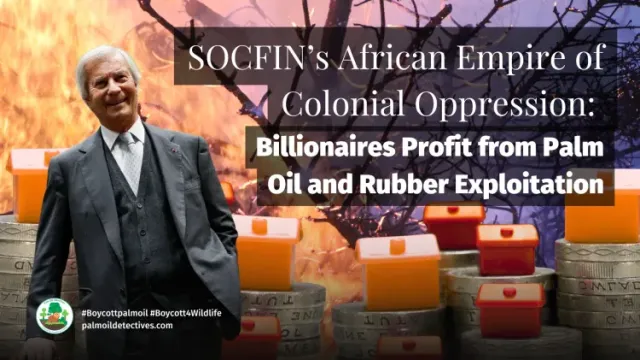
SOCFIN’s African Empire of Colonial Oppression: Billionaires Profit from Palm Oil and Rubber Exploitation
An investigation by Bloomberg exposed that despite being RSPO members, #SOCFIN plantations in #WestAfrica are the epicentre of #humanrights abuses, sexual coercion, environmental destruction, and #landgrabbing. Operating in #Liberia, #Ghana, #Nigeria, and beyond, SOCFIN’s #rubber and #palmoil plantations continue historical colonial legacies of exploitation. Despite widespread evidence of abuse and deforestation, SOCFIN and its partners benefit from weak sustainability certifications such as #FSC and #RSPO. Europe and the US buy products directly linked to these violations, greenwashing the destruction in the process. Indigenous communities and workers are actively resisting this huge injustice —They seek proper redress in the form of stricter #EUDR regulations and better protections of their health, livelihoods and families. Consumers can boycott palm oil and rubber in solidarity. #BoycottPalmOil #Boycott4Wildlife
#News: 🚨 #SOCFIN #palmoil and #rubber is linked to sexual #violence, forced #labour, #landgrabbing #deforestation in #WestAfrica🌴🔥🤢☠️🙊🚫 French tycoon Vincent Bolloré profits while communities suffer. 💀✊🏽 #BoycottPalmOil #Boycott4Wildlife palmoildetectives.com/2025/10/…
Share to BlueSky
Share to Twitter
A recent Bloomberg investigation into SOCFIN, a plantation empire co-owned by French billionaire Vincent Bolloré, reveals ongoing human rights violations, sexual exploitation, deforestation, and colonial-style land grabs across West Africa. SOCFIN, based in Luxembourg and co-owned by Bolloré, operates sprawling palm oil and rubber plantations in Liberia, Ghana, Nigeria, Cameroon, and elsewhere. The investigation uncovered systemic abuses and environmental destruction, exposing the toxic greenwashing reality behind RSPO corporate sustainability claims.
According to Bloomberg’s extensive report published in April 2025, SOCFIN plantations in Liberia and Ghana are sites of widespread sexual coercion, rape and sexual abuse.
Women workers at the Liberian Agricultural Company (LAC) plantation, one of SOCFIN’s largest operations, routinely face demands for sex from supervisors as a condition for securing daily work. Women like Rebecca (a pseudonym) describe daily harassment and abuse, forced to accept demands out of economic necessity. Contract workers earn as little as $3.50 a day and face threats of dismissal if they refuse sexual advances.
Similar accounts emerge from SOCFIN’s Salala Rubber Corporation (SRC), recently sold after violent worker protests over labour abuses, inadequate medical care, and poor housing conditions. Women workers have described supervisors openly demanding sexual favours in exchange for continued employment. Mamie, a former SRC worker, described being violently raped by her supervisor after repeatedly refusing his advances. Such experiences remain common, despite superficial anti-harassment measures like “No Sexual Harassment” signs erected by the company (Bloomberg, 2025).
SOCFIN’s operations are rooted deeply in colonial history. Established in the Belgian Congo in the late 1800s, SOCFIN expanded aggressively during colonialism, exploiting rubber and palm oil resources across Africa and Asia. Today, its co-owners, Vincent Bolloré and Belgian businessman Hubert Fabri, control vast landholdings, perpetuating neo-colonial dynamics of wealth extraction. According to an article by Tony Lawson for Shoppe Black, the plantations replicate exploitative plantation models, extracting wealth from African land and labour for European profit, reminiscent of colonial rubber plantations and antebellum slave operations like Louisiana’s Nottoway Plantation.
This neo-colonial exploitation is glaringly evident in Nigeria, where SOCFIN’s subsidiary, Okumu Oil Palm Company, operates 19,062 hectares of palm plantations and 7,335 hectares of rubber plantations. Palm Oil Detectives (2024) documented widespread displacement of local Indigenous communities due to plantation expansion. Villages such as Lemon, Agbeda, and Oweike have been forcibly dismantled, leaving hundreds homeless. The affected communities received no compensation or consultation—violating international human rights standards on Free Prior and Informed Consent (FPIC).
Austin Lemon, whose family established Lemon village in 1969, recounted witnessing his ancestral land seized by SOCFIN and converted into plantations without consent or compensation. The trauma from losing their homes, livelihoods, and ancestral heritage remains profound, with many residents still unable to recover decades later.
In Ghana, SOCFIN’s Plantations Socfin Ghana (PSG) has systematically destroyed vital rainforests, despite clear warnings from environmental assessments. PSG admitted clearing over 1,089 hectares of natural forest between 2012 and 2016. The loss of biodiversity and increased carbon emissions from these activities directly exacerbate the climate crisis, severely impacting local rainfall patterns and agricultural productivity. Farmers around PSG’s plantations suffer reduced yields, poverty, and food insecurity.
Meanwhile, the EU continues to import vast quantities of palm oil and rubber from SOCFIN, despite mounting evidence of human rights violations and deforestation. Europe’s reliance on SOCFIN’s supply chains for products such as Michelin tyres, Nestlé’s consumer goods, and numerous cosmetic brands implicates major companies in these abuses. Investigations show European tyre manufacturers purchasing rubber sourced from plantations like Liberia’s LAC and SRC, despite credible allegations of labour abuses, sexual coercion, and land theft.
SOCFIN and its partners rely heavily on weak and ineffective sustainability schemes like the Roundtable on Sustainable Palm Oil (RSPO). But investigations repeatedly reveal these certifications as ineffectual greenwashing tools. For example, SOCFIN’s Cameroon plantations—RSPO-certified—face lawsuits alleging severe environmental damage and community displacement. Water pollution tests conducted near these plantations revealed dangerous contamination levels, threatening public health (Bloomberg, 2025).
Vincent Bolloré, despite his influential position as a major shareholder and board member, consistently denies responsibility, claiming limited involvement. Yet Bolloré’s role remains central. Known for his vast media empire and conservative political influence in France, Bolloré has maintained his SOCFIN stake despite decades of documented abuses. Lawsuits brought under French duty-of-vigilance laws now challenge Bolloré directly, arguing that his oversight constitutes effective control, making him legally responsible for SOCFIN’s actions.
Public pressure is growing. In 2024, Norway’s sovereign wealth fund excluded Bolloré Group and strongly recommended divestment from Bolloré and SOCFIN, citing overwhelming evidence of abuse. Luxembourg’s stock exchange delisted SOCFIN the same year, further isolating the company. Despite these actions, European governments and multinational corporations including the RSPO continue to support SOCFIN financially, facilitating ongoing abuses in Africa.
Communities across West Africa resist despite enormous personal risk. Liberian union leader Mary Boimah was jailed after protests against SRC’s labour conditions. Nigerian community member Iyabo Batu was shot by SOCFIN-affiliated security personnel while protesting environmental contamination and blocked access to her village. Despite these risks, communities persist in their demands for justice, compensation, and the return of their lands.
SOCFIN’s stated commitments to human rights and sustainability remain hollow. Decades of documented abuses, superficial responses to audits, and persistent denial illustrate systemic failure and wilful negligence. As long as global markets reward SOCFIN’s rubber and palm oil, the cycle of violence and exploitation will continue.
The time has come to demand real accountability. Regulators and law-makers in the EU and USA must recognise their complicity in human rights abuses and ecocide in palm oil and rubber supply chains. Until this time, people and landscapes will continue to suffer from forced labour, sexual coercion, and environmental destruction. SOCFIN’s ecocide and human rights abuses—must end now.
Learn more
Bloomberg. (2025, April 17). The Rubber Barons. Retrieved from bloomberg.com/features/2025-so…
Palm Oil Detectives. (2024, July 31). Socfin’s Destructive Empire: Palm Oil Deforestation and Human Rights Abuses in West Africa. Retrieved from palmoildetectives.com/2024/07/…
Shoppe Black. (2025). Labor Abuses: Nottoway and Liberia Plantations. Retrieved from shoppeblack.us/labor-abuses-no…
ENDS
Read more about human rights abuses and child slavery in the palm oil industry
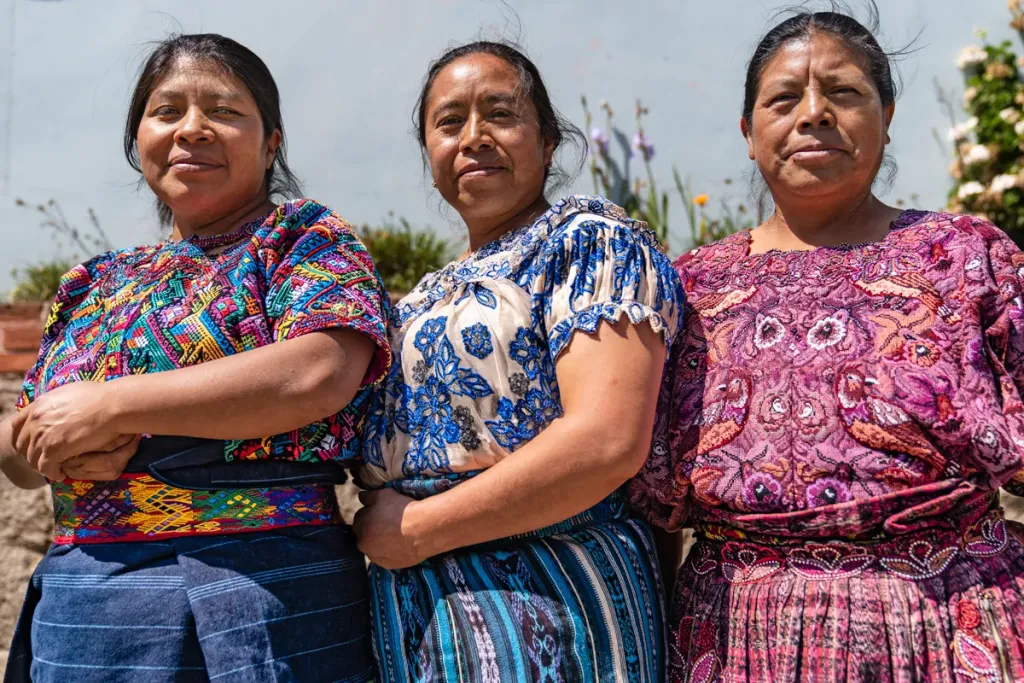
After wildfires, Belize’s indigenous people rebuild stronger based on “se’ komonil”: reciprocity, solidarity, gender equity, togetherness and community.
Read more
Colonial palm oil and sugarcane causing the loss of West Papuans’ cultural identity. Land grabs force communities from forests, threatening Noken weaving
Read more

An explosive report by the Environment Investigation Agency (EIA) details how Indonesia’s Fangiono family, through a wide corporate web, is linked to ongoing #deforestation, #corruption, and #indigenousrights abuses for #palmoil. Calls mount for…
Read more
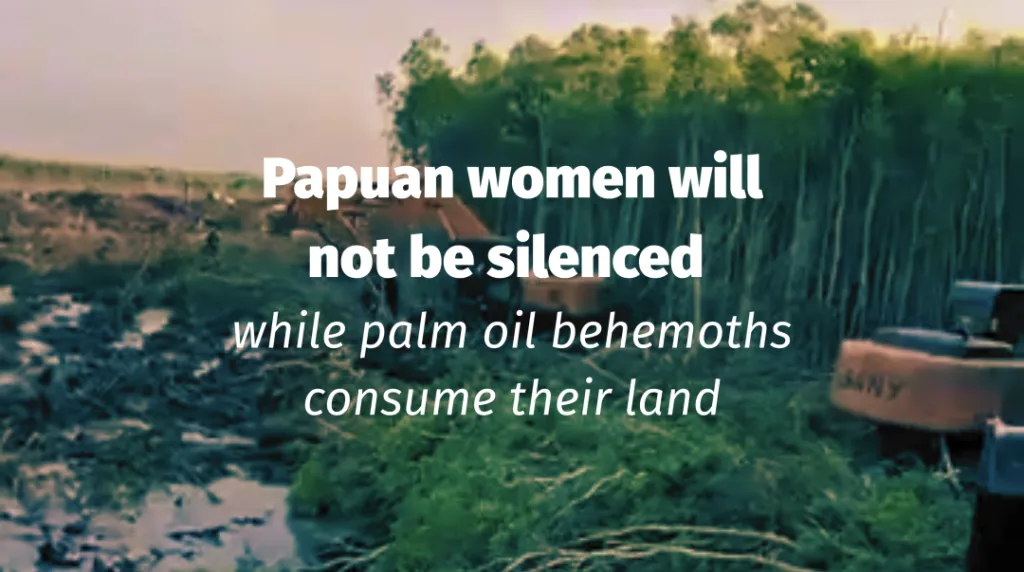
Indigenous Melanesian women in West Papua fight land seizures for palm oil and sugar plantations, protecting their ancestral rights. Join #BoycottPalmOil
Read more

A landmark study published in Global Studies Quarterly in April 2025 has revealed that the rapid expansion of the #palmoil industry in #WestPapua is not only fuelling #deforestation, #ecocide and environmental destruction but…
Read more
Load more posts
Something went wrong. Please refresh the page and/or try again.
Take Action in Five Ways
1. Join the #Boycott4Wildlife on social media and subscribe to stay in the loop: Share posts from this website to your own network on Twitter, Mastadon, Instagram, Facebook and Youtube using the hashtags #Boycottpalmoil #Boycott4Wildlife.
Enter your email address
Sign Up
Join 3,171 other subscribers
2. Contribute stories: Academics, conservationists, scientists, indigenous rights advocates and animal rights advocates working to expose the corruption of the palm oil industry or to save animals can contribute stories to the website.

Read more

Read more

Read more

Read more

Read more

Read more
3. Supermarket sleuthing: Next time you’re in the supermarket, take photos of products containing palm oil. Share these to social media along with the hashtags to call out the greenwashing and ecocide of the brands who use palm oil. You can also take photos of palm oil free products and congratulate brands when they go palm oil free.
twitter.com/CuriousApe4/status…
twitter.com/PhillDixon1/status…
twitter.com/mugabe139/status/1…
4. Take to the streets: Get in touch with Palm Oil Detectives to find out more.
5. Donate: Make a one-off or monthly donation to Palm Oil Detectives as a way of saying thank you and to help pay for ongoing running costs of the website and social media campaigns. Donate here
Pledge your support
#boycottPalmOil #boycott4wildlife #boycottpalmoil #childLabour #childSlavery #deforestation #eudr #fsc #ghana #greenwashing #humanRights #humanrights #indigenousRights #labour #landRights #landgrabbing #liberia #news #nigeria #palmOil #palmoil #rspo #rubber #slavery #socfin #violence #westafrica
French industrial group Bollore on Friday reached a settlement over a decade-old corruption case in Togo, prosecutors said, but a separate plea deal with three top company executives was thrown out by a judge.
NEWS WIRES (FRANCE 24)
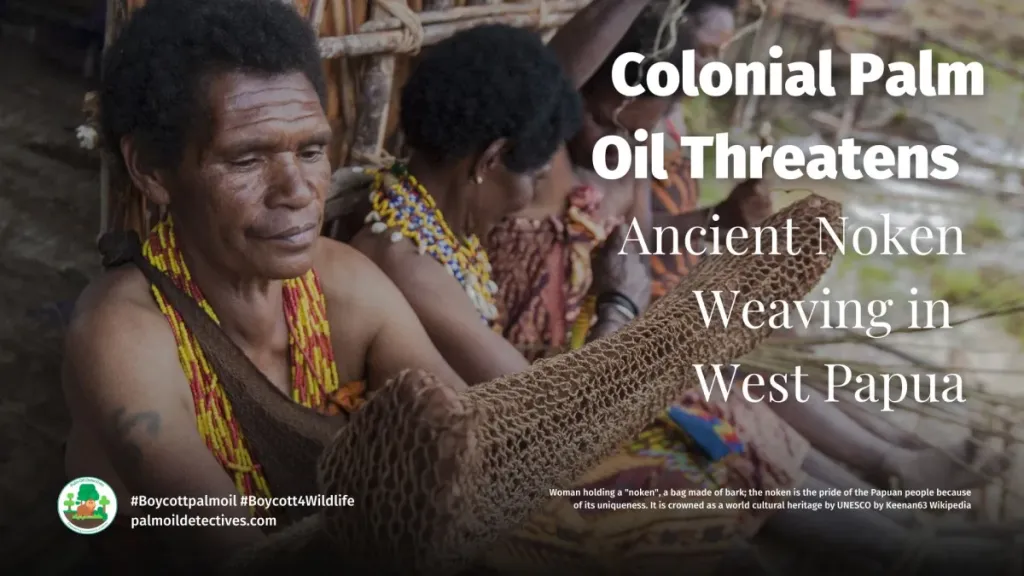
Colonial Palm Oil Threatens Ancient Noken Weaving in West Papua
A powerful new indigenous art exhibition has highlighted the tragic loss of #WestPapua’s cultural identity due to #deforestation for #palmoil and #sugarcane monoculture plantations. A situation perpetuated by the illegal Indonesian colonisation of Melanesia. The ancient Melanesian tradition of noken weaving is under threat, as military-backed land grabs force Indigenous Muyu communities from their forests. Protect people and culture, when you shop make sure you #BoycottPalmOil #HumanRights #IndigenousRights
#News: Exhibition highlights vanishing of West Papua’s UNESCO recognised #noken weaving for #palmoil and #sugarcane in #WestPapua. Reject corporate #landgrabbing for palm oil in when you shop! #BoycottPalmOil #HumanRights #IndigenousRights @palmoildetect wp.me/pcFhgU-bmj
Share to BlueSky
Share to Twitter
Asia Pacific Report. (2025, March 28). Researcher warns over West Papuan deforestation impact on traditional noken weaving. Evening Report. eveningreport.nz/2025/03/28/re…
West Papuan doctoral candidate Veronika T. Kanem has issued a stark warning about the cultural and ecological destruction unfolding in Indonesia-occupied West Papua. As the region faces what may be the world’s largest deforestation project—two million hectares for palm oil and sugarcane—centuries-old Indigenous traditions are being pushed to the edge of existence.
Veronika T. Kanem, whose exhibition “Noken/Men: String Bags of the Muyu Tribe of Southern West Papua” opened at Auckland University, says the forced removal of her people from their forests has endangered not only biodiversity but the sacred art of noken weaving—a practice deeply embedded in the identity and social fabric of her father’s tribe, the Muyu.
Known locally as “men,” the noken is more than a string bag. Made from inner fibres of the genemo tree and other natural materials, noken symbolises a woman’s womb, a vessel of life used in ceremonies, food gathering, child-rearing, and cultural gift-giving. It holds economic, spiritual, and ancestral significance across Melanesia.
Now, industrial agriculture and military occupation threaten the entire cultural landscape. These new plantations are not only destroying forests; they are severing communities from their knowledge systems, their land, and each other.

Kanem’s research applies Indigenous Melanesian methodologies, using the act of noken weaving as a metaphor for knowledge, kinship, and resistance. Her work captures the lived experience of displacement and climate injustice at the intersection of colonial occupation, corporate extraction, and Indigenous resilience.
The Auckland exhibition also screened a documentary showcasing noken weaving traditions from across West Papua, including Asmat, Nabire, and Wamena. Speakers at the event, including Pacific scholars and artists, praised the project as a vital act of cultural preservation and defiance.
As Indonesia accelerates its colonial development schemes, the voices of West Papuans like Kanem are essential. Indigenous peoples must lead solutions to environmental destruction. Without indigenous justice, there can be no climate repair.
Defend West Papua’s forests and ancient indigenous cultures. Reject palm oil-driven genocide. #BoycottPalmOil #Boycott4Wildlife #HumanRights #IndigenousRights
Read more: Researcher warns over West Papuan deforestation impact on traditional noken weaving (Evening Report, 2025)

Asia Pacific Report. (2025, March 28). Researcher warns over West Papuan deforestation impact on traditional noken weaving. Evening Report. eveningreport.nz/2025/03/28/re…
ENDS
Read more about human rights abuses and child slavery in the palm oil industry
An explosive report by the Environment Investigation Agency (EIA) details how Indonesia’s Fangiono family, through a wide corporate web, is linked to ongoing #deforestation, #corruption, and #indigenousrights abuses for #palmoil. Calls mount for…
Read more

In the colonised region of #WestPapua, Indigenous Melanesian women’s rights are being forgotten as companies and the Indonesian government seizes ancestral land for palm oil and sugar cane plantations — without owners’ consent.…
Read more
A landmark study published in Global Studies Quarterly in April 2025 has revealed that the rapid expansion of the #palmoil industry in #WestPapua is not only fuelling #deforestation, #ecocide and environmental destruction but…
Read more

Palm Oil Workers Expose Industry Practices Resembling Colonialism | A coalition of palm oil workers in Indonesia has unveiled industry practices that mirror colonial exploitation, including land grabbing, poor working conditions, and environmental…
Read more

In #WestPapua, on illegally colonised and disputed land taken by violence from Melanesian Indigenous peoples last century by Indonesian forces, authorities label indigenous lands as “empty”. This is done in order to justify…
Read more
Load more posts
Something went wrong. Please refresh the page and/or try again.
Take Action in Five Ways
1. Join the #Boycott4Wildlife on social media and subscribe to stay in the loop: Share posts from this website to your own network on Twitter, Mastadon, Instagram, Facebook and Youtube using the hashtags #Boycottpalmoil #Boycott4Wildlife.
Enter your email address
Sign Up
Join 1,399 other subscribers
2. Contribute stories: Academics, conservationists, scientists, indigenous rights advocates and animal rights advocates working to expose the corruption of the palm oil industry or to save animals can contribute stories to the website.
Read more
Read more
Read more
Read more
Read more
Read more
3. Supermarket sleuthing: Next time you’re in the supermarket, take photos of products containing palm oil. Share these to social media along with the hashtags to call out the greenwashing and ecocide of the brands who use palm oil. You can also take photos of palm oil free products and congratulate brands when they go palm oil free.
twitter.com/CuriousApe4/status…
twitter.com/PhillDixon1/status…
twitter.com/mugabe139/status/1…
4. Take to the streets: Get in touch with Palm Oil Detectives to find out more.
5. Donate: Make a one-off or monthly donation to Palm Oil Detectives as a way of saying thank you and to help pay for ongoing running costs of the website and social media campaigns. Donate here
Pledge your support
#art #BoycottPalmOil #Boycott4wildlife #BoycottPalmOil #childLabour #childSlavery #deforestation #humanRights #HumanRights #indigenousRights #indigenousrights #landRights #landgrabbing #News #noken #PalmOil #palmoil #slavery #sugarcane #WestPapua
Evening Report Provides daily analysis of geopolitics, politics, business, the economy and news. Evening Report also publishes and webcasts authoritative podcasts that analyse global issues and events.
eveningreport.nz