dialogue.earth/en/business/ecu…
Search
Items tagged with: landgrabbing
dialogue.earth/en/business/ecu…
PepsiCo uses "sustainable" palm oil from razed indigenous land Palm Oil Detectives
PepsiCo's supply chain is linked to environmental and human rights violations in Peru, involving Amazon deforestation and Indigenous land invasion.Palm Oil Detectives
Some guy broke into my house … / Caitlin Johnstone. 2026
My family and I tried to kick him out but he got very violent. He brings in his friends and they help beat us up if we ever try to make him leave.
They keep saying I hate the guy because of his religion. I don’t even care about his religion, I just don’t like sharing my house with some random outsider who broke in here out of nowhere and took my stuff.
“The poor guy just wants one room to call his own,” his friends say in his defense. “You and your family have all the surrounding rooms in the house, and yet you have a problem with the guy having sovereignty over ONE room? That’s kind of bigoted and evil.”
He keeps throwing stuff at me and my family if we get too close to his door, saying we make him feel afraid. His friends say it’s understandable because his room is surrounded by enemies who hate him just for existing, but we don’t hate him for existing, we hate him because he forcibly inserted himself into our home and keeps throwing stuff at us.
And what’s weird is whenever I explain my situation to normal people they completely understand where I’m coming from and agree the guy is being a dick, but if I talk to the police or the local paper they always side with the guy. Almost everyone in town hates this guy now because of how he’s been acting, but everyone in power does everything they can to protect him. It’s like there’s a total disconnect between the authorities and the will of the public on this particular issue.
It’s having a nastier and nastier effect on the community at large all across town. The police have been showing up to arrest anyone who says they think the guy’s being an asshole. The paper keeps printing these obnoxious lies telling everyone that me and my family are the real criminals and the guy is actually sweet and awesome. It’s really unfair.
Things have been so tense and hostile ever since this guy showed up. I honestly think it would be better if he’d never moved in here at all, but whenever I say that his friends try to get me in trouble and claim I want to exterminate the guy.
It’s a real mess, man.
That guy sucks.
Some guy broke into my house … / Caitlin Johnstone. 2026
Some guy broke into my house and set up residence in the study room. He says his great-grandparents used to live in this house and now he won’t leave.
My family and I tried to kick him out but he
differx.noblogs.org/2026/06/22…
#Palestina #racconto #Resistenza #ricostruzioni #burglars #CaitlinJohnstone #Gaza #Israhell #LandGrabbing #Palestine #settlers #ViolentSettlers
Some guy broke into my house … / Caitlin Johnstone. 2026
Some guy broke into my house and set up residence in the study room. He says his great-grandparents used to live in this house and now he won’t leave.
My family and I tried to kick him out but he got very violent. He brings in his friends and they help beat us up if we ever try to make him leave.
They keep saying I hate the guy because of his religion. I don’t even care about his religion, I just don’t like sharing my house with some random outsider who broke in here out of nowhere and took my stuff.
“The poor guy just wants one room to call his own,” his friends say in his defense. “You and your family have all the surrounding rooms in the house, and yet you have a problem with the guy having sovereignty over ONE room? That’s kind of bigoted and evil.”
He keeps throwing stuff at me and my family if we get too close to his door, saying we make him feel afraid. His friends say it’s understandable because his room is surrounded by enemies who hate him just for existing, but we don’t hate him for existing, we hate him because he forcibly inserted himself into our home and keeps throwing stuff at us.
And what’s weird is whenever I explain my situation to normal people they completely understand where I’m coming from and agree the guy is being a dick, but if I talk to the police or the local paper they always side with the guy. Almost everyone in town hates this guy now because of how he’s been acting, but everyone in power does everything they can to protect him. It’s like there’s a total disconnect between the authorities and the will of the public on this particular issue.
It’s having a nastier and nastier effect on the community at large all across town. The police have been showing up to arrest anyone who says they think the guy’s being an asshole. The paper keeps printing these obnoxious lies telling everyone that me and my family are the real criminals and the guy is actually sweet and awesome. It’s really unfair.
Things have been so tense and hostile ever since this guy showed up. I honestly think it would be better if he’d never moved in here at all, but whenever I say that his friends try to get me in trouble and claim I want to exterminate the guy.
It’s a real mess, man.
That guy sucks.
Sumatra’s flood crisis: How deforestation turned a cyclonic storm into a likely recurring tragedy
Extreme rain wasn’t the only cause of Sumatra’s deadly floods. Years of forest loss, eroded soils, and weakened watersheds turned a storm into a tragedy — one that could repeat.The Conversation
Oreo Maker Linked to Ongoing Deforestation and Human Rights Abuses
Mondelēz International, the company behind Oreo biscuits, continues to source palm oil from suppliers linked to rainforest destruction, exploitation of workers, and #violence against #Indigenous land defenders. Despite marketing its palm oil as “sustainable” and RSPO-certified, investigations show that these claims amount to greenwashing, with human rights abuses and #deforestation ongoing in its supply chain. We demand urgent action to expose these deceptive practices and protect marginalised indigenous peoples, endangered animals and endangered plants. #BoycottPalmOil #HumanRights
🍪🔥 #Mondelez maker of #Oreos is fuelling rainforest #ecocide and #humanrights abuses. They source #palmoil linked to #childlabour and exploitation 💀🌴 Use your wallet as a weapon to help animals and indigenous people! #BoycottPalmOil #Boycott4Wildlife palmoildetectives.com/2026/02/…
Share to BlueSky
Share to Twitter
Oreo’s “sustainable” #palmoil is a #greenwashing myth—deforestation and human rights abuses continue in #Mondelēz’s supply chain. Demand real change! #BoycottPalmOil #Boycott4Wildlife #HumanRights @palmoildetect 🌴☠️🚫 palmoildetectives.com/2026/02/…
Share to BlueSky
Share to Twitter
youtu.be/eG8V-Cmj4Es?si=D3KyWv…
Rainforest Action Network. (2025, May 14). The maker of Oreos is not taking its human rights responsibilities seriously.
Mondelēz International, the global food giant responsible for Oreo biscuits, faces renewed scrutiny for its palm oil sourcing practices. Despite public claims of using “sustainable” RSPO-certified palm oil, evidence from multiple investigations shows that human rights abuses and deforestation remain widespread in the company’s supply chain.
Between 2015 and 2017, 22 of Mondelēz’s palm oil suppliers cleared over 70,000 hectares of rainforest, including 25,000 hectares of orangutan habitat in Indonesia. These suppliers have also been accused of child labour, worker exploitation, illegal deforestation, forest fires, and land grabbing. Much of this palm oil is sourced from Wilmar International, the world’s largest palm oil trader, which has repeatedly failed to monitor or control its suppliers’ destructive practices.
Despite adopting a “No Deforestation, No Peat, No Exploitation” policy, Mondelēz’s reliance on RSPO certification has been widely criticised as ineffective and misleading. The RSPO standard has failed to prevent land grabs, forced labour, and environmental harm, while the company continues to market its products as ethical and sustainable.
Kiki Taufik, head of Greenpeace Southeast Asia’s Indonesia forests campaign, said: “It’s outrageous that despite promising to clean up its palm oil almost ten years ago, Mondelēz is still trading with forest destroyers. Palm oil can be made without destroying forests, yet our investigation discovered that Mondelēz suppliers are still trashing forests and wrecking orangutan habitat, pushing these beautiful and intelligent creatures to the brink of extinction. They’re literally dying for a cookie”.
The article highlights that these issues are not isolated incidents but reflect systemic failures in the palm oil sector’s self-regulation and corporate accountability. The continued use of “sustainable” palm oil claims is described as greenwashing, misleading consumers while abuses persist.
The article calls for urgent action from consumers, advocates, and policymakers to demand real accountability from companies like Mondelēz. Protecting Indigenous communities, upholding workers’ rights, and halting deforestation are identified as urgent priorities.
Rainforest Action Network. (2025, May 14). The maker of Oreos is not taking its human rights responsibilities seriously.
ENDS
Read more about deforestation and ecocide in the palm oil industry
Meat-Stinking Giant Flower Has A Delectable Aroma For Pollinators
Titan Arum AKA ‘Corpse Flowers’ is famous for its repulsive meat smell. Palm oil agriculture is a massive threat to these rare stinky plants. Take action!
Western Parotia Parotia sefilata
Western Parotias AKA Arfak Parotias are stunning bird-of-paradise of West Papua known for their mesmerising dances. Palm oil and mining ecocide are threats
Capped Langur Trachypithecus pileatus
Capped langurs are found in India Bhutan Bangladesh and Myanmar, they are vulnerable from palm oil and other forms of deforestation. Take action for them!
World’s Wealthiest Drive Two Thirds of Global Warming Since 1990
Wealthiest people in USA and China responsible for 2/3 of global warming since 1990. Climate policies needed to target the richest people on the planet now!
Jaguars and Pumas Eat More Monkeys in Damaged Forests
In fragmented forests of Mexico, big cats find it hard to locate prey ungulates instead seeking tree-dwelling #monkeys – that’s bad news for primates!
Load more posts
Something went wrong. Please refresh the page and/or try again.
Take Action in Five Ways
1. Join the #Boycott4Wildlife on social media and subscribe to stay in the loop: Share posts from this website to your own network on Twitter, Mastadon, Instagram, Facebook and Youtube using the hashtags #Boycottpalmoil #Boycott4Wildlife.
Enter your email address
Sign Up
Join 3,174 other subscribers
2. Contribute stories: Academics, conservationists, scientists, indigenous rights advocates and animal rights advocates working to expose the corruption of the palm oil industry or to save animals can contribute stories to the website.
Wildlife Artist Juanchi Pérez
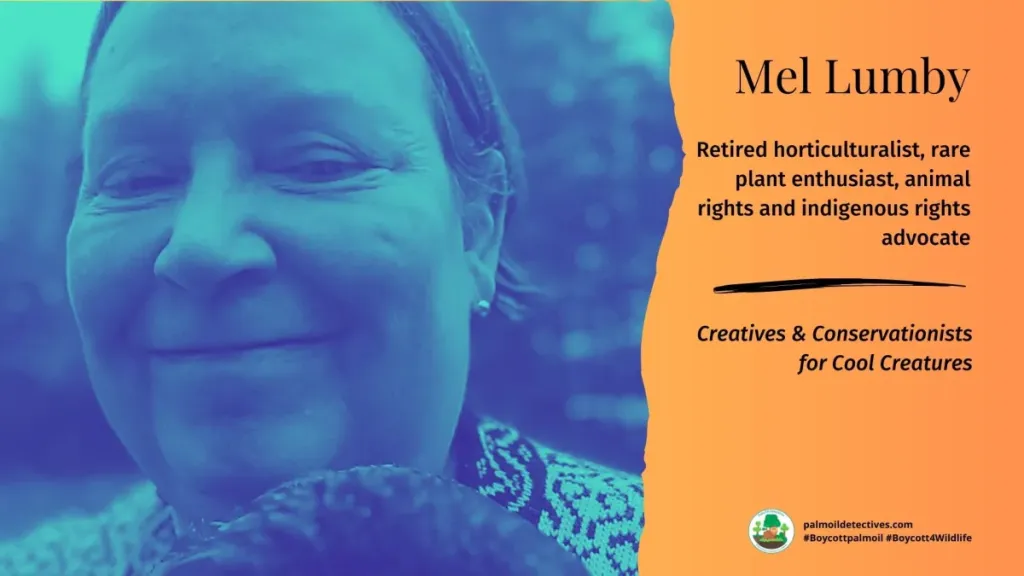
Mel Lumby: Dedicated Devotee to Borneo’s Living Beings
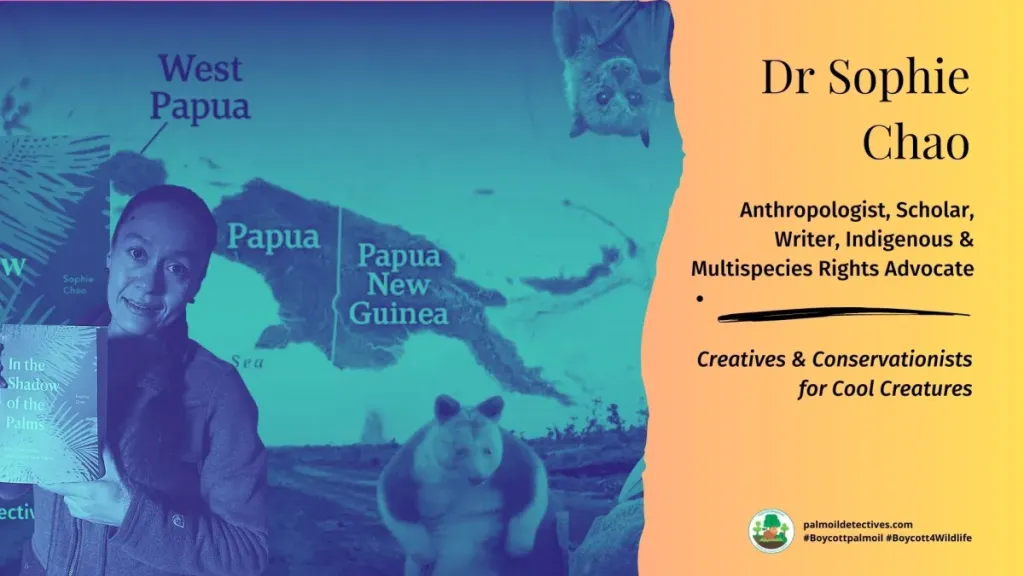
Anthropologist and Author Dr Sophie Chao
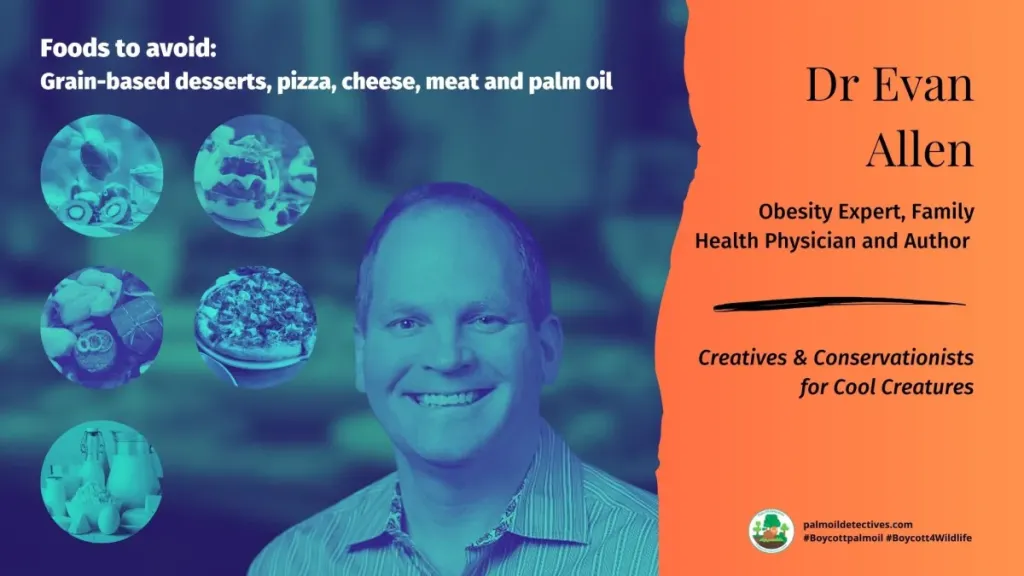
Health Physician Dr Evan Allen
The World’s Most Loved Cup: A Social, Ethical & Environmental History of Coffee by Aviary Doert
How do we stop the world’s ecosystems from going into a death spiral? A #SteadyState Economy
3. Supermarket sleuthing: Next time you’re in the supermarket, take photos of products containing palm oil. Share these to social media along with the hashtags to call out the greenwashing and ecocide of the brands who use palm oil. You can also take photos of palm oil free products and congratulate brands when they go palm oil free.
twitter.com/CuriousApe4/status…
twitter.com/PhillDixon1/status…
twitter.com/mugabe139/status/1…
4. Take to the streets: Get in touch with Palm Oil Detectives to find out more.
5. Donate: Make a one-off or monthly donation to Palm Oil Detectives as a way of saying thank you and to help pay for ongoing running costs of the website and social media campaigns. Donate here
#BoycottPalmOil #Boycott4wildlife #BoycottPalmOil #childlabour #corruption #deforestation #ecocide #GHG #greenwashing #HumanRights #indigenous #landgrabbing #Mondelez #News #Oreos #PalmOil #palmOilBiofuel #palmOilDeforestation #palmoil #violence
The maker of Oreos is not taking its human rights responsibilities seriously - The Understory - Rainforest Action Network
Rising authoritarianism is eroding basic democratic principles and human rights around the world, and corporations aren't doing enough about it.Rainforest Action Network
World’s Wealthiest Drive Two Thirds of Global Warming Since 1990
A study examining the wealthiest people in the USA and China reveals that the world’s richest 10% are responsible for two-thirds of global warming since 1990. Their consumption and investments disproportionately fuel climate extremes, especially in vulnerable regions like the Amazon and Southeast Asia. According to the lead author of the study: “If everyone had emitted like the bottom 50% of the global population, the world would have seen minimal additional warming since 1990”. This underscores the urgent need to examine the lifestyle choices and investments of the world’s richest people and for robust climate policies targeting the world’s most powerful in order to achieve true #ClimateJustice #ClimateActionNow#Study finds top 10% of wealthiest people in #USA and #China cause two thirds of #GHG emissions. Robust #climate policies urgently and a #wealthtax needed to counteract pure #greed 💰🧐🤑 🤮#ClimateActionNow 🏭🛢️ #BoycottPalmOil #Boycott4Wildlife palmoildetectives.com/2026/01/…
Share to BlueSky
Share to Twitter[strong]International Institute for Applied Systems Analysis. (2025, May 7). The world’s wealthiest 10% caused two thirds of global warming since 1990. ScienceDaily. sciencedaily.com/releases/2025…[/strong]
A groundbreaking study published in Nature Climate Change has found that the world’s wealthiest 10% are responsible for two-thirds of global warming since 1990. The research, conducted by the International Institute for Applied Systems Analysis (IIASA), highlights the disproportionate impact of affluent individuals’ consumption and investments on climate change.
The study reveals that the top 1% of earners globally have contributed 26 times more to increases in extreme heat events and 17 times more to Amazon droughts compared to the global average. These findings underscore the significant role that high-income individuals play in driving climate extremes, particularly in vulnerable regions such as the Amazon, Southeast Asia, and southern Africa.Lead author Sarah Schöngart, associated with ETH Zurich, emphasizes that lifestyle and investment choices linked to wealth are major contributors to climate impacts. “Our study shows that extreme climate impacts are not just the result of abstract global emissions; instead, we can directly link them to our lifestyle and investment choices,” she stated.
The research utilised a novel modeling framework combining economic data and climate simulations to trace emissions from different global income groups. It found that emissions from the wealthiest 10% in countries like the United States and China led to a two- to threefold increase in heat extremes across vulnerable regions.The researchers were able to trace emissions from different global income groups and assess their contributions to specific climate extremes.
They found that emissions from the wealthiest 10% of individuals in the United States and China alone, each led to a two-to threefold increase in heat extremes across vulnerable regions.
“If everyone had emitted like the bottom 50% of the global population, the world would have seen minimal additional warming since 1990,” says coauthor Carl-Friedrich Schleussner, who leads the Integrated Climate Impacts Research Group at IIASA. “Addressing this imbalance is crucial for fair and effective climate action.”He advocates for climate policies that address the outsize responsibilities of the wealthiest members of society to effectively reduce future harm.
The study also highlights the importance of targeting emissions embedded in financial investments, not just personal consumption. By focusing on the financial flows and portfolios of high-income individuals, substantial climate benefits can be achieved.
This research provides compelling evidence for the need to implement progressive climate policies that hold the wealthiest accountable for their disproportionate contributions to global warming. Such measures are essential for achieving climate justice and mitigating the impacts of climate change on the most vulnerable populations.International Institute for Applied Systems Analysis. (2025, May 7). The world’s wealthiest 10% caused two thirds of global warming since 1990. ScienceDaily. sciencedaily.com/releases/2025…
ENDS
Read more about deforestation and ecocide in the palm oil industry
Jaguars and Pumas Eat More Monkeys in Damaged Forests
In fragmented forests of Mexico, big cats find it hard to locate prey ungulates instead seeking tree-dwelling #monkeys – that’s bad news for primates!Mountain Tapir Tapirus pinchaque
Mountain Tapirs are the most threatened large mammals of the northern Andes, hunting, climate change and mining are threats, take action and boycott gold!Seeing Forest As Merely A Carbon “Commodity”: Dangerous Greenwashing
Commodifying forests as merely an investment for ‘carbon credits’ has many dangerous loopholes that human rights to indigenous peoples, take action!Finance giants fuel $8.9 trillion deforestation economy
Forest 500 report shows 150 of the world’s largest financial institutions invested nearly $9 trillion in deforestation-linked industries. Support EUDR!Saola Pseudoryx nghetinhensis
Saolas are rare and considered Southeast Asia’s ‘unicorns’, this Critically Endangered antelope is facing imminent extinction due to hunting and deforestationLoad more posts
Something went wrong. Please refresh the page and/or try again.
Take Action in Five Ways
1. Join the #Boycott4Wildlife on social media and subscribe to stay in the loop: Share posts from this website to your own network on Twitter, Mastadon, Instagram, Facebook and Youtube using the hashtags #Boycottpalmoil #Boycott4Wildlife.
Enter your email addressSign Up
Join 3,174 other subscribers
2. Contribute stories: Academics, conservationists, scientists, indigenous rights advocates and animal rights advocates working to expose the corruption of the palm oil industry or to save animals can contribute stories to the website.
Wildlife Artist Juanchi Pérez
Mel Lumby: Dedicated Devotee to Borneo’s Living Beings
Anthropologist and Author Dr Sophie Chao
Health Physician Dr Evan Allen
The World’s Most Loved Cup: A Social, Ethical & Environmental History of Coffee by Aviary Doert
How do we stop the world’s ecosystems from going into a death spiral? A #SteadyState Economy
3. Supermarket sleuthing: Next time you’re in the supermarket, take photos of products containing palm oil. Share these to social media along with the hashtags to call out the greenwashing and ecocide of the brands who use palm oil. You can also take photos of palm oil free products and congratulate brands when they go palm oil free.
twitter.com/CuriousApe4/status…
twitter.com/PhillDixon1/status…
twitter.com/mugabe139/status/1…
4. Take to the streets: Get in touch with Palm Oil Detectives to find out more.
5. Donate: Make a one-off or monthly donation to Palm Oil Detectives as a way of saying thank you and to help pay for ongoing running costs of the website and social media campaigns. Donate here
#BoycottPalmOil #Boycott4wildlife #BoycottGold #BoycottGold4Yanomami #BoycottPalmOil #China #Climate #climateChange #ClimateActionNow #climatecrisis #ClimateEmergency #ClimateJustice #CO2 #consumerRights #corruption #deforestation #ewaste #GHG #gold #greed #investment #News #PalmOil #palmOilBiofuel #palmOilDeforestation #study #USA #wealth #wealthtax
South America: Species Endangered by Palm Oil Deforestation
As the lush equatorial rainforests of South East Asia are exhausted, increasingly focus is being placed on parts of Central and South America. Oil Palm is a growing commodity there and is found in …Palm Oil Detectives
UN human rights mechanisms urge Guatemala to end forced evictions, protect land rights defenders - ISHR
From 14 to 25 July, the UN Special Rapporteur on the right to adequate housing, Balakrishnan Rajagopal, conducted an official visit to Guatemala - only theUlises Quero (ISHR)
foe.org/news/land-grabbing-cer…
Financial Speculation Drives Deforestation in Brazil's Cerrado
New report shows international financial corporations fuel environmental destruction and displacement of communities in biodiverse savannah.Audrey Fox (FOE)
#News: Peasant Communities in #Honduras 🇭🇳 face violent #landgrabbing from armed groups claiming their ancestral lands for #palmoil co. #Dinant. 33 #HumanRights orgs call for an end to violence! #LandRights #IndigenousRights #Boycottpalmoil 🌴🔥⛔ wp.me/pcFhgU-an1?utm_source=ma…
Violence for Palm Oil Against Peasant Communities in Honduras Meets Resistance
In the Aguán Valley of northern Honduras, peasant communities reclaiming ancestral lands face increasing violence and intimidation from armed groups linked to organised crime. The Dinant Corporation, a prominent palm oil producer, is accused of land theft and involvement in the murders of local activists. International organisations have condemned these human rights abuses, with a coalition of 33 organisations calling for a boycott of Dinant and for multinational companies: Pepsi, ADM, Cargill and Nestle to immediately cease business with Dinant. Despite governmental promises to address the conflict, concrete actions remain absent. You can resist for them in solidarity by boycotting their products in the supermarket! #BoycottPalmOil #LandRights #IndigenousRights #HumanRights#News: Peasant Communities in #Honduras 🇭🇳 face violent #landgrabbing from armed groups claiming their ancestral lands on behalf of #palmoil company #Dinant. 33 #HumanRights orgs call for an end to violence and a boycott of Dinant. #LandRights #IndigenousRights #Boycottpalmoil 🌴🔥⛔ wp.me/pcFhgU-an1
Share to BlueSky
Share to TwitterIn the Aguán Valley, northern Honduras, peasant communities striving to reclaim ancestral lands from the palm oil industry are encountering severe threats from heavily armed groups associated with organised crime. Recent incidents include the assassinations of peasant leaders José Luis Hernández Lobo and Suyapa Guillén in February 2025, and activist Arnulfo Díaz in January 2025. On December 24, 2024, the Los Camarones cooperative suffered a violent eviction by armed factions, displacing over 160 families who now endure precarious conditions without access to land or resources.
Dinant Faces Allegations of Murder, Violence and Threats Against Peasant Farmers
The Dinant Corporation, a major palm oil producer, claims ownership of lands that peasants assert as their ancestral territory. For over a decade, Dinant has faced allegations of engaging in violence, including murders and threats against peasant leaders and human rights defenders. International bodies, such as the Inter-American Commission on Human Rights, have denounced these abuses. In February 2022, Honduran President Xiomara Castro pledged to investigate and resolve the conflict through a tripartite commission; however, tangible actions have yet to materialise.Environmental and Economic Implications
The expansion of palm oil monoculture in Honduras, now covering approximately 200,000 hectares—over 18% of the nation’s arable land—has led to significant deforestation, ecosystem destruction, and soil degradation. This growth often involves collaboration between corporations and paramilitary groups, exacerbating the displacement and persecution of peasant communities.International Coalition of 33 Orgs Call for Boycott of Dinant
A coalition of 33 environmental and human rights organisations has called on multinational corporations, including ADM, Cargill, Pepsico, and Nestlé, to cease business relations with Dinant. These organisations accuse Dinant of employing paramilitary and military forces to forcibly remove peasants resisting plantation expansion, using tactics ranging from physical violence to the destruction of livelihoods. In response to mounting pressure, companies such as BASF and Bunge have suspended commercial ties with Dinant, while Nestlé has announced plans to eliminate the supplier from its supply chains.Call for Immediate Action
The ongoing violence and displacement of peasant communities in Honduras necessitate urgent intervention from both national authorities and the international community. Protecting the rights and lives of these communities is imperative, alongside promoting land use practices that fully respect indigenous territories and environmental integrity.Latchford, R. (2025, February 20). Peasant communities under attack in Honduras. Freedom News. Retrieved February 25, 2025, from freedomnews.org.uk/2025/02/20/…
ENDS
Read more about human rights abuses and child slavery in the palm oil industry
The Great Malaysian Timber and Palm Oil Swindle
A joint investigation by Malaysiakini and Pulitzer Center’s Rainforest Investigations Network (RIN) reveals alarming deforestation in Pahang, #Malaysia, caused by one of the country’s largest #palmoil plantations. The plantation threatens endangered species like…Deadly Harvest: How Demand for Palm Oil Fuels Corruption in Honduras
Latin America is the fastest-growing producer of palm oil, but at what price for the environment and its defenders? Park rangers in Honduras tell harrowing tales of daily threats to their lives and…Ten Victories and Challenges to Indigenous Rights in 2024
From Brazil’s action against illegal gold miners to the Sacred Headwaters Alliance defending the Amazon, these top Indigenous stories of 2024 highlight resilience and challenges. The year of 2024 underscored the importance of…Palm Oil Protesters Silenced and Arrested in Congo
On Tuesday, April 30, 2024, a shocking and disgraceful incident occurred in Kinshasa, the capital of the Democratic Republic of Congo (DRC). During a meeting of shareholders from Plantations et Huileries du Congo…Amazon Clarion Call: Pandemics Emerging in the Rainforest
The Amazon’s diverse ecosystem is under threat from rampant deforestation, degradation, a biodiversity crisis, and the climate crisis – jeopardising its ability to act as a carbon sink. This degradation increases the likelihood of zoonotic diseases emerging…Load more posts
Something went wrong. Please refresh the page and/or try again.
Take Action in Five Ways
1. Join the #Boycott4Wildlife on social media and subscribe to stay in the loop: Share posts from this website to your own network on Twitter, Mastadon, Instagram, Facebook and Youtube using the hashtags #Boycottpalmoil #Boycott4Wildlife.2. Contribute stories: Academics, conservationists, scientists, indigenous rights advocates and animal rights advocates working to expose the corruption of the palm oil industry or to save animals can contribute stories to the website.
Wildlife Artist Juanchi Pérez
Mel Lumby: Dedicated Devotee to Borneo’s Living Beings
Anthropologist and Author Dr Sophie Chao
Health Physician Dr Evan Allen
The World’s Most Loved Cup: A Social, Ethical & Environmental History of Coffee by Aviary Doert
How do we stop the world’s ecosystems from going into a death spiral? A #SteadyState Economy
3. Supermarket sleuthing: Next time you’re in the supermarket, take photos of products containing palm oil. Share these to social media along with the hashtags to call out the greenwashing and ecocide of the brands who use palm oil. You can also take photos of palm oil free products and congratulate brands when they go palm oil free.
twitter.com/CuriousApe4/status…
twitter.com/PhillDixon1/status…
twitter.com/mugabe139/status/1…
4. Take to the streets: Get in touch with Palm Oil Detectives to find out more.
5. Donate: Make a one-off or monthly donation to Palm Oil Detectives as a way of saying thank you and to help pay for ongoing running costs of the website and social media campaigns. Donate here
#BoycottPalmOil #Boycott4wildlife #BoycottPalmOil #childLabour #childSlavery #Dinant #Honduras #humanRights #HumanRights #indigenousRights #indigenousrights #landRights #landgrabbing #landrights #LatinAmerica #Nestle #News #PalmOil #palmoil #Pepsi #PepsiCo #slavery #SouthAmerica #violence
Peasant communities under attack in Honduras - Freedom News
Palm oil company Dinant accused of land theft and murder of local activists ~ Rob Latchford ~ In the Aguán Valley in northern Honduras, heavily armed men linked to organised crime have been employing intimidation and violence towards farmers, who hav…neil (Freedom Press)
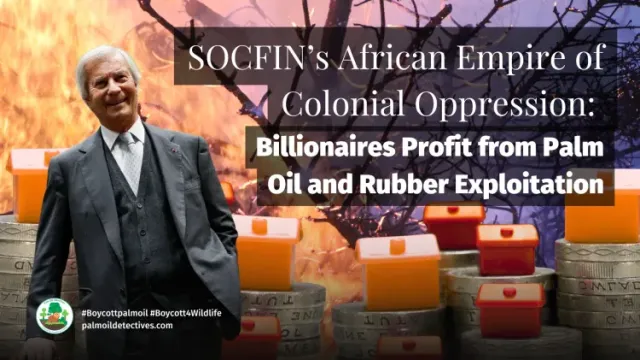
SOCFIN’s African Empire of Colonial Oppression: Billionaires Profit from Palm Oil and Rubber Exploitation
An investigation by Bloomberg exposed that despite being RSPO members, #SOCFIN plantations in #WestAfrica are the epicentre of #humanrights abuses, sexual coercion, environmental destruction, and #landgrabbing. Operating in #Liberia, #Ghana, #Nigeria, and beyond, SOCFIN’s #rubber and #palmoil plantations continue historical colonial legacies of exploitation. Despite widespread evidence of abuse and deforestation, SOCFIN and its partners benefit from weak sustainability certifications such as #FSC and #RSPO. Europe and the US buy products directly linked to these violations, greenwashing the destruction in the process. Indigenous communities and workers are actively resisting this huge injustice —They seek proper redress in the form of stricter #EUDR regulations and better protections of their health, livelihoods and families. Consumers can boycott palm oil and rubber in solidarity. #BoycottPalmOil #Boycott4Wildlife
#News: 🚨 #SOCFIN #palmoil and #rubber is linked to sexual #violence, forced #labour, #landgrabbing #deforestation in #WestAfrica🌴🔥🤢☠️🙊🚫 French tycoon Vincent Bolloré profits while communities suffer. 💀✊🏽 #BoycottPalmOil #Boycott4Wildlife palmoildetectives.com/2025/10/…
Share to BlueSky
Share to Twitter
A recent Bloomberg investigation into SOCFIN, a plantation empire co-owned by French billionaire Vincent Bolloré, reveals ongoing human rights violations, sexual exploitation, deforestation, and colonial-style land grabs across West Africa. SOCFIN, based in Luxembourg and co-owned by Bolloré, operates sprawling palm oil and rubber plantations in Liberia, Ghana, Nigeria, Cameroon, and elsewhere. The investigation uncovered systemic abuses and environmental destruction, exposing the toxic greenwashing reality behind RSPO corporate sustainability claims.
According to Bloomberg’s extensive report published in April 2025, SOCFIN plantations in Liberia and Ghana are sites of widespread sexual coercion, rape and sexual abuse.
Women workers at the Liberian Agricultural Company (LAC) plantation, one of SOCFIN’s largest operations, routinely face demands for sex from supervisors as a condition for securing daily work. Women like Rebecca (a pseudonym) describe daily harassment and abuse, forced to accept demands out of economic necessity. Contract workers earn as little as $3.50 a day and face threats of dismissal if they refuse sexual advances.
Similar accounts emerge from SOCFIN’s Salala Rubber Corporation (SRC), recently sold after violent worker protests over labour abuses, inadequate medical care, and poor housing conditions. Women workers have described supervisors openly demanding sexual favours in exchange for continued employment. Mamie, a former SRC worker, described being violently raped by her supervisor after repeatedly refusing his advances. Such experiences remain common, despite superficial anti-harassment measures like “No Sexual Harassment” signs erected by the company (Bloomberg, 2025).
SOCFIN’s operations are rooted deeply in colonial history. Established in the Belgian Congo in the late 1800s, SOCFIN expanded aggressively during colonialism, exploiting rubber and palm oil resources across Africa and Asia. Today, its co-owners, Vincent Bolloré and Belgian businessman Hubert Fabri, control vast landholdings, perpetuating neo-colonial dynamics of wealth extraction. According to an article by Tony Lawson for Shoppe Black, the plantations replicate exploitative plantation models, extracting wealth from African land and labour for European profit, reminiscent of colonial rubber plantations and antebellum slave operations like Louisiana’s Nottoway Plantation.
This neo-colonial exploitation is glaringly evident in Nigeria, where SOCFIN’s subsidiary, Okumu Oil Palm Company, operates 19,062 hectares of palm plantations and 7,335 hectares of rubber plantations. Palm Oil Detectives (2024) documented widespread displacement of local Indigenous communities due to plantation expansion. Villages such as Lemon, Agbeda, and Oweike have been forcibly dismantled, leaving hundreds homeless. The affected communities received no compensation or consultation—violating international human rights standards on Free Prior and Informed Consent (FPIC).
Austin Lemon, whose family established Lemon village in 1969, recounted witnessing his ancestral land seized by SOCFIN and converted into plantations without consent or compensation. The trauma from losing their homes, livelihoods, and ancestral heritage remains profound, with many residents still unable to recover decades later.
In Ghana, SOCFIN’s Plantations Socfin Ghana (PSG) has systematically destroyed vital rainforests, despite clear warnings from environmental assessments. PSG admitted clearing over 1,089 hectares of natural forest between 2012 and 2016. The loss of biodiversity and increased carbon emissions from these activities directly exacerbate the climate crisis, severely impacting local rainfall patterns and agricultural productivity. Farmers around PSG’s plantations suffer reduced yields, poverty, and food insecurity.
Meanwhile, the EU continues to import vast quantities of palm oil and rubber from SOCFIN, despite mounting evidence of human rights violations and deforestation. Europe’s reliance on SOCFIN’s supply chains for products such as Michelin tyres, Nestlé’s consumer goods, and numerous cosmetic brands implicates major companies in these abuses. Investigations show European tyre manufacturers purchasing rubber sourced from plantations like Liberia’s LAC and SRC, despite credible allegations of labour abuses, sexual coercion, and land theft.
SOCFIN and its partners rely heavily on weak and ineffective sustainability schemes like the Roundtable on Sustainable Palm Oil (RSPO). But investigations repeatedly reveal these certifications as ineffectual greenwashing tools. For example, SOCFIN’s Cameroon plantations—RSPO-certified—face lawsuits alleging severe environmental damage and community displacement. Water pollution tests conducted near these plantations revealed dangerous contamination levels, threatening public health (Bloomberg, 2025).
Vincent Bolloré, despite his influential position as a major shareholder and board member, consistently denies responsibility, claiming limited involvement. Yet Bolloré’s role remains central. Known for his vast media empire and conservative political influence in France, Bolloré has maintained his SOCFIN stake despite decades of documented abuses. Lawsuits brought under French duty-of-vigilance laws now challenge Bolloré directly, arguing that his oversight constitutes effective control, making him legally responsible for SOCFIN’s actions.
Public pressure is growing. In 2024, Norway’s sovereign wealth fund excluded Bolloré Group and strongly recommended divestment from Bolloré and SOCFIN, citing overwhelming evidence of abuse. Luxembourg’s stock exchange delisted SOCFIN the same year, further isolating the company. Despite these actions, European governments and multinational corporations including the RSPO continue to support SOCFIN financially, facilitating ongoing abuses in Africa.
Communities across West Africa resist despite enormous personal risk. Liberian union leader Mary Boimah was jailed after protests against SRC’s labour conditions. Nigerian community member Iyabo Batu was shot by SOCFIN-affiliated security personnel while protesting environmental contamination and blocked access to her village. Despite these risks, communities persist in their demands for justice, compensation, and the return of their lands.
SOCFIN’s stated commitments to human rights and sustainability remain hollow. Decades of documented abuses, superficial responses to audits, and persistent denial illustrate systemic failure and wilful negligence. As long as global markets reward SOCFIN’s rubber and palm oil, the cycle of violence and exploitation will continue.
The time has come to demand real accountability. Regulators and law-makers in the EU and USA must recognise their complicity in human rights abuses and ecocide in palm oil and rubber supply chains. Until this time, people and landscapes will continue to suffer from forced labour, sexual coercion, and environmental destruction. SOCFIN’s ecocide and human rights abuses—must end now.
Learn more
Bloomberg. (2025, April 17). The Rubber Barons. Retrieved from bloomberg.com/features/2025-so…
Palm Oil Detectives. (2024, July 31). Socfin’s Destructive Empire: Palm Oil Deforestation and Human Rights Abuses in West Africa. Retrieved from palmoildetectives.com/2024/07/…
Shoppe Black. (2025). Labor Abuses: Nottoway and Liberia Plantations. Retrieved from shoppeblack.us/labor-abuses-no…
ENDS
Read more about human rights abuses and child slavery in the palm oil industry
Indigenous Peoples Fight Climate Change
After wildfires, Belize’s indigenous people rebuild stronger based on “se’ komonil”: reciprocity, solidarity, gender equity, togetherness and community.
Palm Oil Threatens Ancient Noken Weaving in West Papua
Colonial palm oil and sugarcane causing the loss of West Papuans’ cultural identity. Land grabs force communities from forests, threatening Noken weaving
Family Ties Expose Deforestation and Rights Violations in Indonesian Palm Oil
An explosive report by the Environment Investigation Agency (EIA) details how Indonesia’s Fangiono family, through a wide corporate web, is linked to ongoing #deforestation, #corruption, and #indigenousrights abuses for #palmoil. Calls mount for…
West Papuan Indigenous Women Fight Land Seizures
Indigenous Melanesian women in West Papua fight land seizures for palm oil and sugar plantations, protecting their ancestral rights. Join #BoycottPalmOil
Greasing the Wheels of Colonialism: Palm Oil Industry in West Papua
A landmark study published in Global Studies Quarterly in April 2025 has revealed that the rapid expansion of the #palmoil industry in #WestPapua is not only fuelling #deforestation, #ecocide and environmental destruction but…
Load more posts
Something went wrong. Please refresh the page and/or try again.
Take Action in Five Ways
1. Join the #Boycott4Wildlife on social media and subscribe to stay in the loop: Share posts from this website to your own network on Twitter, Mastadon, Instagram, Facebook and Youtube using the hashtags #Boycottpalmoil #Boycott4Wildlife.
Enter your email address
Sign Up
Join 3,171 other subscribers
2. Contribute stories: Academics, conservationists, scientists, indigenous rights advocates and animal rights advocates working to expose the corruption of the palm oil industry or to save animals can contribute stories to the website.
Wildlife Artist Juanchi Pérez
Mel Lumby: Dedicated Devotee to Borneo’s Living Beings
Anthropologist and Author Dr Sophie Chao
Health Physician Dr Evan Allen
The World’s Most Loved Cup: A Social, Ethical & Environmental History of Coffee by Aviary Doert
How do we stop the world’s ecosystems from going into a death spiral? A #SteadyState Economy
3. Supermarket sleuthing: Next time you’re in the supermarket, take photos of products containing palm oil. Share these to social media along with the hashtags to call out the greenwashing and ecocide of the brands who use palm oil. You can also take photos of palm oil free products and congratulate brands when they go palm oil free.
twitter.com/CuriousApe4/status…
twitter.com/PhillDixon1/status…
twitter.com/mugabe139/status/1…
4. Take to the streets: Get in touch with Palm Oil Detectives to find out more.
5. Donate: Make a one-off or monthly donation to Palm Oil Detectives as a way of saying thank you and to help pay for ongoing running costs of the website and social media campaigns. Donate here
#boycottPalmOil #boycott4wildlife #boycottpalmoil #childLabour #childSlavery #deforestation #eudr #fsc #ghana #greenwashing #humanRights #humanrights #indigenousRights #labour #landRights #landgrabbing #liberia #news #nigeria #palmOil #palmoil #rspo #rubber #slavery #socfin #violence #westafrica
Bolloré Group fined €12 million in Togo corruption case
French industrial group Bollore on Friday reached a settlement over a decade-old corruption case in Togo, prosecutors said, but a separate plea deal with three top company executives was thrown out by a judge.NEWS WIRES (FRANCE 24)
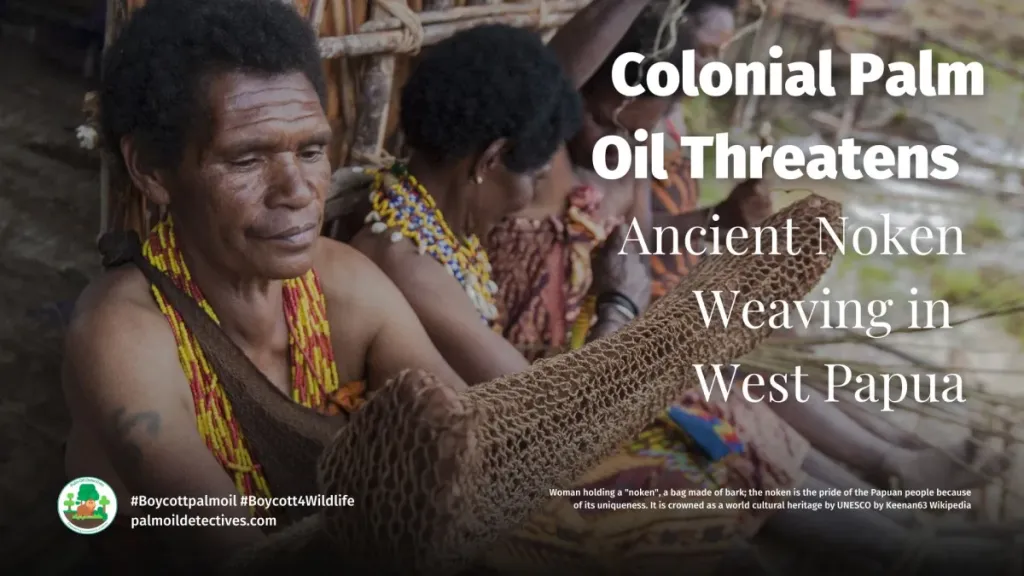
Colonial Palm Oil Threatens Ancient Noken Weaving in West Papua
A powerful new indigenous art exhibition has highlighted the tragic loss of #WestPapua’s cultural identity due to #deforestation for #palmoil and #sugarcane monoculture plantations. A situation perpetuated by the illegal Indonesian colonisation of Melanesia. The ancient Melanesian tradition of noken weaving is under threat, as military-backed land grabs force Indigenous Muyu communities from their forests. Protect people and culture, when you shop make sure you #BoycottPalmOil #HumanRights #IndigenousRights#News: Exhibition highlights vanishing of West Papua’s UNESCO recognised #noken weaving for #palmoil and #sugarcane in #WestPapua. Reject corporate #landgrabbing for palm oil in when you shop! #BoycottPalmOil #HumanRights #IndigenousRights @palmoildetect wp.me/pcFhgU-bmj
Share to BlueSky
Share to TwitterAsia Pacific Report. (2025, March 28). Researcher warns over West Papuan deforestation impact on traditional noken weaving. Evening Report. eveningreport.nz/2025/03/28/re…
West Papuan doctoral candidate Veronika T. Kanem has issued a stark warning about the cultural and ecological destruction unfolding in Indonesia-occupied West Papua. As the region faces what may be the world’s largest deforestation project—two million hectares for palm oil and sugarcane—centuries-old Indigenous traditions are being pushed to the edge of existence.
Veronika T. Kanem, whose exhibition “Noken/Men: String Bags of the Muyu Tribe of Southern West Papua” opened at Auckland University, says the forced removal of her people from their forests has endangered not only biodiversity but the sacred art of noken weaving—a practice deeply embedded in the identity and social fabric of her father’s tribe, the Muyu.
Known locally as “men,” the noken is more than a string bag. Made from inner fibres of the genemo tree and other natural materials, noken symbolises a woman’s womb, a vessel of life used in ceremonies, food gathering, child-rearing, and cultural gift-giving. It holds economic, spiritual, and ancestral significance across Melanesia.
Now, industrial agriculture and military occupation threaten the entire cultural landscape. These new plantations are not only destroying forests; they are severing communities from their knowledge systems, their land, and each other.
Kanem’s research applies Indigenous Melanesian methodologies, using the act of noken weaving as a metaphor for knowledge, kinship, and resistance. Her work captures the lived experience of displacement and climate injustice at the intersection of colonial occupation, corporate extraction, and Indigenous resilience.The Auckland exhibition also screened a documentary showcasing noken weaving traditions from across West Papua, including Asmat, Nabire, and Wamena. Speakers at the event, including Pacific scholars and artists, praised the project as a vital act of cultural preservation and defiance.
As Indonesia accelerates its colonial development schemes, the voices of West Papuans like Kanem are essential. Indigenous peoples must lead solutions to environmental destruction. Without indigenous justice, there can be no climate repair.
Defend West Papua’s forests and ancient indigenous cultures. Reject palm oil-driven genocide. #BoycottPalmOil #Boycott4Wildlife #HumanRights #IndigenousRights
Read more: Researcher warns over West Papuan deforestation impact on traditional noken weaving (Evening Report, 2025)
Asia Pacific Report. (2025, March 28). Researcher warns over West Papuan deforestation impact on traditional noken weaving. Evening Report. eveningreport.nz/2025/03/28/re…ENDS
Read more about human rights abuses and child slavery in the palm oil industry
Family Ties Expose Deforestation and Rights Violations in Indonesian Palm Oil
An explosive report by the Environment Investigation Agency (EIA) details how Indonesia’s Fangiono family, through a wide corporate web, is linked to ongoing #deforestation, #corruption, and #indigenousrights abuses for #palmoil. Calls mount for…Papuan women will not be silenced while palm oil behemoths consume their land
In the colonised region of #WestPapua, Indigenous Melanesian women’s rights are being forgotten as companies and the Indonesian government seizes ancestral land for palm oil and sugar cane plantations — without owners’ consent.…Greasing the Wheels of Colonialism: Palm Oil Industry in West Papua
A landmark study published in Global Studies Quarterly in April 2025 has revealed that the rapid expansion of the #palmoil industry in #WestPapua is not only fuelling #deforestation, #ecocide and environmental destruction but…Palm Oil Workers Expose Industry Practices Resembling Colonialism
Palm Oil Workers Expose Industry Practices Resembling Colonialism | A coalition of palm oil workers in Indonesia has unveiled industry practices that mirror colonial exploitation, including land grabbing, poor working conditions, and environmental…Papua’s ‘Empty Lands’: A Dangerous Myth Displacing Indigenous Peoples
In #WestPapua, on illegally colonised and disputed land taken by violence from Melanesian Indigenous peoples last century by Indonesian forces, authorities label indigenous lands as “empty”. This is done in order to justify…Load more posts
Something went wrong. Please refresh the page and/or try again.
Take Action in Five Ways
1. Join the #Boycott4Wildlife on social media and subscribe to stay in the loop: Share posts from this website to your own network on Twitter, Mastadon, Instagram, Facebook and Youtube using the hashtags #Boycottpalmoil #Boycott4Wildlife.
Enter your email addressSign Up
Join 1,399 other subscribers
2. Contribute stories: Academics, conservationists, scientists, indigenous rights advocates and animal rights advocates working to expose the corruption of the palm oil industry or to save animals can contribute stories to the website.
Wildlife Artist Juanchi Pérez
Mel Lumby: Dedicated Devotee to Borneo’s Living Beings
Anthropologist and Author Dr Sophie Chao
Health Physician Dr Evan Allen
The World’s Most Loved Cup: A Social, Ethical & Environmental History of Coffee by Aviary Doert
How do we stop the world’s ecosystems from going into a death spiral? A #SteadyState Economy
3. Supermarket sleuthing: Next time you’re in the supermarket, take photos of products containing palm oil. Share these to social media along with the hashtags to call out the greenwashing and ecocide of the brands who use palm oil. You can also take photos of palm oil free products and congratulate brands when they go palm oil free.
twitter.com/CuriousApe4/status…
twitter.com/PhillDixon1/status…
twitter.com/mugabe139/status/1…
4. Take to the streets: Get in touch with Palm Oil Detectives to find out more.
5. Donate: Make a one-off or monthly donation to Palm Oil Detectives as a way of saying thank you and to help pay for ongoing running costs of the website and social media campaigns. Donate here
#art #BoycottPalmOil #Boycott4wildlife #BoycottPalmOil #childLabour #childSlavery #deforestation #humanRights #HumanRights #indigenousRights #indigenousrights #landRights #landgrabbing #News #noken #PalmOil #palmoil #slavery #sugarcane #WestPapua
Researcher warns over West Papuan deforestation impact on traditional noken weaving | Evening Report
Evening Report Provides daily analysis of geopolitics, politics, business, the economy and news. Evening Report also publishes and webcasts authoritative podcasts that analyse global issues and events.eveningreport.nz
Indigenous Peoples Fight Climate Change
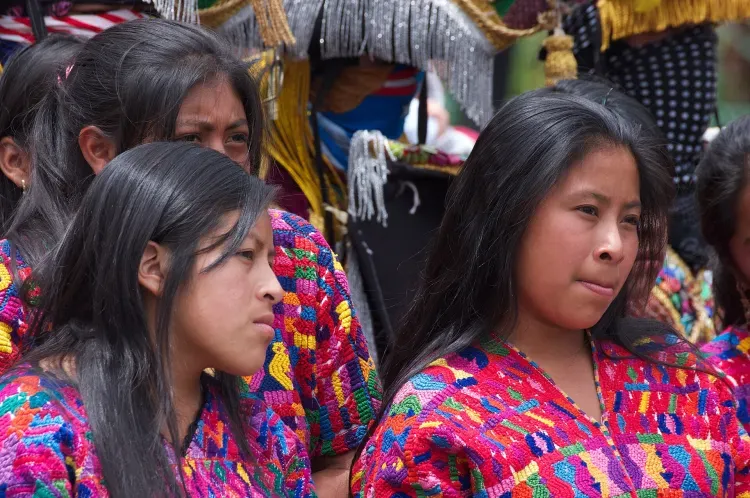
In the wake of the worst wildfires in living memory in Mexico and Central America in 2024, news outlets were looking for someone to blame. Howler monkeys and many species of parrots perished in the blazes. Slash and burn farming practices by Belize‘s indigenous communities were singled out as a primary cause. Yet this knee-jerk reaction is not evidence based and doesn’t take into account forces like corporate landgrabbing for mining and agribusinesses like meat, soy and palm oil.Belize’s indigenous Maya communities are rebuilding stronger based on the collective notion of se’ komonil: reciprocity, solidarity, traditional knowledge, gender equity, togetherness and community.
In the wake of horrific #wildfires in #Belize and #Mexico caused by #climatechange, #indigenous #Maya are rebuilding using the notion of se’ komonil: reciprocity #community and solidarity. #indigenousrights #landrights #BoycottPalmOil @palmoildetect wp.me/pcFhgU-924
Share to BlueSky
Share to Twitter
Written by James Stinson, Senior Research Associate and Evaluation Specialist, Young Lives Research Lab, Faculty of Education, York University, Canada and Lee Mcloughlin, PhD student, Global Sociocultural Studies, Florida International University This article is republished from The Conversation under a Creative Commons license. Read the original article.
Driven by extreme heat and drought, some of the worst wildfires in living memory raged across Mexico and Central America through April and May 2024.
News agencies reported howler monkeys dropping dead from trees, and parrots and other birds falling from the skies.
In Belize, a state of emergency was declared as wildfires burned tens of thousands of hectares of highly bio-diverse forest. Farmers suffered huge losses as fires destroyed crops and homes, and communities across the country suffered from hazardous air quality and hot, sleepless nights. Many risked their lives to fight off the approaching fires.
As the wildfire crisis subsided with rains in June, public attention shifted toward identifying the causes and allocating blame. Many singled out the “slash and burn” farming practices in Belize’s Indigenous communities as the primary cause. This simple knee-jerk reaction ignores the underlying causes of the climate crisis, are scientifically unfounded and stoke resentment of Indigenous Peoples.Young Mayan women. Image source: Wikipedia
Fanning the flames
On June 5, one of Belize’s major news networks ran a story with the headline “Are Primitive Farming Techniques Responsible for Wildfires?” The story placed blame for Belize’s wildfires on “slash-and-burn farming”, arguing that “there has to be a shift away from this destructive means of agriculture.”
The story was followed by an op-ed published online asserting that “because of the increased amounts of escaped agricultural fires, aided by climate change, global warming and drought, slash and burn has become more of a problem than the solution it once was.” This sentiment was further reinforced by Belize’s prime minister, who declared that “slash аnd burn has to be something of the past.”
While some of the recent fires in Belize were connected to agricultural burning — and poorly managed fire-clearing practices can have negative air-quality impacts — blaming “slash and burn” for the wildfire crisis ignores the larger context and conditions that made it possible, namely global warming.
May 2024 was the hottest and driest month in Belize’s history. This extreme heat is part of a broader global trend, with June 2024 marking the 13th consecutive “hottest month on record” globally.
More fundamentally, these statements confuse other forms of slash-and-burn agriculture with the distinct “milpa” systems employed by Indigenous people in Belize.
Indigenous knowledge undermined
Throughout Belize, Indigenous Maya farmers commonly practise a form of agriculture referred to as milpa in which fire is used to clear fields and fertilize the soil. Within this system, small areas of forest are chopped down, burned, and planted with maize, beans, squash and other crops. After being cultivated for a year or two, the field is then left fallow and allowed to regenerate back to forest cover while the farmers move on to a new area within a cyclical pattern where areas are reused after a regenerative period.
Commonly derided as slash-and-burn farming, milpa has long been perceived as environmentally destructive. This perspective has been perpetuated by long-standing myths and misconceptions that portray the farming practices of non-Europeans, and specifically the use of fire, as wasteful and irrational.
In Belize, this negative view of slash and burn has driven many colonial and post-colonial interventions to modernize Maya farming practices.
Recent research, however, has shown that the lands of Indigenous Peoples around the world have reduced deforestation and degradation rates relative to non-protected areas. The southern Toledo district of Belize, where the majority of Maya communities are located, boasts a forest cover rate of 71 per cent, significantly higher than the national average of 63 per cent.
Further research has found that the species composition of contemporary Mesoamerican forests has been shaped by the agricultural practices of ancient Maya farmers.
In Belize, fire has been found to play a role in promoting ecosystem health and resilience and intermediate levels of forest disturbance caused by milpa can increase species diversity. Well-managed milpa farming can support soil fertility, result in long-term carbon sequestration and enriched woodland vegetation.
Research has also shown that previous studies of deforestation in southern Belize significantly overestimated the rate of deforestation due to milpa agriculture by not accounting for its rotational process.
Many researchers now believe that milpa is a more benign alternative, in terms of environmental effects, than most other permanent farming systems in the humid tropics. Indeed, findings such as these have led to a growing appreciation for the role of Indigenous Peoples in advancing nature-based and life-enhancing climate solutions.
Unfortunately, research in the region has also found that climate change is undermining the ecological sustainability of milpa farming by forcing farmers to abandon traditional practices and adopt counterproductive measures in their struggle to adapt. In some cases, this has resulted in a decrease in the biodiversity and ecological resilience of the milpa system. This issue is compounded by the decreasing participation of young people, resulting in a further generational loss of traditional ecological knowledge.
Together, these issues are serving to alter and undermine a livelihood strategy that has proven sustainable for thousands of years. However, rather than call for Maya farmers to abandon slash and burn, we encourage support for the self-determined efforts of Maya communities to adapt to this changing climate. youtube.com/embed/ok787HRp_gA?… A video documenting the Maya response to the 2024 wildfire crisis.
Planting seeds of collaboration
Since winning a groundbreaking land rights claim in 2015, Maya communities in southern Belize have been working to promote an Indigenous future based on principles of reciprocity, solidarity, traditional knowledge, gender equity and, most significantly, se’ komonil, the Maya notion of togetherness and community.
Led by a collaboration of Maya leaders and non-governmental organizations, work toward this has included efforts to revitalize traditional institutions and governance systems, as well as the development of an Indigenous Forest Caring Strategy and fire-permitting system. In an effort to encourage and support the participation of youth in this process, Maya leaders have collaborated with the Young Lives Research Lab at York University to develop the Partnership for Youth and Planetary Wellbeing.
Building on previous research with Maya youth, the project has produced innovative youth-led research and education on the impacts of climate change, the importance of food sovereignty, traditional ecological knowledge and the struggle to secure Indigenous land rights in Maya communities. This work has been shared with global policymakers at the United Nations and local audiences in Belize.
Rather than fanning the flames of climate blame, we must work together to revitalize Indigenous knowledge systems and plant seeds of climate collaboration and care.
Written by James Stinson, Senior Research Associate and Evaluation Specialist, Young Lives Research Lab, Faculty of Education, York University, Canada and Lee Mcloughlin, PhD student, Global Sociocultural Studies, Florida International University This article is republished from The Conversation under a Creative Commons license. Read the original article.
ENDS
Read more about human rights abuses and child slavery in the palm oil and gold mining industries
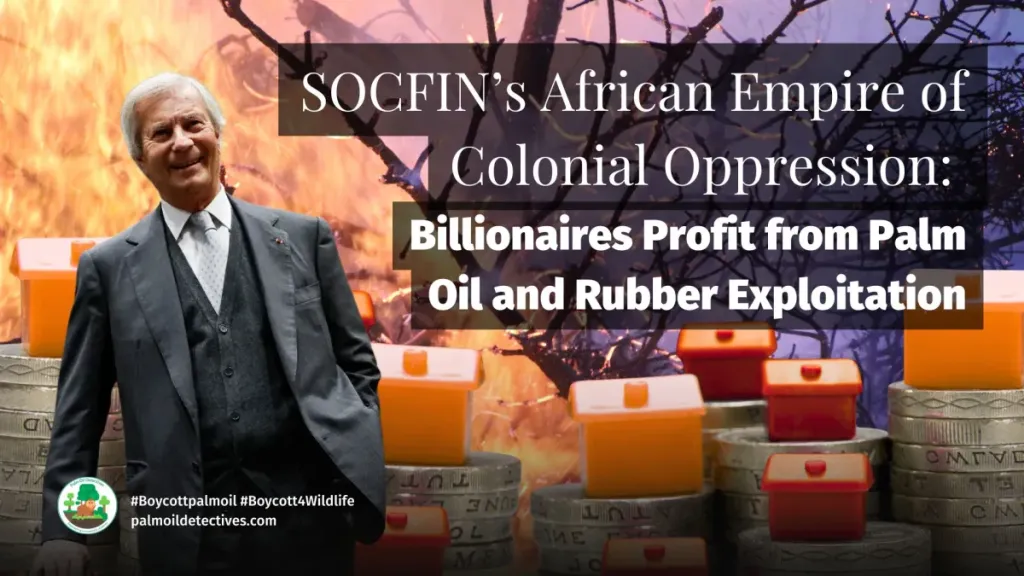
SOCFIN’s African Empire of Colonial Oppression: Billionaires Profit from Palm Oil and Rubber Exploitation
Investigation by Bloomberg exposes that despite being RSPO members, #SOCFIN plantations in #WestAfrica are the epicentre of #humanrights abuses, sexual coercion, environmental destruction, and #landgrabbing. Operating in #Liberia, #Ghana, #Nigeria, and beyond, SOCFIN’s…
Palm Oil Threatens Ancient Noken Weaving in West Papua
Colonial palm oil and sugarcane causing the loss of West Papuans’ cultural identity. Land grabs force communities from forests, threatening Noken weaving
Family Ties Expose Deforestation and Rights Violations in Indonesian Palm Oil
An explosive report by the Environment Investigation Agency (EIA) details how Indonesia’s Fangiono family, through a wide corporate web, is linked to ongoing #deforestation, #corruption, and #indigenousrights abuses for #palmoil. Calls mount for…
West Papuan Indigenous Women Fight Land Seizures
Indigenous Melanesian women in West Papua fight land seizures for palm oil and sugar plantations, protecting their ancestral rights. Join #BoycottPalmOil
Greasing the Wheels of Colonialism: Palm Oil Industry in West Papua
A landmark study published in Global Studies Quarterly in April 2025 has revealed that the rapid expansion of the #palmoil industry in #WestPapua is not only fuelling #deforestation, #ecocide and environmental destruction but…
Load more posts
Something went wrong. Please refresh the page and/or try again.
Take Action in Five Ways
1. Join the #Boycott4Wildlife on social media and subscribe to stay in the loop: Share posts from this website to your own network on Twitter, Mastadon, Instagram, Facebook and Youtube using the hashtags #Boycottpalmoil #Boycott4Wildlife.
Enter your email address
Sign Up
Join 3,171 other subscribers
2. Contribute stories: Academics, conservationists, scientists, indigenous rights advocates and animal rights advocates working to expose the corruption of the palm oil industry or to save animals can contribute stories to the website.
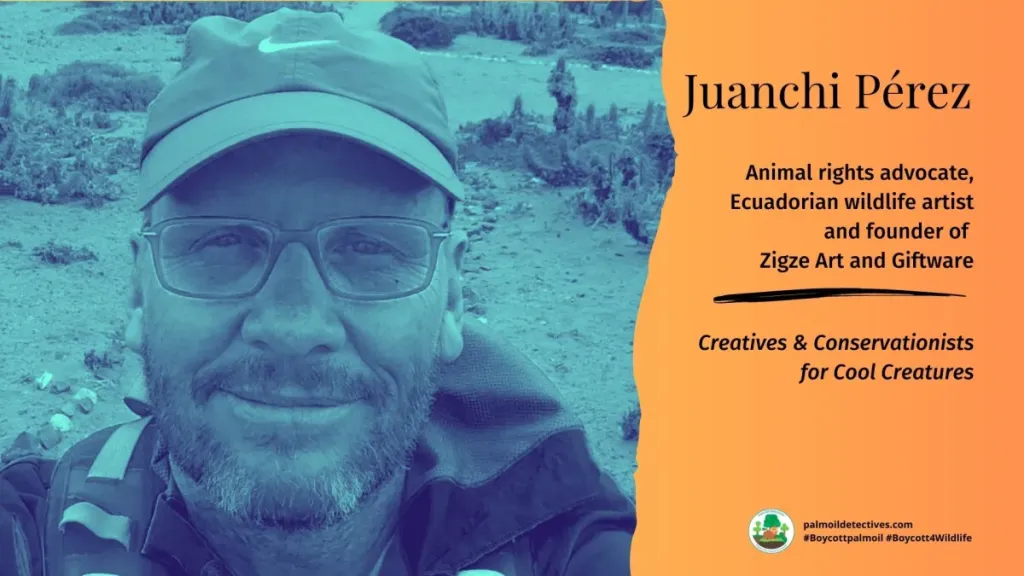
Wildlife Artist Juanchi Pérez
Mel Lumby: Dedicated Devotee to Borneo’s Living Beings
Anthropologist and Author Dr Sophie Chao
Health Physician Dr Evan Allen
The World’s Most Loved Cup: A Social, Ethical & Environmental History of Coffee by Aviary Doert
How do we stop the world’s ecosystems from going into a death spiral? A #SteadyState Economy
3. Supermarket sleuthing: Next time you’re in the supermarket, take photos of products containing palm oil. Share these to social media along with the hashtags to call out the greenwashing and ecocide of the brands who use palm oil. You can also take photos of palm oil free products and congratulate brands when they go palm oil free.
twitter.com/CuriousApe4/status…
twitter.com/PhillDixon1/status…
twitter.com/mugabe139/status/1…
4. Take to the streets: Get in touch with Palm Oil Detectives to find out more.
5. Donate: Make a one-off or monthly donation to Palm Oil Detectives as a way of saying thank you and to help pay for ongoing running costs of the website and social media campaigns. Donate here
#belize #boycottPalmOil #boycottpalmoil #childLabour #childSlavery #climatechange #community #goldMining #humanRights #hunger #indigenous #indigenousActivism #indigenousKnowledge #indigenousRights #indigenousrights #landRights #landgrabbing #landrights #maya #mexico #palmOil #poverty #slavery #wildfires
Partnership for Youth and Planetary Wellbeing Present Results at the Society for Applied Anthropology Conference - Dahdaleh Institute for Global Health Research
Dahdaleh research fellow James Stinson and research assistant Lee Mcloughlin recently presented at the Society for Applied Anthropology annual conference in Santa Fe, New Mexico on a panel titled "Decolonizing Alliances for the Post-Carbon Transition…hnawu (Dahdaleh Institute for Global Health Research)
SOCFIN’s African Empire of Colonial Oppression: Billionaires Profit from Palm Oil and Rubber Exploitation
An investigation by Bloomberg exposed that despite being RSPO members, #SOCFIN plantations in #WestAfrica are the epicentre of #humanrights abuses, sexual coercion, environmental destruction, and #landgrabbing. Operating in #Liberia, #Ghana, #Nigeria, and beyond, SOCFIN’s #rubber and #palmoil plantations continue historical colonial legacies of exploitation. Despite widespread evidence of abuse and deforestation, SOCFIN and its partners benefit from weak sustainability certifications such as #FSC and #RSPO. Europe and the US buy products directly linked to these violations, greenwashing the destruction in the process. Indigenous communities and workers are actively resisting this huge injustice —They seek proper redress in the form of stricter #EUDR regulations and better protections of their health, livelihoods and families. Consumers can boycott palm oil and rubber in solidarity. #BoycottPalmOil #Boycott4Wildlife#News: 🚨 #SOCFIN #palmoil and #rubber is linked to sexual #violence, forced #labour, #landgrabbing #deforestation in #WestAfrica🌴🔥🤢☠️🙊🚫 French tycoon Vincent Bolloré profits while communities suffer. 💀✊🏽 #BoycottPalmOil #Boycott4Wildlife palmoildetectives.com/2025/10/…
Share to BlueSky
Share to TwitterA recent Bloomberg investigation into SOCFIN, a plantation empire co-owned by French billionaire Vincent Bolloré, reveals ongoing human rights violations, sexual exploitation, deforestation, and colonial-style land grabs across West Africa. SOCFIN, based in Luxembourg and co-owned by Bolloré, operates sprawling palm oil and rubber plantations in Liberia, Ghana, Nigeria, Cameroon, and elsewhere. The investigation uncovered systemic abuses and environmental destruction, exposing the toxic greenwashing reality behind RSPO corporate sustainability claims.
According to Bloomberg’s extensive report published in April 2025, SOCFIN plantations in Liberia and Ghana are sites of widespread sexual coercion, rape and sexual abuse.
Women workers at the Liberian Agricultural Company (LAC) plantation, one of SOCFIN’s largest operations, routinely face demands for sex from supervisors as a condition for securing daily work. Women like Rebecca (a pseudonym) describe daily harassment and abuse, forced to accept demands out of economic necessity. Contract workers earn as little as $3.50 a day and face threats of dismissal if they refuse sexual advances.
Similar accounts emerge from SOCFIN’s Salala Rubber Corporation (SRC), recently sold after violent worker protests over labour abuses, inadequate medical care, and poor housing conditions. Women workers have described supervisors openly demanding sexual favours in exchange for continued employment. Mamie, a former SRC worker, described being violently raped by her supervisor after repeatedly refusing his advances. Such experiences remain common, despite superficial anti-harassment measures like “No Sexual Harassment” signs erected by the company (Bloomberg, 2025).
SOCFIN’s operations are rooted deeply in colonial history. Established in the Belgian Congo in the late 1800s, SOCFIN expanded aggressively during colonialism, exploiting rubber and palm oil resources across Africa and Asia. Today, its co-owners, Vincent Bolloré and Belgian businessman Hubert Fabri, control vast landholdings, perpetuating neo-colonial dynamics of wealth extraction. According to an article by Tony Lawson for Shoppe Black, the plantations replicate exploitative plantation models, extracting wealth from African land and labour for European profit, reminiscent of colonial rubber plantations and antebellum slave operations like Louisiana’s Nottoway Plantation.
This neo-colonial exploitation is glaringly evident in Nigeria, where SOCFIN’s subsidiary, Okumu Oil Palm Company, operates 19,062 hectares of palm plantations and 7,335 hectares of rubber plantations. Palm Oil Detectives (2024) documented widespread displacement of local Indigenous communities due to plantation expansion. Villages such as Lemon, Agbeda, and Oweike have been forcibly dismantled, leaving hundreds homeless. The affected communities received no compensation or consultation—violating international human rights standards on Free Prior and Informed Consent (FPIC).
Austin Lemon, whose family established Lemon village in 1969, recounted witnessing his ancestral land seized by SOCFIN and converted into plantations without consent or compensation. The trauma from losing their homes, livelihoods, and ancestral heritage remains profound, with many residents still unable to recover decades later.
In Ghana, SOCFIN’s Plantations Socfin Ghana (PSG) has systematically destroyed vital rainforests, despite clear warnings from environmental assessments. PSG admitted clearing over 1,089 hectares of natural forest between 2012 and 2016. The loss of biodiversity and increased carbon emissions from these activities directly exacerbate the climate crisis, severely impacting local rainfall patterns and agricultural productivity. Farmers around PSG’s plantations suffer reduced yields, poverty, and food insecurity.
Meanwhile, the EU continues to import vast quantities of palm oil and rubber from SOCFIN, despite mounting evidence of human rights violations and deforestation. Europe’s reliance on SOCFIN’s supply chains for products such as Michelin tyres, Nestlé’s consumer goods, and numerous cosmetic brands implicates major companies in these abuses. Investigations show European tyre manufacturers purchasing rubber sourced from plantations like Liberia’s LAC and SRC, despite credible allegations of labour abuses, sexual coercion, and land theft.
SOCFIN and its partners rely heavily on weak and ineffective sustainability schemes like the Roundtable on Sustainable Palm Oil (RSPO). But investigations repeatedly reveal these certifications as ineffectual greenwashing tools. For example, SOCFIN’s Cameroon plantations—RSPO-certified—face lawsuits alleging severe environmental damage and community displacement. Water pollution tests conducted near these plantations revealed dangerous contamination levels, threatening public health (Bloomberg, 2025).
Vincent Bolloré, despite his influential position as a major shareholder and board member, consistently denies responsibility, claiming limited involvement. Yet Bolloré’s role remains central. Known for his vast media empire and conservative political influence in France, Bolloré has maintained his SOCFIN stake despite decades of documented abuses. Lawsuits brought under French duty-of-vigilance laws now challenge Bolloré directly, arguing that his oversight constitutes effective control, making him legally responsible for SOCFIN’s actions.
Public pressure is growing. In 2024, Norway’s sovereign wealth fund excluded Bolloré Group and strongly recommended divestment from Bolloré and SOCFIN, citing overwhelming evidence of abuse. Luxembourg’s stock exchange delisted SOCFIN the same year, further isolating the company. Despite these actions, European governments and multinational corporations including the RSPO continue to support SOCFIN financially, facilitating ongoing abuses in Africa.
Communities across West Africa resist despite enormous personal risk. Liberian union leader Mary Boimah was jailed after protests against SRC’s labour conditions. Nigerian community member Iyabo Batu was shot by SOCFIN-affiliated security personnel while protesting environmental contamination and blocked access to her village. Despite these risks, communities persist in their demands for justice, compensation, and the return of their lands.
SOCFIN’s stated commitments to human rights and sustainability remain hollow. Decades of documented abuses, superficial responses to audits, and persistent denial illustrate systemic failure and wilful negligence. As long as global markets reward SOCFIN’s rubber and palm oil, the cycle of violence and exploitation will continue.
The time has come to demand real accountability. Regulators and law-makers in the EU and USA must recognise their complicity in human rights abuses and ecocide in palm oil and rubber supply chains. Until this time, people and landscapes will continue to suffer from forced labour, sexual coercion, and environmental destruction. SOCFIN’s ecocide and human rights abuses—must end now.
Learn more
Bloomberg. (2025, April 17). The Rubber Barons. Retrieved from bloomberg.com/features/2025-so…Palm Oil Detectives. (2024, July 31). Socfin’s Destructive Empire: Palm Oil Deforestation and Human Rights Abuses in West Africa. Retrieved from palmoildetectives.com/2024/07/…
Shoppe Black. (2025). Labor Abuses: Nottoway and Liberia Plantations. Retrieved from shoppeblack.us/labor-abuses-no…
ENDS
Read more about human rights abuses and child slavery in the palm oil industry
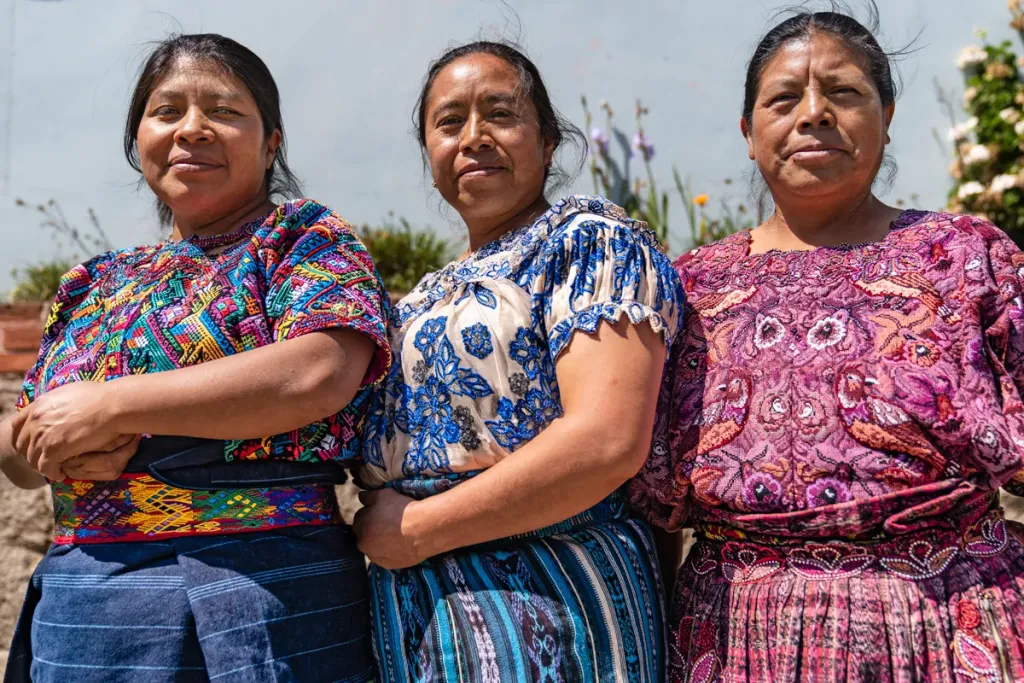
Indigenous Peoples Fight Climate Change
After wildfires, Belize’s indigenous people rebuild stronger based on “se’ komonil”: reciprocity, solidarity, gender equity, togetherness and community.Palm Oil Threatens Ancient Noken Weaving in West Papua
Colonial palm oil and sugarcane causing the loss of West Papuans’ cultural identity. Land grabs force communities from forests, threatening Noken weavingFamily Ties Expose Deforestation and Rights Violations in Indonesian Palm Oil
An explosive report by the Environment Investigation Agency (EIA) details how Indonesia’s Fangiono family, through a wide corporate web, is linked to ongoing #deforestation, #corruption, and #indigenousrights abuses for #palmoil. Calls mount for…West Papuan Indigenous Women Fight Land Seizures
Indigenous Melanesian women in West Papua fight land seizures for palm oil and sugar plantations, protecting their ancestral rights. Join #BoycottPalmOilGreasing the Wheels of Colonialism: Palm Oil Industry in West Papua
A landmark study published in Global Studies Quarterly in April 2025 has revealed that the rapid expansion of the #palmoil industry in #WestPapua is not only fuelling #deforestation, #ecocide and environmental destruction but…Load more posts
Something went wrong. Please refresh the page and/or try again.
Take Action in Five Ways
1. Join the #Boycott4Wildlife on social media and subscribe to stay in the loop: Share posts from this website to your own network on Twitter, Mastadon, Instagram, Facebook and Youtube using the hashtags #Boycottpalmoil #Boycott4Wildlife.
Enter your email addressSign Up
Join 3,171 other subscribers
2. Contribute stories: Academics, conservationists, scientists, indigenous rights advocates and animal rights advocates working to expose the corruption of the palm oil industry or to save animals can contribute stories to the website.
Wildlife Artist Juanchi Pérez
Mel Lumby: Dedicated Devotee to Borneo’s Living Beings
Anthropologist and Author Dr Sophie Chao
Health Physician Dr Evan Allen
The World’s Most Loved Cup: A Social, Ethical & Environmental History of Coffee by Aviary Doert
How do we stop the world’s ecosystems from going into a death spiral? A #SteadyState Economy
3. Supermarket sleuthing: Next time you’re in the supermarket, take photos of products containing palm oil. Share these to social media along with the hashtags to call out the greenwashing and ecocide of the brands who use palm oil. You can also take photos of palm oil free products and congratulate brands when they go palm oil free.
twitter.com/CuriousApe4/status…
twitter.com/PhillDixon1/status…
twitter.com/mugabe139/status/1…
4. Take to the streets: Get in touch with Palm Oil Detectives to find out more.
5. Donate: Make a one-off or monthly donation to Palm Oil Detectives as a way of saying thank you and to help pay for ongoing running costs of the website and social media campaigns. Donate here
#boycottPalmOil #boycott4wildlife #boycottpalmoil #childLabour #childSlavery #deforestation #eudr #fsc #ghana #greenwashing #humanRights #humanrights #indigenousRights #labour #landRights #landgrabbing #liberia #news #nigeria #palmOil #palmoil #rspo #rubber #slavery #socfin #violence #westafrica
Bolloré Group fined €12 million in Togo corruption case
French industrial group Bollore on Friday reached a settlement over a decade-old corruption case in Togo, prosecutors said, but a separate plea deal with three top company executives was thrown out by a judge.NEWS WIRES (FRANCE 24)
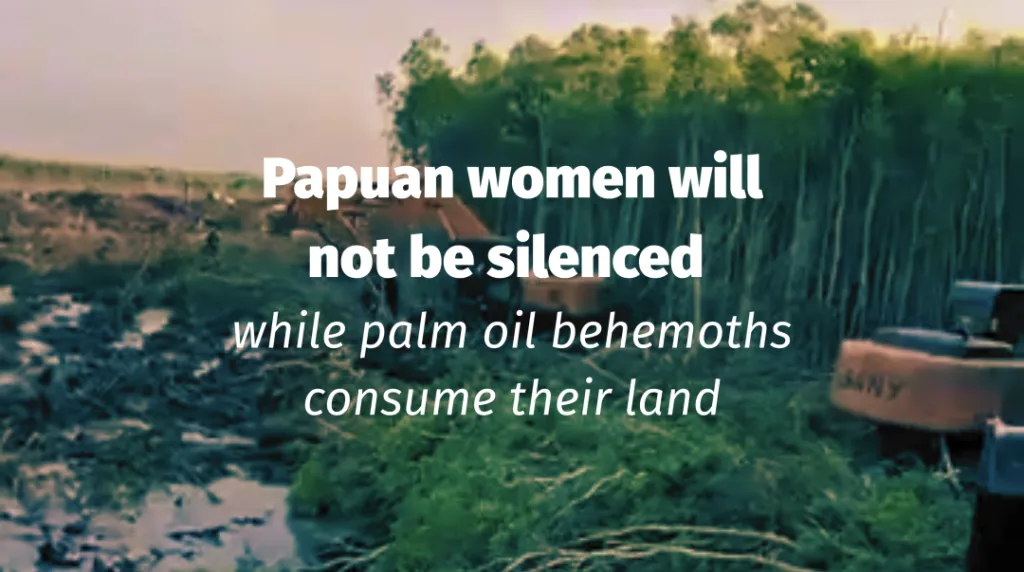
Papuan women will not be silenced while palm oil behemoths consume their land
In the colonised region of #WestPapua, Indigenous Melanesian women’s rights are being forgotten as companies and the Indonesian government seizes ancestral land for palm oil and sugar cane plantations — without owners’ consent. These women are fighting to protect customary lands for future generations. The following is a summarised version of a story published by Human Rights Watch, read the original ‘There will be nowhere left.’
#News: #Indigenous women’s #landrights trampled in #Papua as #palmoil giants seize forests and jostle for power —the women will not be silenced! 🚫🌴☠️ #BoycottPalmOil #Boycott4Wildlife @palmoildetect via @HRW palmoildetectives.com/2025/09/…
Share to BlueSky
Share to Twitter
Human Rights Watch. (2025, August 20). “There Will be Nowhere Left: Government, Companies Take Indigenous Lands Without Women’s Consent in Indonesia’s South Papua. hrw.org/feature/2025/08/20/the…
“Tomorrow, when everyone has sold their dusun (customary land), where will our children and grandchildren find food? There will be nowhere left. They’ll have to go to someone else’s dusun and buy food. That’s why I said no. I won’t let the company into my dusun. Let it remain for my children and grandchildren.”Imelda Maa via Human Rights Watch
Laurensia Yame is from the Indigenous community, the Awyu. She heard from women traders that workers were surveying the community’s forest for a company’s commercial use, including the hamlet where she farms.“My brother decided alone to work with the company and allow them into our village lands. He never discussed it with me. Instead, he worked with my father’s nephew, the only boy. But my uncle’s children don’t have land there. That land is my father’s land; it belongs to me.”
Laurensia Yame via Human Rights Watch
Rikarda Maa, a Maa clan member, attended the only meeting held in Ampera village. She recalled a discussion after which several men – including her uncle and a male cousin – signed documents provided by the company. Neither the company nor village representatives read the document aloud to the meeting participants, so women who went to observe didn’t know what exactly their male relatives signed away.
She later found out that her relatives’ signatures were used by the company to represent the Maa clan’s release of its claims to the land—even though her clan never met and discussed the company’s plans.Rikarda Maa via Human Rights Watch
A new investigation by Human Rights Watch finds that the world’s leading palm oil producer, Indonesia is rapidly expanding agricultural frontiers into Papua, especially the western New Guinea region. This aggressive and unrestrained expansion is driving mass deforestation and loss of Indigenous lands, as government and private companies move in—often without the consent of local women.
Customary lands known as dusun are central to the livelihoods and cultural identity of Indigenous Papuans. Women like Imelda Maa warn of the implications: “Tomorrow, when everyone has sold their dusun (customary land), where will our children and grandchildren find food? There will be nowhere left. They’ll have to go to someone else’s dusun and buy food. That’s why I said no. I won’t let the company into my dusun. Let it remain for my children and grandchildren.”
Despite Indonesian law requiring companies to obtain community consent—including through environmental and social impact assessments—the reality is different. Permits are granted after so-called consultations that routinely exclude women, even though under national law they possess equal land rights. As Laurensia Yame, from the Awyu community, explains: “My brother decided alone to work with the company and allow them into our village lands. He never discussed it with me. Instead, he worked with my father’s nephew, the only boy. But my uncle’s children don’t have land there. That land is my father’s land; it belongs to me.”
Corporate strategies to acquire land have included meetings involving only male representatives, leaving women’s voices ignored—even though both women and men inherit and use community lands. These decisions jeopardise food security, traditional livelihoods, and the ability of Indigenous families to sustain themselves.
While legally companies must engage with the whole affected community, testimonies highlight the persistent exclusion of women across South Papua. As the government authorises clearance of old-growth forests for palm oil, rice, and sugar cane, these vital lands are vanishing, sparking fears articulated by many Papuan women: there will be nowhere left for their descendants to survive.
The struggle continues as the Awyu and others campaign for the rights to their lands and forests—advocating for legal recognition and genuine, inclusive consultation, not just box-ticking exercises. The HRW report highlights the urgent need for indigenous-led land management and respect for women’s voices in decision-making.
Indonesia is the top producer of palm oil in the world, and Indonesian Papua – the western half of the island of New Guinea – is its final frontier for agriculture-driven deforestation.Rather than preserve the old, undisturbed trees, the Indonesian government is authorising companies to clear millions of hectares of primary forests, primarily for oil palm, rice, and sugar cane plantations.
Via Human Rights Watch
To acquire land and establish a plantation, companies are required by Indonesian law to obtain certain permits from relevant local government authorities and conduct environment and social impact assessments, which involves engaging with the affected community.Despite being half the community’s population and having equal land rights to men under national law, women’s voices were repeatedly ignored, including by the men in the Awyu community.
Via Human Rights Watch
Read more: “There Will be Nowhere Left: Government, Companies Take Indigenous Lands Without Women’s Consent in Indonesia’s South Papua,” by Human Rights Watch.
Original article was written by Juliana Nnoko, women’s rights senior researcher. Edited by a senior program editor, and Amy Braunschweiger, former communications associate director. James Ross, legal and policy director, and Joseph Saunders, deputy program director, provided legal and programmatic review, respectively.
Human Rights Watch. (2025, August 20). “There Will be Nowhere Left: Government, Companies Take Indigenous Lands Without Women’s Consent in Indonesia’s South Papua.” Human Rights Watch. hrw.org/feature/2025/08/20/the…
ENDS
Read more about human rights abuses and child slavery in the palm oil industry
Colonial Palm Oil Threatens Ancient Noken Weaving in West Papua
A powerful new indigenous art exhibition has highlighted the tragic loss of #WestPapua’s cultural identity due to #deforestation for #palmoil and #sugarcane monoculture plantations. A situation perpetuated by the illegal Indonesian colonisation of…
Family Ties Expose Deforestation and Rights Violations in Indonesian Palm Oil
An explosive report by the Environment Investigation Agency (EIA) details how Indonesia’s Fangiono family, through a wide corporate web, is linked to ongoing #deforestation, #corruption, and #indigenousrights abuses for #palmoil. Calls mount for…
Greasing the Wheels of Colonialism: Palm Oil Industry in West Papua
A landmark study published in Global Studies Quarterly in April 2025 has revealed that the rapid expansion of the #palmoil industry in #WestPapua is not only fuelling #deforestation, #ecocide and environmental destruction but…
Palm Oil Workers Expose Industry Practices Resembling Colonialism
Palm Oil Workers Expose Industry Practices Resembling Colonialism | A coalition of palm oil workers in Indonesia has unveiled industry practices that mirror colonial exploitation, including land grabbing, poor working conditions, and environmental…
Papua’s ‘Empty Lands’: A Dangerous Myth Displacing Indigenous Peoples
In #WestPapua, on illegally colonised and disputed land taken by violence from Melanesian Indigenous peoples last century by Indonesian forces, authorities label indigenous lands as “empty”. This is done in order to justify…
Load more posts
Something went wrong. Please refresh the page and/or try again.
Take Action in Five Ways
1. Join the #Boycott4Wildlife on social media and subscribe to stay in the loop: Share posts from this website to your own network on Twitter, Mastadon, Instagram, Facebook and Youtube using the hashtags #Boycottpalmoil #Boycott4Wildlife.
Enter your email address
Sign Up
Join 1,399 other subscribers
2. Contribute stories: Academics, conservationists, scientists, indigenous rights advocates and animal rights advocates working to expose the corruption of the palm oil industry or to save animals can contribute stories to the website.
Wildlife Artist Juanchi Pérez
Mel Lumby: Dedicated Devotee to Borneo’s Living Beings
Anthropologist and Author Dr Sophie Chao
Health Physician Dr Evan Allen
The World’s Most Loved Cup: A Social, Ethical & Environmental History of Coffee by Aviary Doert
How do we stop the world’s ecosystems from going into a death spiral? A #SteadyState Economy
3. Supermarket sleuthing: Next time you’re in the supermarket, take photos of products containing palm oil. Share these to social media along with the hashtags to call out the greenwashing and ecocide of the brands who use palm oil. You can also take photos of palm oil free products and congratulate brands when they go palm oil free.
twitter.com/CuriousApe4/status…
twitter.com/PhillDixon1/status…
twitter.com/mugabe139/status/1…
4. Take to the streets: Get in touch with Palm Oil Detectives to find out more.
5. Donate: Make a one-off or monthly donation to Palm Oil Detectives as a way of saying thank you and to help pay for ongoing running costs of the website and social media campaigns. Donate here
#BoycottPalmOil #Boycott4wildlife #BoycottPalmOil #childLabour #humanRights #indigenous #indigenousRights #landRights #landgrabbing #landrights #Melanesia #Melanesian #News #PalmOil #palmoil #Papua #slavery #WestPapua #womenSRights
“There Will be Nowhere Left”
Read a new feature on how the government and companies take Indigenous lands without women's consent in Indonesia's South Papua.Human Rights Watch
Family Ties Expose Deforestation and Rights Violations in Indonesian Palm Oil
An explosive report by the Environment Investigation Agency (EIA) details how Indonesia’s Fangiono family, through a wide corporate web, is linked to ongoing #deforestation, #corruption, and #indigenousrights abuses for #palmoil. Calls mount for governments to act immediately to strengthen the #EUDR. Consumers can act when we #BoycottPalmOil #Boycott4Wildlife #HumanRights#News: Shady family ties underlie Fangiono family’s #palmoil empire, peppered with #deforestation, rights abuse in #Indonesia 🌴☠️🧐 Demand change! #BoycottPalmOil #Boycott4Wildlife #HumanRights @palmoildetect palmoildetectives.com/2025/09/…
Share to BlueSky
Share to TwitterEIA & Kaoem Telapak. (2025, August 20). When deforestation, corruption and rights violations are just another palm oil family affair. [EIA]. eia-international.org/news/whe…
A new investigation by the Environmental Investigation Agency (EIA) UK and Kaoem Telapak exposes widespread alleged deforestation, corruption, and human rights abuses permeating Indonesia’s palm oil sector, tracing these patterns to the powerful Fangiono family and their sprawling corporate network. Despite public denials and ostensible sustainability commitments, the report finds disturbing evidence that companies linked to the family have persistently violated laws, destroyed forests, and displaced local and indigenous peoples.
Indonesia, the world’s largest palm oil producer—exporting products worth nearly $28 billion in 2024—remains a hotbed for land-grabbing and habitat loss. The report, A Family Affair, catalogues cases across Sumatra, Kalimantan, and Papua, each area inhabited by unique indigenous communities and affected by complex ecological shifts driven by industrial expansion.
Martias, the family patriarch, was convicted in 2007 for acquiring palm oil permits through corruption and bribery. Despite serving a sentence and paying fines, his relatives have increased their influence, now holding leadership positions in major groups such as First Resources, FAP Agri, and Ciliandry Anky Abadi. The report highlights a series of persistent issues, including illegal plantation expansion, continued deforestation after permit revocation, and land acquisition without proper consent.
“The Fangiono family’s activities are spread far and wide across Indonesia’s palm oil industry and all too often we find routine, flagrant violations of the law, human rights and the environment.”Senior Forests Campaigner Siobhan Pearce (EIA)
“This report reveals a governance failure that has enabled the Fangiono family’s corporate network to engage in deforestation, legal violations and the criminalisation of indigenous peoples. As long as groups… continue to operate without oversight, accountability or legal consequences, indigenous and local communities will keep losing their land, livelihoods and fundamental rights.”
Olvy Tumbelaka, Kaoem Telapak’s Senior Campaigner.
Corporate denials have done little to resolve the controversies. Although First Resources is a member of the RSPO, renowned for its so-called “sustainability” standards, the RSPO suspended its membership for three months in August 2025 after the company failed to demonstrate transparency regarding cross-ownership and shadow companies. The case reflects the broader limitations of voluntary industry certification and the persistent use of offshore entities to shield beneficial ownership from scrutiny.The EIA and Kaoem Telapak strongly urge authorities, companies, investors, and certification bodies to address these ongoing violations and demand accountability for persistent environmental and social harm. The findings serve as an urgent warning for policymakers, buyers, and consumers on the global risks of unchecked palm oil expansion. Learn more via EIA.
EIA & Kaoem Telapak. (2025, August 20). When deforestation, corruption and rights violations are just another palm oil family affair. [EIA]. eia-international.org/news/whe…
ENDS
Read more about human rights abuses and child slavery in the palm oil industry
Colonial Palm Oil Threatens Ancient Noken Weaving in West Papua
A powerful new indigenous art exhibition has highlighted the tragic loss of #WestPapua’s cultural identity due to #deforestation for #palmoil and #sugarcane monoculture plantations. A situation perpetuated by the illegal Indonesian colonisation of…Papuan women will not be silenced while palm oil behemoths consume their land
In the colonised region of #WestPapua, Indigenous Melanesian women’s rights are being forgotten as companies and the Indonesian government seizes ancestral land for palm oil and sugar cane plantations — without owners’ consent.…Greasing the Wheels of Colonialism: Palm Oil Industry in West Papua
A landmark study published in Global Studies Quarterly in April 2025 has revealed that the rapid expansion of the #palmoil industry in #WestPapua is not only fuelling #deforestation, #ecocide and environmental destruction but…Palm Oil Workers Expose Industry Practices Resembling Colonialism
Palm Oil Workers Expose Industry Practices Resembling Colonialism | A coalition of palm oil workers in Indonesia has unveiled industry practices that mirror colonial exploitation, including land grabbing, poor working conditions, and environmental…Papua’s ‘Empty Lands’: A Dangerous Myth Displacing Indigenous Peoples
In #WestPapua, on illegally colonised and disputed land taken by violence from Melanesian Indigenous peoples last century by Indonesian forces, authorities label indigenous lands as “empty”. This is done in order to justify…Load more posts
Something went wrong. Please refresh the page and/or try again.
Take Action in Five Ways
1. Join the #Boycott4Wildlife on social media and subscribe to stay in the loop: Share posts from this website to your own network on Twitter, Mastadon, Instagram, Facebook and Youtube using the hashtags #Boycottpalmoil #Boycott4Wildlife.
Enter your email addressSign Up
Join 1,399 other subscribers
2. Contribute stories: Academics, conservationists, scientists, indigenous rights advocates and animal rights advocates working to expose the corruption of the palm oil industry or to save animals can contribute stories to the website.
Wildlife Artist Juanchi Pérez
Mel Lumby: Dedicated Devotee to Borneo’s Living Beings
Anthropologist and Author Dr Sophie Chao
Health Physician Dr Evan Allen
The World’s Most Loved Cup: A Social, Ethical & Environmental History of Coffee by Aviary Doert
How do we stop the world’s ecosystems from going into a death spiral? A #SteadyState Economy
3. Supermarket sleuthing: Next time you’re in the supermarket, take photos of products containing palm oil. Share these to social media along with the hashtags to call out the greenwashing and ecocide of the brands who use palm oil. You can also take photos of palm oil free products and congratulate brands when they go palm oil free.
twitter.com/CuriousApe4/status…
twitter.com/PhillDixon1/status…
twitter.com/mugabe139/status/1…
4. Take to the streets: Get in touch with Palm Oil Detectives to find out more.
5. Donate: Make a one-off or monthly donation to Palm Oil Detectives as a way of saying thank you and to help pay for ongoing running costs of the website and social media campaigns. Donate here
#BoycottPalmOil #Boycott4wildlife #BoycottPalmOil #childLabour #childSlavery #corruption #deforestation #EUDR #greenwashing #humanRights #HumanRights #indigenousRights #indigenousrights #Indonesia #landRights #landgrabbing #News #PalmOil #palmoil #slavery
When deforestation, corruption and rights violations are just another palm oil family affair
We investigate and campaign against environmental crime and abuseEIA (Environmental Investigation Agency)
Family Ties Expose Deforestation and Rights Violations in Indonesian Palm Oil
An explosive report by the Environment Investigation Agency (EIA) details how Indonesia’s Fangiono family, through a wide corporate web, is linked to ongoing #deforestation, #corruption, and #indigenousrights abuses for #palmoil. Calls mount for governments to act immediately to strengthen the #EUDR. Consumers can act when we #BoycottPalmOil #Boycott4Wildlife #HumanRights
#News: Shady family ties underlie Fangiono family’s #palmoil empire, peppered with #deforestation, rights abuse in #Indonesia 🌴☠️🧐 Demand change! #BoycottPalmOil #Boycott4Wildlife #HumanRights @palmoildetect palmoildetectives.com/2025/09/…
Share to BlueSky
Share to Twitter
EIA & Kaoem Telapak. (2025, August 20). When deforestation, corruption and rights violations are just another palm oil family affair. [EIA]. eia-international.org/news/whe…
A new investigation by the Environmental Investigation Agency (EIA) UK and Kaoem Telapak exposes widespread alleged deforestation, corruption, and human rights abuses permeating Indonesia’s palm oil sector, tracing these patterns to the powerful Fangiono family and their sprawling corporate network. Despite public denials and ostensible sustainability commitments, the report finds disturbing evidence that companies linked to the family have persistently violated laws, destroyed forests, and displaced local and indigenous peoples.
Indonesia, the world’s largest palm oil producer—exporting products worth nearly $28 billion in 2024—remains a hotbed for land-grabbing and habitat loss. The report, A Family Affair, catalogues cases across Sumatra, Kalimantan, and Papua, each area inhabited by unique indigenous communities and affected by complex ecological shifts driven by industrial expansion.
Martias, the family patriarch, was convicted in 2007 for acquiring palm oil permits through corruption and bribery. Despite serving a sentence and paying fines, his relatives have increased their influence, now holding leadership positions in major groups such as First Resources, FAP Agri, and Ciliandry Anky Abadi. The report highlights a series of persistent issues, including illegal plantation expansion, continued deforestation after permit revocation, and land acquisition without proper consent.
“The Fangiono family’s activities are spread far and wide across Indonesia’s palm oil industry and all too often we find routine, flagrant violations of the law, human rights and the environment.”Senior Forests Campaigner Siobhan Pearce (EIA)
“This report reveals a governance failure that has enabled the Fangiono family’s corporate network to engage in deforestation, legal violations and the criminalisation of indigenous peoples. As long as groups… continue to operate without oversight, accountability or legal consequences, indigenous and local communities will keep losing their land, livelihoods and fundamental rights.”
Olvy Tumbelaka, Kaoem Telapak’s Senior Campaigner.
Corporate denials have done little to resolve the controversies. Although First Resources is a member of the RSPO, renowned for its so-called “sustainability” standards, the RSPO suspended its membership for three months in August 2025 after the company failed to demonstrate transparency regarding cross-ownership and shadow companies. The case reflects the broader limitations of voluntary industry certification and the persistent use of offshore entities to shield beneficial ownership from scrutiny.
The EIA and Kaoem Telapak strongly urge authorities, companies, investors, and certification bodies to address these ongoing violations and demand accountability for persistent environmental and social harm. The findings serve as an urgent warning for policymakers, buyers, and consumers on the global risks of unchecked palm oil expansion. Learn more via EIA.
EIA & Kaoem Telapak. (2025, August 20). When deforestation, corruption and rights violations are just another palm oil family affair. [EIA]. eia-international.org/news/whe…
ENDS
Read more about human rights abuses and child slavery in the palm oil industry
Colonial Palm Oil Threatens Ancient Noken Weaving in West Papua
A powerful new indigenous art exhibition has highlighted the tragic loss of #WestPapua’s cultural identity due to #deforestation for #palmoil and #sugarcane monoculture plantations. A situation perpetuated by the illegal Indonesian colonisation of…
Papuan women will not be silenced while palm oil behemoths consume their land
In the colonised region of #WestPapua, Indigenous Melanesian women’s rights are being forgotten as companies and the Indonesian government seizes ancestral land for palm oil and sugar cane plantations — without owners’ consent.…
Greasing the Wheels of Colonialism: Palm Oil Industry in West Papua
A landmark study published in Global Studies Quarterly in April 2025 has revealed that the rapid expansion of the #palmoil industry in #WestPapua is not only fuelling #deforestation, #ecocide and environmental destruction but…
Palm Oil Workers Expose Industry Practices Resembling Colonialism
Palm Oil Workers Expose Industry Practices Resembling Colonialism | A coalition of palm oil workers in Indonesia has unveiled industry practices that mirror colonial exploitation, including land grabbing, poor working conditions, and environmental…
Papua’s ‘Empty Lands’: A Dangerous Myth Displacing Indigenous Peoples
In #WestPapua, on illegally colonised and disputed land taken by violence from Melanesian Indigenous peoples last century by Indonesian forces, authorities label indigenous lands as “empty”. This is done in order to justify…
Load more posts
Something went wrong. Please refresh the page and/or try again.
Take Action in Five Ways
1. Join the #Boycott4Wildlife on social media and subscribe to stay in the loop: Share posts from this website to your own network on Twitter, Mastadon, Instagram, Facebook and Youtube using the hashtags #Boycottpalmoil #Boycott4Wildlife.
Enter your email address
Sign Up
Join 1,399 other subscribers
2. Contribute stories: Academics, conservationists, scientists, indigenous rights advocates and animal rights advocates working to expose the corruption of the palm oil industry or to save animals can contribute stories to the website.
Wildlife Artist Juanchi Pérez
Mel Lumby: Dedicated Devotee to Borneo’s Living Beings
Anthropologist and Author Dr Sophie Chao
Health Physician Dr Evan Allen
The World’s Most Loved Cup: A Social, Ethical & Environmental History of Coffee by Aviary Doert
How do we stop the world’s ecosystems from going into a death spiral? A #SteadyState Economy
3. Supermarket sleuthing: Next time you’re in the supermarket, take photos of products containing palm oil. Share these to social media along with the hashtags to call out the greenwashing and ecocide of the brands who use palm oil. You can also take photos of palm oil free products and congratulate brands when they go palm oil free.
twitter.com/CuriousApe4/status…
twitter.com/PhillDixon1/status…
twitter.com/mugabe139/status/1…
4. Take to the streets: Get in touch with Palm Oil Detectives to find out more.
5. Donate: Make a one-off or monthly donation to Palm Oil Detectives as a way of saying thank you and to help pay for ongoing running costs of the website and social media campaigns. Donate here
#BoycottPalmOil #Boycott4wildlife #BoycottPalmOil #childLabour #childSlavery #corruption #deforestation #EUDR #greenwashing #humanRights #HumanRights #indigenousRights #indigenousrights #Indonesia #landRights #landgrabbing #News #PalmOil #palmoil #slavery
When deforestation, corruption and rights violations are just another palm oil family affair
We investigate and campaign against environmental crime and abuseEIA (Environmental Investigation Agency)
Palm Oil Workers Expose Industry Practices Resembling Colonialism
Palm Oil Workers Expose Industry Practices Resembling Colonialism | A coalition of palm oil workers in Indonesia has unveiled industry practices that mirror colonial exploitation, including land grabbing, poor working conditions, and environmental degradation. These revelations highlight the urgent need to address systemic issues within the palm oil sector and advocate for indigenous rights. #HumanRights #IndigenousRights #BoycottPalmOil#News: Indonesian #palmoil workers reveal industry practices they liken to #colonial exploitation, including #landgrabbing and poor labor conditions. #HumanRights #IndigenousRights #BoycottPalmOil 🌴⛔️ @palmoildetect wp.me/pcFhgU-9Pm
Share to BlueSky
Share to TwitterTempo.co. (2024, December 20). Palm oil workers’ group unveils harmful industry practices akin to colonialism. Retrieved from en.tempo.co/read/1957496/palm-…
In a recent exposé, a coalition representing palm oil workers in Indonesia has brought to light industry practices that they equate to modern-day colonialism. The group highlights several critical issues, including land appropriation from indigenous communities, substandard working conditions, and significant environmental harm resulting from palm oil cultivation.
The coalition points to instances where large palm oil corporations have seized ancestral lands without proper consent or compensation, displacing indigenous populations and disrupting their traditional way of life. Workers within the industry report facing hazardous conditions, inadequate wages, and a lack of labour rights protections, drawing parallels to exploitative colonial labour systems.
Environmental concerns are also at the forefront, with the expansion of palm oil plantations leading to deforestation, loss of biodiversity, and increased greenhouse gas emissions. These practices not only harm the ecosystem but also undermine the livelihoods of local communities dependent on forest resources.
The coalition is calling for comprehensive reforms in the palm oil industry, emphasising the need for policies that respect indigenous land rights, ensure fair labor standards, and promote environmentally sustainable practices. They urge consumers and policymakers to support initiatives that hold corporations accountable and advocate for ethical sourcing of palm oil.
For a detailed account, read the full article on Tempo.co.
Tempo.co. (2024, December 20). Palm oil workers’ group unveils harmful industry practices akin to colonialism. Retrieved from en.tempo.co/read/1957496/palm-…
ENDS
Read more about human rights abuses and child slavery in the palm oil industry
Greasing the Wheels of Colonialism: Palm Oil Industry in West Papua
A landmark study published in Global Studies Quarterly in April 2025 has revealed that the rapid expansion of the #palmoil industry in #WestPapua is not only fuelling #deforestation, #ecocide and environmental destruction but…Papua’s ‘Empty Lands’: A Dangerous Myth Displacing Indigenous Peoples
In #WestPapua, on illegally colonised and disputed land taken by violence from Melanesian Indigenous peoples last century by Indonesian forces, authorities label indigenous lands as “empty”. This is done in order to justify…Research: Palm Oil Plantations Threaten Indigenous Waterways
Research: Palm Oil Plantations Threaten Indigenous Waterways | A study by the University of Massachusetts Amherst reveals that the expansion of oil palm plantations in West Papua’s Kais River watershed has significantly degraded…New Research: Indigenous Communities Reduce Amazon Deforestation by 83%”
Although #deforestation rates in the Brazilian #Amazon have halved, this globally critical biome is still losing more than 5,000km² every year. That’s an area three times larger than Greater London. By combining satellite…Concerns Mount Over Palm Oil Expansion in Nagaland
Concerns Mount Over Palm Oil Expansion in Nagaland | The Nagaland Climate Change Adaptation Forum (NCCAF) has raised grave concerns about the environmental and social impacts of expanding palm oil plantations in the…Load more posts
Something went wrong. Please refresh the page and/or try again.
Take Action in Five Ways
1. Join the #Boycott4Wildlife on social media and subscribe to stay in the loop: Share posts from this website to your own network on Twitter, Mastadon, Instagram, Facebook and Youtube using the hashtags #Boycottpalmoil #Boycott4Wildlife.
Enter your email addressSign Up
Join 1,396 other subscribers
2. Contribute stories: Academics, conservationists, scientists, indigenous rights advocates and animal rights advocates working to expose the corruption of the palm oil industry or to save animals can contribute stories to the website.
Wildlife Artist Juanchi Pérez
Mel Lumby: Dedicated Devotee to Borneo’s Living Beings
Anthropologist and Author Dr Sophie Chao
Health Physician Dr Evan Allen
The World’s Most Loved Cup: A Social, Ethical & Environmental History of Coffee by Aviary Doert
How do we stop the world’s ecosystems from going into a death spiral? A #SteadyState Economy
3. Supermarket sleuthing: Next time you’re in the supermarket, take photos of products containing palm oil. Share these to social media along with the hashtags to call out the greenwashing and ecocide of the brands who use palm oil. You can also take photos of palm oil free products and congratulate brands when they go palm oil free.
twitter.com/CuriousApe4/status…
twitter.com/PhillDixon1/status…
twitter.com/mugabe139/status/1…
4. Take to the streets: Get in touch with Palm Oil Detectives to find out more.
5. Donate: Make a one-off or monthly donation to Palm Oil Detectives as a way of saying thank you and to help pay for ongoing running costs of the website and social media campaigns. Donate here
#BoycottPalmOil #Boycott4wildlife #BoycottPalmOil #childLabour #childSlavery #colonial #humanRights #HumanRights #indigenousRights #indigenousrights #landRights #landgrabbing #News #PalmOil #palmoil #slavery
Papua’s ‘Empty Lands’: A Dangerous Myth Displacing Indigenous Peoples
In #WestPapua, on illegally colonised and disputed land taken by violence from Melanesian Indigenous peoples last century by Indonesian forces, authorities label indigenous lands as “empty”. This i…Palm Oil Detectives
Colonial Palm Oil Threatens Ancient Noken Weaving in West Papua
A powerful new indigenous art exhibition has highlighted the tragic loss of #WestPapua’s cultural identity due to #deforestation for #palmoil and #sugarcane monoculture plantations. A situation perpetuated by the illegal Indonesian colonisation of Melanesia. The ancient Melanesian tradition of noken weaving is under threat, as military-backed land grabs force Indigenous Muyu communities from their forests. Protect people and culture, when you shop make sure you #BoycottPalmOil #HumanRights #IndigenousRights
#News: Exhibition highlights vanishing of West Papua’s UNESCO recognised #noken weaving for #palmoil and #sugarcane in #WestPapua. Reject corporate #landgrabbing for palm oil in when you shop! #BoycottPalmOil #HumanRights #IndigenousRights @palmoildetect wp.me/pcFhgU-bmj
Share to BlueSky
Share to Twitter
Asia Pacific Report. (2025, March 28). Researcher warns over West Papuan deforestation impact on traditional noken weaving. Evening Report. eveningreport.nz/2025/03/28/re…
West Papuan doctoral candidate Veronika T. Kanem has issued a stark warning about the cultural and ecological destruction unfolding in Indonesia-occupied West Papua. As the region faces what may be the world’s largest deforestation project—two million hectares for palm oil and sugarcane—centuries-old Indigenous traditions are being pushed to the edge of existence.
Veronika T. Kanem, whose exhibition “Noken/Men: String Bags of the Muyu Tribe of Southern West Papua” opened at Auckland University, says the forced removal of her people from their forests has endangered not only biodiversity but the sacred art of noken weaving—a practice deeply embedded in the identity and social fabric of her father’s tribe, the Muyu.
Known locally as “men,” the noken is more than a string bag. Made from inner fibres of the genemo tree and other natural materials, noken symbolises a woman’s womb, a vessel of life used in ceremonies, food gathering, child-rearing, and cultural gift-giving. It holds economic, spiritual, and ancestral significance across Melanesia.
Now, industrial agriculture and military occupation threaten the entire cultural landscape. These new plantations are not only destroying forests; they are severing communities from their knowledge systems, their land, and each other.
Kanem’s research applies Indigenous Melanesian methodologies, using the act of noken weaving as a metaphor for knowledge, kinship, and resistance. Her work captures the lived experience of displacement and climate injustice at the intersection of colonial occupation, corporate extraction, and Indigenous resilience.
The Auckland exhibition also screened a documentary showcasing noken weaving traditions from across West Papua, including Asmat, Nabire, and Wamena. Speakers at the event, including Pacific scholars and artists, praised the project as a vital act of cultural preservation and defiance.
As Indonesia accelerates its colonial development schemes, the voices of West Papuans like Kanem are essential. Indigenous peoples must lead solutions to environmental destruction. Without indigenous justice, there can be no climate repair.
Defend West Papua’s forests and ancient indigenous cultures. Reject palm oil-driven genocide. #BoycottPalmOil #Boycott4Wildlife #HumanRights #IndigenousRights
Read more: Researcher warns over West Papuan deforestation impact on traditional noken weaving (Evening Report, 2025)
Asia Pacific Report. (2025, March 28). Researcher warns over West Papuan deforestation impact on traditional noken weaving. Evening Report. eveningreport.nz/2025/03/28/re…
ENDS
Read more about human rights abuses and child slavery in the palm oil industry
Family Ties Expose Deforestation and Rights Violations in Indonesian Palm Oil
An explosive report by the Environment Investigation Agency (EIA) details how Indonesia’s Fangiono family, through a wide corporate web, is linked to ongoing #deforestation, #corruption, and #indigenousrights abuses for #palmoil. Calls mount for…
Papuan women will not be silenced while palm oil behemoths consume their land
In the colonised region of #WestPapua, Indigenous Melanesian women’s rights are being forgotten as companies and the Indonesian government seizes ancestral land for palm oil and sugar cane plantations — without owners’ consent.…
Greasing the Wheels of Colonialism: Palm Oil Industry in West Papua
A landmark study published in Global Studies Quarterly in April 2025 has revealed that the rapid expansion of the #palmoil industry in #WestPapua is not only fuelling #deforestation, #ecocide and environmental destruction but…
Palm Oil Workers Expose Industry Practices Resembling Colonialism
Palm Oil Workers Expose Industry Practices Resembling Colonialism | A coalition of palm oil workers in Indonesia has unveiled industry practices that mirror colonial exploitation, including land grabbing, poor working conditions, and environmental…
Papua’s ‘Empty Lands’: A Dangerous Myth Displacing Indigenous Peoples
In #WestPapua, on illegally colonised and disputed land taken by violence from Melanesian Indigenous peoples last century by Indonesian forces, authorities label indigenous lands as “empty”. This is done in order to justify…
Load more posts
Something went wrong. Please refresh the page and/or try again.
Take Action in Five Ways
1. Join the #Boycott4Wildlife on social media and subscribe to stay in the loop: Share posts from this website to your own network on Twitter, Mastadon, Instagram, Facebook and Youtube using the hashtags #Boycottpalmoil #Boycott4Wildlife.
Enter your email address
Sign Up
Join 1,399 other subscribers
2. Contribute stories: Academics, conservationists, scientists, indigenous rights advocates and animal rights advocates working to expose the corruption of the palm oil industry or to save animals can contribute stories to the website.
Wildlife Artist Juanchi Pérez
Mel Lumby: Dedicated Devotee to Borneo’s Living Beings
Anthropologist and Author Dr Sophie Chao
Health Physician Dr Evan Allen
The World’s Most Loved Cup: A Social, Ethical & Environmental History of Coffee by Aviary Doert
How do we stop the world’s ecosystems from going into a death spiral? A #SteadyState Economy
3. Supermarket sleuthing: Next time you’re in the supermarket, take photos of products containing palm oil. Share these to social media along with the hashtags to call out the greenwashing and ecocide of the brands who use palm oil. You can also take photos of palm oil free products and congratulate brands when they go palm oil free.
twitter.com/CuriousApe4/status…
twitter.com/PhillDixon1/status…
twitter.com/mugabe139/status/1…
4. Take to the streets: Get in touch with Palm Oil Detectives to find out more.
5. Donate: Make a one-off or monthly donation to Palm Oil Detectives as a way of saying thank you and to help pay for ongoing running costs of the website and social media campaigns. Donate here
#art #BoycottPalmOil #Boycott4wildlife #BoycottPalmOil #childLabour #childSlavery #deforestation #humanRights #HumanRights #indigenousRights #indigenousrights #landRights #landgrabbing #News #noken #PalmOil #palmoil #slavery #sugarcane #WestPapua
Researcher warns over West Papuan deforestation impact on traditional noken weaving | Evening Report
Evening Report Provides daily analysis of geopolitics, politics, business, the economy and news. Evening Report also publishes and webcasts authoritative podcasts that analyse global issues and events.eveningreport.nz
Family Ties Expose Deforestation and Rights Violations in Indonesian Palm Oil
An explosive report by the Environment Investigation Agency (EIA) details how Indonesia’s Fangiono family, through a wide corporate web, is linked to ongoing #deforestation, #corruption, and #indigenousrights abuses for #palmoil. Calls mount for governments to act immediately to strengthen the #EUDR. Consumers can act when we #BoycottPalmOil #Boycott4Wildlife #HumanRights#News: Shady family ties underlie Fangiono family’s #palmoil empire, peppered with #deforestation, rights abuse in #Indonesia 🌴☠️🧐 Demand change! #BoycottPalmOil #Boycott4Wildlife #HumanRights @palmoildetect palmoildetectives.com/2025/09/…
Share to BlueSky
Share to TwitterEIA & Kaoem Telapak. (2025, August 20). When deforestation, corruption and rights violations are just another palm oil family affair. [EIA]. eia-international.org/news/whe…
A new investigation by the Environmental Investigation Agency (EIA) UK and Kaoem Telapak exposes widespread alleged deforestation, corruption, and human rights abuses permeating Indonesia’s palm oil sector, tracing these patterns to the powerful Fangiono family and their sprawling corporate network. Despite public denials and ostensible sustainability commitments, the report finds disturbing evidence that companies linked to the family have persistently violated laws, destroyed forests, and displaced local and indigenous peoples.
Indonesia, the world’s largest palm oil producer—exporting products worth nearly $28 billion in 2024—remains a hotbed for land-grabbing and habitat loss. The report, A Family Affair, catalogues cases across Sumatra, Kalimantan, and Papua, each area inhabited by unique indigenous communities and affected by complex ecological shifts driven by industrial expansion.
Martias, the family patriarch, was convicted in 2007 for acquiring palm oil permits through corruption and bribery. Despite serving a sentence and paying fines, his relatives have increased their influence, now holding leadership positions in major groups such as First Resources, FAP Agri, and Ciliandry Anky Abadi. The report highlights a series of persistent issues, including illegal plantation expansion, continued deforestation after permit revocation, and land acquisition without proper consent.
“The Fangiono family’s activities are spread far and wide across Indonesia’s palm oil industry and all too often we find routine, flagrant violations of the law, human rights and the environment.”Senior Forests Campaigner Siobhan Pearce (EIA)
“This report reveals a governance failure that has enabled the Fangiono family’s corporate network to engage in deforestation, legal violations and the criminalisation of indigenous peoples. As long as groups… continue to operate without oversight, accountability or legal consequences, indigenous and local communities will keep losing their land, livelihoods and fundamental rights.”
Olvy Tumbelaka, Kaoem Telapak’s Senior Campaigner.
Corporate denials have done little to resolve the controversies. Although First Resources is a member of the RSPO, renowned for its so-called “sustainability” standards, the RSPO suspended its membership for three months in August 2025 after the company failed to demonstrate transparency regarding cross-ownership and shadow companies. The case reflects the broader limitations of voluntary industry certification and the persistent use of offshore entities to shield beneficial ownership from scrutiny.The EIA and Kaoem Telapak strongly urge authorities, companies, investors, and certification bodies to address these ongoing violations and demand accountability for persistent environmental and social harm. The findings serve as an urgent warning for policymakers, buyers, and consumers on the global risks of unchecked palm oil expansion. Learn more via EIA.
EIA & Kaoem Telapak. (2025, August 20). When deforestation, corruption and rights violations are just another palm oil family affair. [EIA]. eia-international.org/news/whe…
ENDS
Read more about human rights abuses and child slavery in the palm oil industry
Colonial Palm Oil Threatens Ancient Noken Weaving in West Papua
A powerful new indigenous art exhibition has highlighted the tragic loss of #WestPapua’s cultural identity due to #deforestation for #palmoil and #sugarcane monoculture plantations. A situation perpetuated by the illegal Indonesian colonisation of…Papuan women will not be silenced while palm oil behemoths consume their land
In the colonised region of #WestPapua, Indigenous Melanesian women’s rights are being forgotten as companies and the Indonesian government seizes ancestral land for palm oil and sugar cane plantations — without owners’ consent.…Greasing the Wheels of Colonialism: Palm Oil Industry in West Papua
A landmark study published in Global Studies Quarterly in April 2025 has revealed that the rapid expansion of the #palmoil industry in #WestPapua is not only fuelling #deforestation, #ecocide and environmental destruction but…Palm Oil Workers Expose Industry Practices Resembling Colonialism
Palm Oil Workers Expose Industry Practices Resembling Colonialism | A coalition of palm oil workers in Indonesia has unveiled industry practices that mirror colonial exploitation, including land grabbing, poor working conditions, and environmental…Papua’s ‘Empty Lands’: A Dangerous Myth Displacing Indigenous Peoples
In #WestPapua, on illegally colonised and disputed land taken by violence from Melanesian Indigenous peoples last century by Indonesian forces, authorities label indigenous lands as “empty”. This is done in order to justify…Load more posts
Something went wrong. Please refresh the page and/or try again.
Take Action in Five Ways
1. Join the #Boycott4Wildlife on social media and subscribe to stay in the loop: Share posts from this website to your own network on Twitter, Mastadon, Instagram, Facebook and Youtube using the hashtags #Boycottpalmoil #Boycott4Wildlife.
Enter your email addressSign Up
Join 1,399 other subscribers
2. Contribute stories: Academics, conservationists, scientists, indigenous rights advocates and animal rights advocates working to expose the corruption of the palm oil industry or to save animals can contribute stories to the website.
Wildlife Artist Juanchi Pérez
Mel Lumby: Dedicated Devotee to Borneo’s Living Beings
Anthropologist and Author Dr Sophie Chao
Health Physician Dr Evan Allen
The World’s Most Loved Cup: A Social, Ethical & Environmental History of Coffee by Aviary Doert
How do we stop the world’s ecosystems from going into a death spiral? A #SteadyState Economy
3. Supermarket sleuthing: Next time you’re in the supermarket, take photos of products containing palm oil. Share these to social media along with the hashtags to call out the greenwashing and ecocide of the brands who use palm oil. You can also take photos of palm oil free products and congratulate brands when they go palm oil free.
twitter.com/CuriousApe4/status…
twitter.com/PhillDixon1/status…
twitter.com/mugabe139/status/1…
4. Take to the streets: Get in touch with Palm Oil Detectives to find out more.
5. Donate: Make a one-off or monthly donation to Palm Oil Detectives as a way of saying thank you and to help pay for ongoing running costs of the website and social media campaigns. Donate here
#BoycottPalmOil #Boycott4wildlife #BoycottPalmOil #childLabour #childSlavery #corruption #deforestation #EUDR #greenwashing #humanRights #HumanRights #indigenousRights #indigenousrights #Indonesia #landRights #landgrabbing #News #PalmOil #palmoil #slavery
When deforestation, corruption and rights violations are just another palm oil family affair
We investigate and campaign against environmental crime and abuseEIA (Environmental Investigation Agency)
"In case you haven’t noticed, Israel seems to be at war with pretty much fucking everybody right now and they show little sign of slowing down anytime in the near future. In fact, if anything, the Netanyahu regime seems to be accelerating the violence to downright dizzying heights of global sadism with every new corner of the map he bombs."
@palestine@fedibird.com @palestine@tagpush.app
@DrALJONES
#Sionism #IsraelTerroristState #IsraelWarCrimes #LandGrabbing #OccupiedTerritories #Palestine
counterpunch.org/2025/09/26/th…
The Project for a New Israeli Century - CounterPunch.org
In case you haven't noticed, Israel seems to be at war with pretty much fucking everybody right now and they show little sign of slowing down anytime inNicky Reid (CounterPunch.org)
"According to Global Witness, Brazil is the second deadliest country for environmental defenders after Colombia. Between 2021 and 2024, the CPT [Pastoral Land Commission] recorded 126 murders in rural conflicts."
brasildefato.com.br/2025/09/05…
#Ecocide #HumanRightsDefenders #EnvironmentalProtection #LandGrabbing #IndigenousRights #WarOnNature
#ClimateChange #GlobalWarming
‘Aren’t you afraid of dying?’: Amazon defenders face death threats and state neglect in Brazil
Pará é o estado mais violento para quem defende os direitos humanos; programas de proteção têm problemas estruturaisGiovana Guedes (Brasil de Fato)
@hoare_spitall
This has been going on for a loooong time. I suggest you watch Dr. Ralph Wilde's brilliant summary of the situation:
youtu.be/EUrLQES3TmY?si=YnUImg…
#OccupiedTerritories #Palestine #WesternComplicity #Genocide #LandGrabbing #ForcedEviction #Nabka #IsraelWarCrimes
Palm Oil Workers Expose Industry Practices Resembling Colonialism
Palm Oil Workers Expose Industry Practices Resembling Colonialism | A coalition of palm oil workers in Indonesia has unveiled industry practices that mirror colonial exploitation, including land grabbing, poor working conditions, and environmental degradation. These revelations highlight the urgent need to address systemic issues within the palm oil sector and advocate for indigenous rights. #HumanRights #IndigenousRights #BoycottPalmOil
#News: Indonesian #palmoil workers reveal industry practices they liken to #colonial exploitation, including #landgrabbing and poor labor conditions. #HumanRights #IndigenousRights #BoycottPalmOil 🌴⛔️ @palmoildetect wp.me/pcFhgU-9Pm
Share to BlueSky
Share to Twitter
Tempo.co. (2024, December 20). Palm oil workers’ group unveils harmful industry practices akin to colonialism. Retrieved from en.tempo.co/read/1957496/palm-…
In a recent exposé, a coalition representing palm oil workers in Indonesia has brought to light industry practices that they equate to modern-day colonialism. The group highlights several critical issues, including land appropriation from indigenous communities, substandard working conditions, and significant environmental harm resulting from palm oil cultivation.
The coalition points to instances where large palm oil corporations have seized ancestral lands without proper consent or compensation, displacing indigenous populations and disrupting their traditional way of life. Workers within the industry report facing hazardous conditions, inadequate wages, and a lack of labour rights protections, drawing parallels to exploitative colonial labour systems.
Environmental concerns are also at the forefront, with the expansion of palm oil plantations leading to deforestation, loss of biodiversity, and increased greenhouse gas emissions. These practices not only harm the ecosystem but also undermine the livelihoods of local communities dependent on forest resources.
The coalition is calling for comprehensive reforms in the palm oil industry, emphasising the need for policies that respect indigenous land rights, ensure fair labor standards, and promote environmentally sustainable practices. They urge consumers and policymakers to support initiatives that hold corporations accountable and advocate for ethical sourcing of palm oil.
For a detailed account, read the full article on Tempo.co.
Tempo.co. (2024, December 20). Palm oil workers’ group unveils harmful industry practices akin to colonialism. Retrieved from en.tempo.co/read/1957496/palm-…
ENDS
Read more about human rights abuses and child slavery in the palm oil industry
Greasing the Wheels of Colonialism: Palm Oil Industry in West Papua
A landmark study published in Global Studies Quarterly in April 2025 has revealed that the rapid expansion of the #palmoil industry in #WestPapua is not only fuelling #deforestation, #ecocide and environmental destruction but…
Papua’s ‘Empty Lands’: A Dangerous Myth Displacing Indigenous Peoples
In #WestPapua, on illegally colonised and disputed land taken by violence from Melanesian Indigenous peoples last century by Indonesian forces, authorities label indigenous lands as “empty”. This is done in order to justify…
Research: Palm Oil Plantations Threaten Indigenous Waterways
Research: Palm Oil Plantations Threaten Indigenous Waterways | A study by the University of Massachusetts Amherst reveals that the expansion of oil palm plantations in West Papua’s Kais River watershed has significantly degraded…
New Research: Indigenous Communities Reduce Amazon Deforestation by 83%”
Although #deforestation rates in the Brazilian #Amazon have halved, this globally critical biome is still losing more than 5,000km² every year. That’s an area three times larger than Greater London. By combining satellite…
Concerns Mount Over Palm Oil Expansion in Nagaland
Concerns Mount Over Palm Oil Expansion in Nagaland | The Nagaland Climate Change Adaptation Forum (NCCAF) has raised grave concerns about the environmental and social impacts of expanding palm oil plantations in the…
Load more posts
Something went wrong. Please refresh the page and/or try again.
Take Action in Five Ways
1. Join the #Boycott4Wildlife on social media and subscribe to stay in the loop: Share posts from this website to your own network on Twitter, Mastadon, Instagram, Facebook and Youtube using the hashtags #Boycottpalmoil #Boycott4Wildlife.
Enter your email address
Sign Up
Join 1,396 other subscribers
2. Contribute stories: Academics, conservationists, scientists, indigenous rights advocates and animal rights advocates working to expose the corruption of the palm oil industry or to save animals can contribute stories to the website.
Wildlife Artist Juanchi Pérez
Mel Lumby: Dedicated Devotee to Borneo’s Living Beings
Anthropologist and Author Dr Sophie Chao
Health Physician Dr Evan Allen
The World’s Most Loved Cup: A Social, Ethical & Environmental History of Coffee by Aviary Doert
How do we stop the world’s ecosystems from going into a death spiral? A #SteadyState Economy
3. Supermarket sleuthing: Next time you’re in the supermarket, take photos of products containing palm oil. Share these to social media along with the hashtags to call out the greenwashing and ecocide of the brands who use palm oil. You can also take photos of palm oil free products and congratulate brands when they go palm oil free.
twitter.com/CuriousApe4/status…
twitter.com/PhillDixon1/status…
twitter.com/mugabe139/status/1…
4. Take to the streets: Get in touch with Palm Oil Detectives to find out more.
5. Donate: Make a one-off or monthly donation to Palm Oil Detectives as a way of saying thank you and to help pay for ongoing running costs of the website and social media campaigns. Donate here
#BoycottPalmOil #Boycott4wildlife #BoycottPalmOil #childLabour #childSlavery #colonial #humanRights #HumanRights #indigenousRights #indigenousrights #landRights #landgrabbing #News #PalmOil #palmoil #slavery
Papua’s ‘Empty Lands’: A Dangerous Myth Displacing Indigenous Peoples
In #WestPapua, on illegally colonised and disputed land taken by violence from Melanesian Indigenous peoples last century by Indonesian forces, authorities label indigenous lands as “empty”. This i…Palm Oil Detectives
Concerns Mount Over Palm Oil Expansion in Nagaland
Concerns Mount Over Palm Oil Expansion in Nagaland | The Nagaland Climate Change Adaptation Forum (NCCAF) has raised grave concerns about the environmental and social impacts of expanding palm oil plantations in the Indian region of Nagaland. They highlight potential deforestation, loss of biodiversity, and threats to indigenous livelihoods. Instead, they advocate for agroecological practices, less intensive crops and indigenous-led conservation in order to protect the Nagaland’s irreplacable ecosystems. #BoycottPalmOil #Boycott4Wildlife#News: Forum in #Nagaland region of #India 🇮🇳 raises alarm over #palmoil expansion, citing huge risks to #biodiversity #climatechange and #indigenous livelihoods. #BoycottPalmOil 🌴🛢️🔥☠️🚫 #Boycott4Wildlife @palmoildetect wp.me/pcFhgU-9Pw
Share to BlueSky
Share to TwitterNagaland Post. (2024, December 17). NCCAF raises concern over oil palm plantations. Retrieved from nagalandpost.com/index.php/202…
The Nagaland Climate Change Adaptation Forum (NCCAF) has expressed significant concerns regarding the expansion of palm oil plantations in Nagaland, India. They warn that such developments could lead to deforestation, loss of biodiversity, and adverse effects on indigenous communities’ livelihoods.
The forum highlights that large-scale palm oil plantations are often linked to widespread deforestation. Nagaland’s unique ecosystems, home to rare flora and fauna, face significant threats if forests are replaced with monoculture crops. Such deforestation could disrupt water cycles, increase soil erosion, and lead to habitat loss for local wildlife.
Additionally, the forum points to soil degradation and water depletion as critical issues. Palm oil farming is water-intensive, placing added pressure on local water resources already stretched by agricultural needs. The use of chemical fertilisers and pesticides further risks contaminating soil and harming nearby communities.
Social consequences are equally concerning. The acquisition of land for plantations could displace Indigenous communities that depend on traditional farming and forest-based livelihoods. This displacement threatens not only food security but also the cultural heritage tied to these lands.
The forum has also criticised the economic model behind palm oil expansion, describing it as exploitative. While corporate stakeholders profit, local farmers are often left in financial distress due to fluctuating palm oil prices and the long maturity period for crops.
As an alternative, the forum advocates for sustainable farming practices that align with Nagaland’s ecological and cultural heritage. It suggests exploring crops that are less resource-intensive and offer long-term environmental benefits.
The forum has emphasised the importance of involving Indigenous communities in land-use decisions. Transparent policymaking that respects local rights is crucial for achieving a balance between economic development and ecological preservation.
The Nagaland Climate Change Adaptation Forum calls on the government, environmentalists, and the public to critically evaluate the long-term consequences of palm oil expansion. By prioritising sustainable alternatives, Nagaland can safeguard its biodiversity while fostering economic growth.
For a detailed account, read the full article on Nagaland Post.
Nagaland Post. (2024, December 17). NCCAF raises concern over oil palm plantations. Retrieved from nagalandpost.com/index.php/202…
ENDS
Read more about human rights abuses and child slavery in the palm oil industry
Palm Oil Is Ruining Kalangala Uganda — Locals Paying the Price
A catastrophic storm in #Uganda’s Kalangala district left nearly 1,000 households homeless. The real culprit? Rampant #deforestation for #palmoil. Once rich in native forests that buffered storms, Kalangala is now a fragile landscape…Violence for Palm Oil Against Peasant Communities in Honduras Meets Resistance
In the Aguán Valley of northern Honduras, peasant communities reclaiming ancestral lands face increasing violence and intimidation from armed groups linked to organised crime. The Dinant Corporation, a prominent palm oil producer, is…The Great Malaysian Timber and Palm Oil Swindle
A joint investigation by Malaysiakini and Pulitzer Center’s Rainforest Investigations Network (RIN) reveals alarming deforestation in Pahang, #Malaysia, caused by one of the country’s largest #palmoil plantations. The plantation threatens endangered species like…Deadly Harvest: How Demand for Palm Oil Fuels Corruption in Honduras
Latin America is the fastest-growing producer of palm oil, but at what price for the environment and its defenders? Park rangers in Honduras tell harrowing tales of daily threats to their lives and…Ten Victories and Challenges to Indigenous Rights in 2024
From Brazil’s action against illegal gold miners to the Sacred Headwaters Alliance defending the Amazon, these top Indigenous stories of 2024 highlight resilience and challenges. The year of 2024 underscored the importance of…Load more posts
Something went wrong. Please refresh the page and/or try again.
Take Action in Five Ways
1. Join the #Boycott4Wildlife on social media and subscribe to stay in the loop: Share posts from this website to your own network on Twitter, Mastadon, Instagram, Facebook and Youtube using the hashtags #Boycottpalmoil #Boycott4Wildlife.
Enter your email addressSign Up
Join 1,385 other subscribers
2. Contribute stories: Academics, conservationists, scientists, indigenous rights advocates and animal rights advocates working to expose the corruption of the palm oil industry or to save animals can contribute stories to the website.
Wildlife Artist Juanchi Pérez
Mel Lumby: Dedicated Devotee to Borneo’s Living Beings
Anthropologist and Author Dr Sophie Chao
Health Physician Dr Evan Allen
The World’s Most Loved Cup: A Social, Ethical & Environmental History of Coffee by Aviary Doert
How do we stop the world’s ecosystems from going into a death spiral? A #SteadyState Economy
3. Supermarket sleuthing: Next time you’re in the supermarket, take photos of products containing palm oil. Share these to social media along with the hashtags to call out the greenwashing and ecocide of the brands who use palm oil. You can also take photos of palm oil free products and congratulate brands when they go palm oil free.
twitter.com/CuriousApe4/status…
twitter.com/PhillDixon1/status…
twitter.com/mugabe139/status/1…
4. Take to the streets: Get in touch with Palm Oil Detectives to find out more.
5. Donate: Make a one-off or monthly donation to Palm Oil Detectives as a way of saying thank you and to help pay for ongoing running costs of the website and social media campaigns. Donate here
#biodiversity #BoycottPalmOil #Boycott4wildlife #BoycottPalmOil #childLabour #childSlavery #climatechange #humanRights #India #indigenous #indigenousRights #landRights #landgrabbing #Nagaland #News #PalmOil #palmoil #slavery
Loading more entries...