eia-international.org/blog/gre…
Green fuel compromised by dirty trade – a look at Indonesia’s palm oil export scandal - EIA
We investigate and campaign against environmental crime and abuseBen Melling (Environmental Investigation Agency)
Products using wood, cattle, cocoa, coffee, palm oil, rubber and soy are set to come under new U.K. deforestation legislation, similar to the EU’sBYTESEU (Bytes Europe)
Global efforts to curb deforestation are evolving beyond compliance, linking trade, climate finance, forest conservation and international cooperation.The 14 (The-14 Pictures)
Costa Rica aims to certify its entire coffee sector as deforestation-free to meet new EU rules. However, its "head start" masks a tougher road for other nations.
Can the rest of the world emulate this model, or will the EUDR leave resource-strapped producers behind?
Learn more in this report by Claudia Geib for #Mongabay. mongabay.cc/xeGMc7
Costa Rica’s famous coffee industry says it’s nearly ready for EUDR. The upcoming European Union Deforestation Regulation (EUDR) requires that all coffee shipped into the EU not come from recently deforested land, prompting Costa Rica to develop a pi…Jeremy Hance (Mongabay Environmental News)
Developed by researchers at the Federal University of Minas Gerais, Brazil’s Selo Verde platform offers a free public tool to check whether rural producers comply with environmental laws, including the upcoming EUDR.
Launched in Pará in 2021 and now used in several states, it cross-checks land use, deforestation, cattle transport and infractions. But experts say business uptake remains limited amid EUDR delays.
by Constance Malleret
news.mongabay.com/2026/02/in-b…
In 2020, a research paper published in the journal Science found that 20% of soy exports and at least 17% of beef exports from Brazil’s Cerrado and Amazon biomes to the European Union had been tainted by illegal deforestation.Jeremy Hance (Mongabay Environmental News)
From Dec. 30, 2026, companies importing many products into the EU must comply with the EUDR (deforestation-free regulation). Satellite and remote-sensing maps are expected to guide compliance and government checks.
But a new review finds most maps can’t yet meet EUDR standards — risking over- or underestimating deforestation. A major gap: distinguishing forests from agroforestry systems used by smallholder cocoa, coffee and rubber farmers.
by John Cannon
news.mongabay.com/2025/12/rese…
A recent scientific review of forest maps used to ensure compliance with the European Union’s Regulation on Deforestation-free products, known as the EUDR, suggests that most may over- or underestimate forest areas, which could lead to inaccurate ass…alexandrapopescu (Mongabay)
Global Canopy’s Forest 500 report reveals that 150 of the world’s largest financial institutions invested nearly $9 trillion in deforestation-linked industries during 2024, with six out of ten firms lacking any public deforestation policies. The analysis tracked $8.9 trillion in direct and indirect financial support for 500 companies exposed to forest-risk commodities including palm oil, soy, beef, cocoa, and timber, with $864 billion going to businesses making no public commitments against deforestation. Financial titans Vanguard, BlackRock and JPMorgan Chase alone accounted for more than one-fifth of total funding at $1.6 trillion. The EU’s upcoming Deforestation Regulation #EUDR will ban imports of products linked to forest destruction from December 30, potentially locking out companies without robust policies. Urgent action needed to redirect finance away from forest destruction and toward Indigenous-led forest protection. Support a strong and strict EUDR to safeguard forests, be vegan and #BoycottPalmOil #Boycott4Wildlife
💰☠️ $8.9 TRILLION funds deforestation! BlackRock, Vanguard, JPMorgan lead with $1.6T funding #palmoil, #soy and #meat #deforestation 🌴🔥 Support the #EUDR ban Dec 30 ⛔️ #BoycottPalmOil #Boycott4Wildlife @palmoildetect palmoildetectives.com/2025/12/…
Share to BlueSky
Share to Twitter
Sustainable Times. (2024). Global finance giants under fire for fueling an $8.9 trillion ‘deforestation economy’ in 2024. Sustainable Times. sustainabletimes.co.uk/post/gl…
The world’s largest financial institutions Vanguard, BlackRock, and JPMorgan Chase are bankrolling a massive $8.9 trillion deforestation economy whilst offering minimal safeguards against forest destruction, according to explosive new research that exposes the banking sector’s complicity in global environmental destruction.
Global Canopy’s comprehensive Forest 500 report tracked investments from 150 of the planet’s biggest financial institutions throughout 2024, revealing systematic funding of industries driving tropical rainforest annihilation across palm oil, soy, beef and timber sectors. The scale of financial exposure proves staggering, with institutions providing $8.9 trillion in direct and indirect support for 500 companies engaged in forest-risk commodities.
The research exposed catastrophic policy failures across the financial sector. Six out of ten institutions reviewed maintain no publicly stated deforestation policies whatsoever, representing only marginal improvement from the previous year when two-thirds lacked such protections. Even more alarming, fewer than four in ten financial giants openly acknowledge that deforestation poses business risks to their portfolios.
Three financial behemoths dominate the destruction economy. Vanguard, BlackRock, and JPMorgan Chase “alone were responsible for more than one-fifth of the total” funding, collectively channelling $1.6 trillion toward forest-risk industries. Their enormous market influence means policy changes from these titans “could trigger rapid change across the global financial system,” according to Global Canopy analysts.
The geographic concentration of destruction finance reveals systematic patterns. Beyond the United States, “China and France also emerged as central hubs of financial flows into deforestation-linked industries.” This concentration demonstrates how relatively few financial centres drive global forest destruction through investment decisions.
Perhaps most damning, nearly $864 billion flowed directly to companies making zero public commitments against deforestation. This represents “almost one in every ten dollars” of total financing going to businesses with no safeguards protecting tropical forests from destruction for palm oil plantations, cattle ranches, or soy cultivation.
Global Canopy researchers emphasised the sector’s transformative potential, stating: “Unless financial institutions engage portfolio companies to act on deforestation risk – for instance, through strong stewardship of investee companies – their financing activities will undermine the positive impact of any transition finance they provide.” However, they noted these “financial heavyweights could use their investment strategies to drive better practice and transform commodity supply chains for the better.”
The European Union’s new Deforestation Regulation dramatically increases pressure on financial institutions to implement robust policies. Beginning December 30, the EU “will ban large businesses from importing beef, cocoa, coffee, palm oil, natural rubber, soy, or wood if these products are linked to deforestation.” The ban will eventually extend to smaller businesses, creating comprehensive market exclusions for forest-destructive products.
This regulatory shift creates urgent risks for financial institutions backing non-compliant companies. “Without robust policies, they will find themselves backing companies that are locked out of key markets,” the report warns. Financial institutions face the prospect of massive portfolio devaluations as their investee companies lose access to lucrative European markets.
A handful of progressive institutions demonstrate viable alternatives. Banco Bilbao Vizcaya Argentaria, Deutsche Bank, and Lloyds Banking Group represent “the only institutions shown to be screening and monitoring all the highest-risk commodities.” Their comprehensive approaches “provide a blueprint for others to follow” in developing effective deforestation policies.
Global Canopy outlined essential components for credible deforestation policies extending “well beyond a vague pledge.” Effective policies require “clear standards for screening clients and portfolio holdings, active engagement to bring non-compliant firms into line, and strict deadlines for divestment if companies fail to improve.” Additionally, institutions must maintain “transparent reporting of progress and commitments to human rights safeguards.”
The analysis examined nine critical forest-risk commodities: “beef, cocoa, coffee, leather, palm oil, pulp and paper, soy, rubber, and timber.” Each sector drives habitat destruction threatening wildlife populations whilst displacing Indigenous communities dependent on intact forests for survival.
The report concludes that financial institutions possess “immense influence over whether deforestation is curbed or allowed to spiral further out of control.” Current investment patterns tell “a troubling story, but with the right commitments, banks and investment firms could become powerful drivers of change” toward forest protection rather than destruction.
Sustainable Times. (2024). Global finance giants under fire for fueling an $8.9 trillion ‘deforestation economy’ in 2024. Sustainable Times. sustainabletimes.co.uk/post/gl…
ENDS
Commodifying forests as merely an investment for ‘carbon credits’ has many dangerous loopholes that human rights to indigenous peoples, take action!
Saolas are rare and considered Southeast Asia’s ‘unicorns’, this Critically Endangered antelope is facing imminent extinction due to hunting and deforestation
Songbirds communicate with different species during nocturnal flights sharing vital info about navigation and stopover habitats. Save their fascinating world!
Pangolins get their name from the Malay ‘pengguling’ meaning rolling up. These special critically endangered animals deserve a break from savage poaching
Tucuxi, small freshwater dolphins of Peru Ecuador Colombia and Brazil are Endangered due to fishing nets, deforestation, mercury poisoning from gold mining.
Load more posts
Something went wrong. Please refresh the page and/or try again.
1. Join the #Boycott4Wildlife on social media and subscribe to stay in the loop: Share posts from this website to your own network on Twitter, Mastadon, Instagram, Facebook and Youtube using the hashtags #Boycottpalmoil #Boycott4Wildlife.
Enter your email address
Sign Up
Join 3,173 other subscribers
2. Contribute stories: Academics, conservationists, scientists, indigenous rights advocates and animal rights advocates working to expose the corruption of the palm oil industry or to save animals can contribute stories to the website.
3. Supermarket sleuthing: Next time you’re in the supermarket, take photos of products containing palm oil. Share these to social media along with the hashtags to call out the greenwashing and ecocide of the brands who use palm oil. You can also take photos of palm oil free products and congratulate brands when they go palm oil free.
twitter.com/CuriousApe4/status…
twitter.com/PhillDixon1/status…
twitter.com/mugabe139/status/1…
4. Take to the streets: Get in touch with Palm Oil Detectives to find out more.
5. Donate: Make a one-off or monthly donation to Palm Oil Detectives as a way of saying thank you and to help pay for ongoing running costs of the website and social media campaigns. Donate here
#BoycottPalmOil #Boycott4wildlife #BoycottPalmOil #corruption #crime #deforestation #ecocide #ecolabel #EUDR #greenwashing #meat #meatAgriculture #meatAndSoyDeforestationInBrazil #News #PalmOil #palmOilDeforestation #palmoil #soy
Urgent call to action! 🌍 #UK’s heavy use of #palmoil #soy & #beef fuels global #deforestation. Demand stricter regulations & transparency. Make every purchase count and #Boycottmeat #…Palm Oil Detectives
The Great Malaysian Timber and Palm Oil Swindle
A joint investigation by Malaysiakini and Pulitzer Center’s Rainforest Investigations Network (RIN) reveals alarming deforestation in Pahang, #Malaysia, caused by one of the country’s largest #palmoil plantations. The plantation threatens endangered species like #tigers and pollutes local water supplies. It has been described as “the worst-managed oil palm plantation in Malaysia.” Palm oil yields are low, while the #deforestation is chaotic, leaving the land barren and overrun with #elephants. The report highlights links between developers and political or royal ownership and rampant corruption and strongly pushes for more transparency, improved government oversight and regulatory enforcement. #BoycottPalmOil #Boycott4Wildlife#News: 🌴🇲🇾 Malaysiakini and Pulitzer investigation in #Malaysia: #Pahang’s badly managed #palmoil threatens endangered #tigers #elephants, disrupts villages. Rife with #corruption at highest level. #BoycottPalmOil 🌴☠️⛔️#Boycott4Wildlife @palmoildetect wp.me/pcFhgU-9GZ
Share to BlueSky
Share to TwitterGIJN. (2024, December 20). Timber grab: The truth behind Pahang oil palm plantation. Global Investigative Journalism Network. Retrieved from gijn.org/stories/2024-editors-…
An investigation by Malaysiakini, in collaboration with the Pulitzer Center’s Rainforest Investigations Network, has exposed the dire environmental and social impacts of one of Malaysia’s largest oil palm plantations in Pahang. Located near an environmentally protected area, the plantation’s operations have resulted in chaotic deforestation, disrupted water supplies, and threats to endangered wildlife, including tigers.
The plantation, described by an environmental consultant as “the worst-managed oil palm plantation in Malaysia,” has low palm oil yields and barren landscapes overrun with elephants. Developers often cite “wildlife conflict” to justify failures, shifting focus to logging valuable timber instead of sustainable plantation development.
Malaysiakini’s investigation also shed light on troubling links between plantation developers and political or royal interests, with 95% of the land developed by such entities. In December, the investigative team revealed that prominent banks provided large loans to plantation developers despite repeated project failures, questioning the banks’ credibility and oversight practices.
The investigation calls on the Malaysian government to tighten plantation approval processes and enforce environmental protections to prevent further harm to biodiversity and local communities.
For detailed insights, read the full Malaysiakini report via GIJN.
GIJN. (2024, December 20). Timber grab: The truth behind Pahang oil palm plantation. Global Investigative Journalism Network. Retrieved from gijn.org/stories/2024-editors-…
ENDS
Read more about human rights abuses and child slavery in the palm oil industry
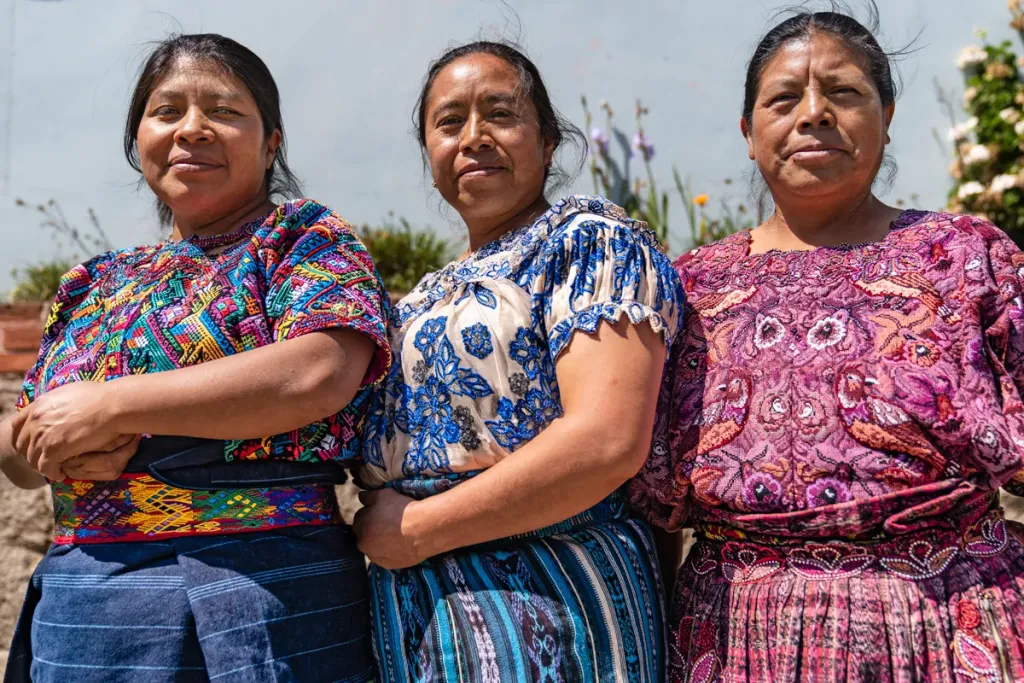
Violence for Palm Oil Against Peasant Communities in Honduras Meets Resistance
In the Aguán Valley of northern Honduras, peasant communities reclaiming ancestral lands face increasing violence and intimidation from armed groups linked to organised crime. The Dinant Corporation, a prominent palm oil producer, is…Deadly Harvest: How Demand for Palm Oil Fuels Corruption in Honduras
Latin America is the fastest-growing producer of palm oil, but at what price for the environment and its defenders? Park rangers in Honduras tell harrowing tales of daily threats to their lives and…Ten Victories and Challenges to Indigenous Rights in 2024
From Brazil’s action against illegal gold miners to the Sacred Headwaters Alliance defending the Amazon, these top Indigenous stories of 2024 highlight resilience and challenges. The year of 2024 underscored the importance of…Palm Oil Protesters Silenced and Arrested in Congo
On Tuesday, April 30, 2024, a shocking and disgraceful incident occurred in Kinshasa, the capital of the Democratic Republic of Congo (DRC). During a meeting of shareholders from Plantations et Huileries du Congo…Amazon Clarion Call: Pandemics Emerging in the Rainforest
The Amazon’s diverse ecosystem is under threat from rampant deforestation, degradation, a biodiversity crisis, and the climate crisis – jeopardising its ability to act as a carbon sink. This degradation increases the likelihood of zoonotic diseases emerging…Load more posts
Something went wrong. Please refresh the page and/or try again.
Take Action in Five Ways
1. Join the #Boycott4Wildlife on social media and subscribe to stay in the loop: Share posts from this website to your own network on Twitter, Mastadon, Instagram, Facebook and Youtube using the hashtags #Boycottpalmoil #Boycott4Wildlife.2. Contribute stories: Academics, conservationists, scientists, indigenous rights advocates and animal rights advocates working to expose the corruption of the palm oil industry or to save animals can contribute stories to the website.
Wildlife Artist Juanchi Pérez
Mel Lumby: Dedicated Devotee to Borneo’s Living Beings
Anthropologist and Author Dr Sophie Chao
Health Physician Dr Evan Allen
The World’s Most Loved Cup: A Social, Ethical & Environmental History of Coffee by Aviary Doert
How do we stop the world’s ecosystems from going into a death spiral? A #SteadyState Economy
3. Supermarket sleuthing: Next time you’re in the supermarket, take photos of products containing palm oil. Share these to social media along with the hashtags to call out the greenwashing and ecocide of the brands who use palm oil. You can also take photos of palm oil free products and congratulate brands when they go palm oil free.
twitter.com/CuriousApe4/status…
twitter.com/PhillDixon1/status…
twitter.com/mugabe139/status/1…
4. Take to the streets: Get in touch with Palm Oil Detectives to find out more.
5. Donate: Make a one-off or monthly donation to Palm Oil Detectives as a way of saying thank you and to help pay for ongoing running costs of the website and social media campaigns. Donate here
#BoycottPalmOil #Boycott4wildlife #BoycottPalmOil #childLabour #childSlavery #corruption #deforestation #elephants #humanRights #indigenousRights #landRights #landgrabbing #Malaysia #News #PalmOil #palmoil #plywood #slavery #supplyChain #supplychain #tigers #wood
Digital Slavery, Nickel Downstreaming, and Timber Grabbing: 2024’s Best Investigative Stories in Southeast Asia
This year’s picks emphasize the region’s increasingly sophisticated cross-border crimes, but also how investigative journalists consistently expose them.gijn.org
The EU has voted again to delay its landmark anti-deforestation law.
The amendment, passed 402–250, pushes EUDR implementation to Dec 2026, with small firms given until June 2027.
The law would ban imports of soy, beef, cocoa and palm oil linked to post-2020 deforestation.
Critics say repeated delays and new exemptions weaken the regulation.
by Shanna Hanbury
news.mongabay.com/short-articl…
#news #EU #EUDR #deforestation
The European Union has voted to postpone implementing a key antideforestation law for the second year in a row, citing technical concerns. Critics of the move warn that a delay and other proposed changes will further weaken the law. On Nov.Conservation news
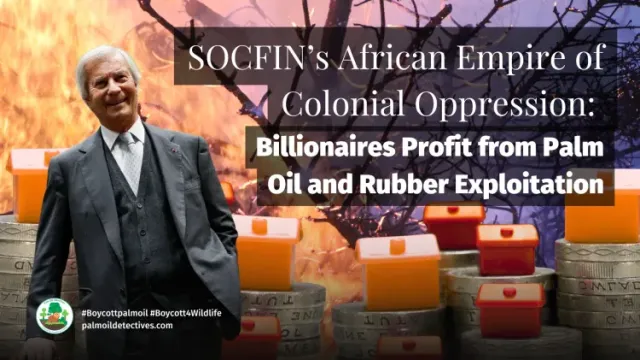
An investigation by Bloomberg exposed that despite being RSPO members, #SOCFIN plantations in #WestAfrica are the epicentre of #humanrights abuses, sexual coercion, environmental destruction, and #landgrabbing. Operating in #Liberia, #Ghana, #Nigeria, and beyond, SOCFIN’s #rubber and #palmoil plantations continue historical colonial legacies of exploitation. Despite widespread evidence of abuse and deforestation, SOCFIN and its partners benefit from weak sustainability certifications such as #FSC and #RSPO. Europe and the US buy products directly linked to these violations, greenwashing the destruction in the process. Indigenous communities and workers are actively resisting this huge injustice —They seek proper redress in the form of stricter #EUDR regulations and better protections of their health, livelihoods and families. Consumers can boycott palm oil and rubber in solidarity. #BoycottPalmOil #Boycott4Wildlife
#News: 🚨 #SOCFIN #palmoil and #rubber is linked to sexual #violence, forced #labour, #landgrabbing #deforestation in #WestAfrica🌴🔥🤢☠️🙊🚫 French tycoon Vincent Bolloré profits while communities suffer. 💀✊🏽 #BoycottPalmOil #Boycott4Wildlife palmoildetectives.com/2025/10/…
Share to BlueSky
Share to Twitter
A recent Bloomberg investigation into SOCFIN, a plantation empire co-owned by French billionaire Vincent Bolloré, reveals ongoing human rights violations, sexual exploitation, deforestation, and colonial-style land grabs across West Africa. SOCFIN, based in Luxembourg and co-owned by Bolloré, operates sprawling palm oil and rubber plantations in Liberia, Ghana, Nigeria, Cameroon, and elsewhere. The investigation uncovered systemic abuses and environmental destruction, exposing the toxic greenwashing reality behind RSPO corporate sustainability claims.
According to Bloomberg’s extensive report published in April 2025, SOCFIN plantations in Liberia and Ghana are sites of widespread sexual coercion, rape and sexual abuse.
Women workers at the Liberian Agricultural Company (LAC) plantation, one of SOCFIN’s largest operations, routinely face demands for sex from supervisors as a condition for securing daily work. Women like Rebecca (a pseudonym) describe daily harassment and abuse, forced to accept demands out of economic necessity. Contract workers earn as little as $3.50 a day and face threats of dismissal if they refuse sexual advances.
Similar accounts emerge from SOCFIN’s Salala Rubber Corporation (SRC), recently sold after violent worker protests over labour abuses, inadequate medical care, and poor housing conditions. Women workers have described supervisors openly demanding sexual favours in exchange for continued employment. Mamie, a former SRC worker, described being violently raped by her supervisor after repeatedly refusing his advances. Such experiences remain common, despite superficial anti-harassment measures like “No Sexual Harassment” signs erected by the company (Bloomberg, 2025).
SOCFIN’s operations are rooted deeply in colonial history. Established in the Belgian Congo in the late 1800s, SOCFIN expanded aggressively during colonialism, exploiting rubber and palm oil resources across Africa and Asia. Today, its co-owners, Vincent Bolloré and Belgian businessman Hubert Fabri, control vast landholdings, perpetuating neo-colonial dynamics of wealth extraction. According to an article by Tony Lawson for Shoppe Black, the plantations replicate exploitative plantation models, extracting wealth from African land and labour for European profit, reminiscent of colonial rubber plantations and antebellum slave operations like Louisiana’s Nottoway Plantation.
This neo-colonial exploitation is glaringly evident in Nigeria, where SOCFIN’s subsidiary, Okumu Oil Palm Company, operates 19,062 hectares of palm plantations and 7,335 hectares of rubber plantations. Palm Oil Detectives (2024) documented widespread displacement of local Indigenous communities due to plantation expansion. Villages such as Lemon, Agbeda, and Oweike have been forcibly dismantled, leaving hundreds homeless. The affected communities received no compensation or consultation—violating international human rights standards on Free Prior and Informed Consent (FPIC).
Austin Lemon, whose family established Lemon village in 1969, recounted witnessing his ancestral land seized by SOCFIN and converted into plantations without consent or compensation. The trauma from losing their homes, livelihoods, and ancestral heritage remains profound, with many residents still unable to recover decades later.
In Ghana, SOCFIN’s Plantations Socfin Ghana (PSG) has systematically destroyed vital rainforests, despite clear warnings from environmental assessments. PSG admitted clearing over 1,089 hectares of natural forest between 2012 and 2016. The loss of biodiversity and increased carbon emissions from these activities directly exacerbate the climate crisis, severely impacting local rainfall patterns and agricultural productivity. Farmers around PSG’s plantations suffer reduced yields, poverty, and food insecurity.
Meanwhile, the EU continues to import vast quantities of palm oil and rubber from SOCFIN, despite mounting evidence of human rights violations and deforestation. Europe’s reliance on SOCFIN’s supply chains for products such as Michelin tyres, Nestlé’s consumer goods, and numerous cosmetic brands implicates major companies in these abuses. Investigations show European tyre manufacturers purchasing rubber sourced from plantations like Liberia’s LAC and SRC, despite credible allegations of labour abuses, sexual coercion, and land theft.
SOCFIN and its partners rely heavily on weak and ineffective sustainability schemes like the Roundtable on Sustainable Palm Oil (RSPO). But investigations repeatedly reveal these certifications as ineffectual greenwashing tools. For example, SOCFIN’s Cameroon plantations—RSPO-certified—face lawsuits alleging severe environmental damage and community displacement. Water pollution tests conducted near these plantations revealed dangerous contamination levels, threatening public health (Bloomberg, 2025).
Vincent Bolloré, despite his influential position as a major shareholder and board member, consistently denies responsibility, claiming limited involvement. Yet Bolloré’s role remains central. Known for his vast media empire and conservative political influence in France, Bolloré has maintained his SOCFIN stake despite decades of documented abuses. Lawsuits brought under French duty-of-vigilance laws now challenge Bolloré directly, arguing that his oversight constitutes effective control, making him legally responsible for SOCFIN’s actions.
Public pressure is growing. In 2024, Norway’s sovereign wealth fund excluded Bolloré Group and strongly recommended divestment from Bolloré and SOCFIN, citing overwhelming evidence of abuse. Luxembourg’s stock exchange delisted SOCFIN the same year, further isolating the company. Despite these actions, European governments and multinational corporations including the RSPO continue to support SOCFIN financially, facilitating ongoing abuses in Africa.
Communities across West Africa resist despite enormous personal risk. Liberian union leader Mary Boimah was jailed after protests against SRC’s labour conditions. Nigerian community member Iyabo Batu was shot by SOCFIN-affiliated security personnel while protesting environmental contamination and blocked access to her village. Despite these risks, communities persist in their demands for justice, compensation, and the return of their lands.
SOCFIN’s stated commitments to human rights and sustainability remain hollow. Decades of documented abuses, superficial responses to audits, and persistent denial illustrate systemic failure and wilful negligence. As long as global markets reward SOCFIN’s rubber and palm oil, the cycle of violence and exploitation will continue.
The time has come to demand real accountability. Regulators and law-makers in the EU and USA must recognise their complicity in human rights abuses and ecocide in palm oil and rubber supply chains. Until this time, people and landscapes will continue to suffer from forced labour, sexual coercion, and environmental destruction. SOCFIN’s ecocide and human rights abuses—must end now.
Bloomberg. (2025, April 17). The Rubber Barons. Retrieved from bloomberg.com/features/2025-so…
Palm Oil Detectives. (2024, July 31). Socfin’s Destructive Empire: Palm Oil Deforestation and Human Rights Abuses in West Africa. Retrieved from palmoildetectives.com/2024/07/…
Shoppe Black. (2025). Labor Abuses: Nottoway and Liberia Plantations. Retrieved from shoppeblack.us/labor-abuses-no…
ENDS
After wildfires, Belize’s indigenous people rebuild stronger based on “se’ komonil”: reciprocity, solidarity, gender equity, togetherness and community.
Colonial palm oil and sugarcane causing the loss of West Papuans’ cultural identity. Land grabs force communities from forests, threatening Noken weaving
An explosive report by the Environment Investigation Agency (EIA) details how Indonesia’s Fangiono family, through a wide corporate web, is linked to ongoing #deforestation, #corruption, and #indigenousrights abuses for #palmoil. Calls mount for…
Indigenous Melanesian women in West Papua fight land seizures for palm oil and sugar plantations, protecting their ancestral rights. Join #BoycottPalmOil
A landmark study published in Global Studies Quarterly in April 2025 has revealed that the rapid expansion of the #palmoil industry in #WestPapua is not only fuelling #deforestation, #ecocide and environmental destruction but…
Load more posts
Something went wrong. Please refresh the page and/or try again.
1. Join the #Boycott4Wildlife on social media and subscribe to stay in the loop: Share posts from this website to your own network on Twitter, Mastadon, Instagram, Facebook and Youtube using the hashtags #Boycottpalmoil #Boycott4Wildlife.
Enter your email address
Sign Up
Join 3,171 other subscribers
2. Contribute stories: Academics, conservationists, scientists, indigenous rights advocates and animal rights advocates working to expose the corruption of the palm oil industry or to save animals can contribute stories to the website.
3. Supermarket sleuthing: Next time you’re in the supermarket, take photos of products containing palm oil. Share these to social media along with the hashtags to call out the greenwashing and ecocide of the brands who use palm oil. You can also take photos of palm oil free products and congratulate brands when they go palm oil free.
twitter.com/CuriousApe4/status…
twitter.com/PhillDixon1/status…
twitter.com/mugabe139/status/1…
4. Take to the streets: Get in touch with Palm Oil Detectives to find out more.
5. Donate: Make a one-off or monthly donation to Palm Oil Detectives as a way of saying thank you and to help pay for ongoing running costs of the website and social media campaigns. Donate here
#boycottPalmOil #boycott4wildlife #boycottpalmoil #childLabour #childSlavery #deforestation #eudr #fsc #ghana #greenwashing #humanRights #humanrights #indigenousRights #labour #landRights #landgrabbing #liberia #news #nigeria #palmOil #palmoil #rspo #rubber #slavery #socfin #violence #westafrica
French industrial group Bollore on Friday reached a settlement over a decade-old corruption case in Togo, prosecutors said, but a separate plea deal with three top company executives was thrown out by a judge.NEWS WIRES (FRANCE 24)
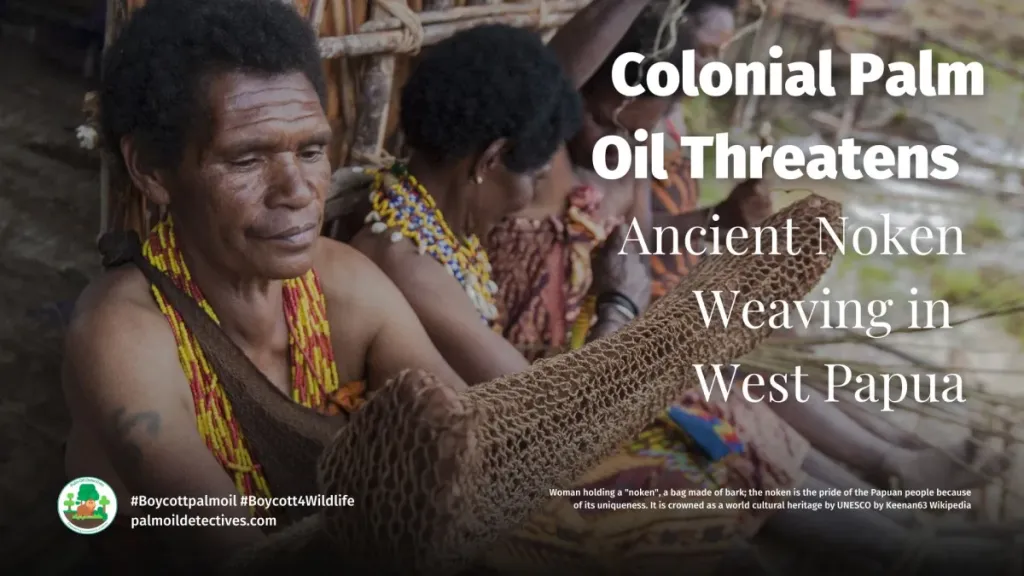
Colonial Palm Oil Threatens Ancient Noken Weaving in West Papua
A powerful new indigenous art exhibition has highlighted the tragic loss of #WestPapua’s cultural identity due to #deforestation for #palmoil and #sugarcane monoculture plantations. A situation perpetuated by the illegal Indonesian colonisation of Melanesia. The ancient Melanesian tradition of noken weaving is under threat, as military-backed land grabs force Indigenous Muyu communities from their forests. Protect people and culture, when you shop make sure you #BoycottPalmOil #HumanRights #IndigenousRights#News: Exhibition highlights vanishing of West Papua’s UNESCO recognised #noken weaving for #palmoil and #sugarcane in #WestPapua. Reject corporate #landgrabbing for palm oil in when you shop! #BoycottPalmOil #HumanRights #IndigenousRights @palmoildetect wp.me/pcFhgU-bmj
Share to BlueSky
Share to TwitterAsia Pacific Report. (2025, March 28). Researcher warns over West Papuan deforestation impact on traditional noken weaving. Evening Report. eveningreport.nz/2025/03/28/re…
West Papuan doctoral candidate Veronika T. Kanem has issued a stark warning about the cultural and ecological destruction unfolding in Indonesia-occupied West Papua. As the region faces what may be the world’s largest deforestation project—two million hectares for palm oil and sugarcane—centuries-old Indigenous traditions are being pushed to the edge of existence.
Veronika T. Kanem, whose exhibition “Noken/Men: String Bags of the Muyu Tribe of Southern West Papua” opened at Auckland University, says the forced removal of her people from their forests has endangered not only biodiversity but the sacred art of noken weaving—a practice deeply embedded in the identity and social fabric of her father’s tribe, the Muyu.
Known locally as “men,” the noken is more than a string bag. Made from inner fibres of the genemo tree and other natural materials, noken symbolises a woman’s womb, a vessel of life used in ceremonies, food gathering, child-rearing, and cultural gift-giving. It holds economic, spiritual, and ancestral significance across Melanesia.
Now, industrial agriculture and military occupation threaten the entire cultural landscape. These new plantations are not only destroying forests; they are severing communities from their knowledge systems, their land, and each other.
Kanem’s research applies Indigenous Melanesian methodologies, using the act of noken weaving as a metaphor for knowledge, kinship, and resistance. Her work captures the lived experience of displacement and climate injustice at the intersection of colonial occupation, corporate extraction, and Indigenous resilience.The Auckland exhibition also screened a documentary showcasing noken weaving traditions from across West Papua, including Asmat, Nabire, and Wamena. Speakers at the event, including Pacific scholars and artists, praised the project as a vital act of cultural preservation and defiance.
As Indonesia accelerates its colonial development schemes, the voices of West Papuans like Kanem are essential. Indigenous peoples must lead solutions to environmental destruction. Without indigenous justice, there can be no climate repair.
Defend West Papua’s forests and ancient indigenous cultures. Reject palm oil-driven genocide. #BoycottPalmOil #Boycott4Wildlife #HumanRights #IndigenousRights
Read more: Researcher warns over West Papuan deforestation impact on traditional noken weaving (Evening Report, 2025)
Asia Pacific Report. (2025, March 28). Researcher warns over West Papuan deforestation impact on traditional noken weaving. Evening Report. eveningreport.nz/2025/03/28/re…ENDS
Read more about human rights abuses and child slavery in the palm oil industry
Family Ties Expose Deforestation and Rights Violations in Indonesian Palm Oil
An explosive report by the Environment Investigation Agency (EIA) details how Indonesia’s Fangiono family, through a wide corporate web, is linked to ongoing #deforestation, #corruption, and #indigenousrights abuses for #palmoil. Calls mount for…Papuan women will not be silenced while palm oil behemoths consume their land
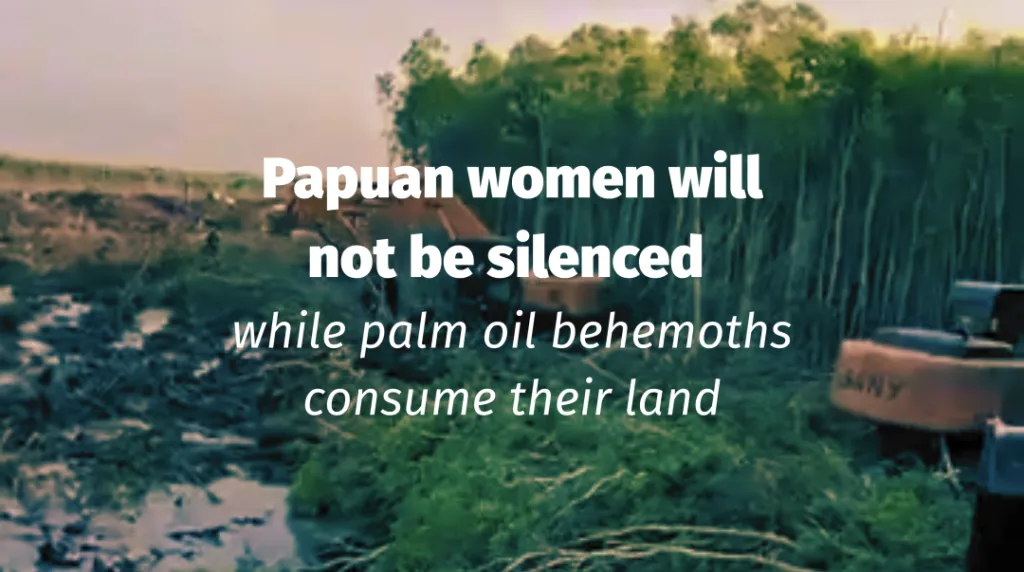
In the colonised region of #WestPapua, Indigenous Melanesian women’s rights are being forgotten as companies and the Indonesian government seizes ancestral land for palm oil and sugar cane plantations — without owners’ consent.…Greasing the Wheels of Colonialism: Palm Oil Industry in West Papua
A landmark study published in Global Studies Quarterly in April 2025 has revealed that the rapid expansion of the #palmoil industry in #WestPapua is not only fuelling #deforestation, #ecocide and environmental destruction but…Palm Oil Workers Expose Industry Practices Resembling Colonialism
Palm Oil Workers Expose Industry Practices Resembling Colonialism | A coalition of palm oil workers in Indonesia has unveiled industry practices that mirror colonial exploitation, including land grabbing, poor working conditions, and environmental…Papua’s ‘Empty Lands’: A Dangerous Myth Displacing Indigenous Peoples
In #WestPapua, on illegally colonised and disputed land taken by violence from Melanesian Indigenous peoples last century by Indonesian forces, authorities label indigenous lands as “empty”. This is done in order to justify…Load more posts
Something went wrong. Please refresh the page and/or try again.
Take Action in Five Ways
1. Join the #Boycott4Wildlife on social media and subscribe to stay in the loop: Share posts from this website to your own network on Twitter, Mastadon, Instagram, Facebook and Youtube using the hashtags #Boycottpalmoil #Boycott4Wildlife.
Enter your email addressSign Up
Join 1,399 other subscribers
2. Contribute stories: Academics, conservationists, scientists, indigenous rights advocates and animal rights advocates working to expose the corruption of the palm oil industry or to save animals can contribute stories to the website.
Wildlife Artist Juanchi Pérez
Mel Lumby: Dedicated Devotee to Borneo’s Living Beings
Anthropologist and Author Dr Sophie Chao
Health Physician Dr Evan Allen
The World’s Most Loved Cup: A Social, Ethical & Environmental History of Coffee by Aviary Doert
How do we stop the world’s ecosystems from going into a death spiral? A #SteadyState Economy
3. Supermarket sleuthing: Next time you’re in the supermarket, take photos of products containing palm oil. Share these to social media along with the hashtags to call out the greenwashing and ecocide of the brands who use palm oil. You can also take photos of palm oil free products and congratulate brands when they go palm oil free.
twitter.com/CuriousApe4/status…
twitter.com/PhillDixon1/status…
twitter.com/mugabe139/status/1…
4. Take to the streets: Get in touch with Palm Oil Detectives to find out more.
5. Donate: Make a one-off or monthly donation to Palm Oil Detectives as a way of saying thank you and to help pay for ongoing running costs of the website and social media campaigns. Donate here
#art #BoycottPalmOil #Boycott4wildlife #BoycottPalmOil #childLabour #childSlavery #deforestation #humanRights #HumanRights #indigenousRights #indigenousrights #landRights #landgrabbing #News #noken #PalmOil #palmoil #slavery #sugarcane #WestPapua
Researcher warns over West Papuan deforestation impact on traditional noken weaving | Evening Report
Evening Report Provides daily analysis of geopolitics, politics, business, the economy and news. Evening Report also publishes and webcasts authoritative podcasts that analyse global issues and events.eveningreport.nz
The controversial law was supposed to come into force in December last year but the latest proposal would see its implementation delayed for a second time to late 2026.Euronews.com
An explosive report by the Environment Investigation Agency (EIA) details how Indonesia’s Fangiono family, through a wide corporate web, is linked to ongoing #deforestation, #corruption, and #indigenousrights abuses for #palmoil. Calls mount for governments to act immediately to strengthen the #EUDR. Consumers can act when we #BoycottPalmOil #Boycott4Wildlife #HumanRights
#News: Shady family ties underlie Fangiono family’s #palmoil empire, peppered with #deforestation, rights abuse in #Indonesia 🌴☠️🧐 Demand change! #BoycottPalmOil #Boycott4Wildlife #HumanRights @palmoildetect palmoildetectives.com/2025/09/…
Share to BlueSky
Share to Twitter
EIA & Kaoem Telapak. (2025, August 20). When deforestation, corruption and rights violations are just another palm oil family affair. [EIA]. eia-international.org/news/whe…
A new investigation by the Environmental Investigation Agency (EIA) UK and Kaoem Telapak exposes widespread alleged deforestation, corruption, and human rights abuses permeating Indonesia’s palm oil sector, tracing these patterns to the powerful Fangiono family and their sprawling corporate network. Despite public denials and ostensible sustainability commitments, the report finds disturbing evidence that companies linked to the family have persistently violated laws, destroyed forests, and displaced local and indigenous peoples.
Indonesia, the world’s largest palm oil producer—exporting products worth nearly $28 billion in 2024—remains a hotbed for land-grabbing and habitat loss. The report, A Family Affair, catalogues cases across Sumatra, Kalimantan, and Papua, each area inhabited by unique indigenous communities and affected by complex ecological shifts driven by industrial expansion.
Martias, the family patriarch, was convicted in 2007 for acquiring palm oil permits through corruption and bribery. Despite serving a sentence and paying fines, his relatives have increased their influence, now holding leadership positions in major groups such as First Resources, FAP Agri, and Ciliandry Anky Abadi. The report highlights a series of persistent issues, including illegal plantation expansion, continued deforestation after permit revocation, and land acquisition without proper consent.
“The Fangiono family’s activities are spread far and wide across Indonesia’s palm oil industry and all too often we find routine, flagrant violations of the law, human rights and the environment.”Senior Forests Campaigner Siobhan Pearce (EIA)
“This report reveals a governance failure that has enabled the Fangiono family’s corporate network to engage in deforestation, legal violations and the criminalisation of indigenous peoples. As long as groups… continue to operate without oversight, accountability or legal consequences, indigenous and local communities will keep losing their land, livelihoods and fundamental rights.”
Olvy Tumbelaka, Kaoem Telapak’s Senior Campaigner.
Corporate denials have done little to resolve the controversies. Although First Resources is a member of the RSPO, renowned for its so-called “sustainability” standards, the RSPO suspended its membership for three months in August 2025 after the company failed to demonstrate transparency regarding cross-ownership and shadow companies. The case reflects the broader limitations of voluntary industry certification and the persistent use of offshore entities to shield beneficial ownership from scrutiny.
The EIA and Kaoem Telapak strongly urge authorities, companies, investors, and certification bodies to address these ongoing violations and demand accountability for persistent environmental and social harm. The findings serve as an urgent warning for policymakers, buyers, and consumers on the global risks of unchecked palm oil expansion. Learn more via EIA.
EIA & Kaoem Telapak. (2025, August 20). When deforestation, corruption and rights violations are just another palm oil family affair. [EIA]. eia-international.org/news/whe…
ENDS
A powerful new indigenous art exhibition has highlighted the tragic loss of #WestPapua’s cultural identity due to #deforestation for #palmoil and #sugarcane monoculture plantations. A situation perpetuated by the illegal Indonesian colonisation of…
In the colonised region of #WestPapua, Indigenous Melanesian women’s rights are being forgotten as companies and the Indonesian government seizes ancestral land for palm oil and sugar cane plantations — without owners’ consent.…
A landmark study published in Global Studies Quarterly in April 2025 has revealed that the rapid expansion of the #palmoil industry in #WestPapua is not only fuelling #deforestation, #ecocide and environmental destruction but…
Palm Oil Workers Expose Industry Practices Resembling Colonialism | A coalition of palm oil workers in Indonesia has unveiled industry practices that mirror colonial exploitation, including land grabbing, poor working conditions, and environmental…
In #WestPapua, on illegally colonised and disputed land taken by violence from Melanesian Indigenous peoples last century by Indonesian forces, authorities label indigenous lands as “empty”. This is done in order to justify…
Load more posts
Something went wrong. Please refresh the page and/or try again.
1. Join the #Boycott4Wildlife on social media and subscribe to stay in the loop: Share posts from this website to your own network on Twitter, Mastadon, Instagram, Facebook and Youtube using the hashtags #Boycottpalmoil #Boycott4Wildlife.
Enter your email address
Sign Up
Join 1,399 other subscribers
2. Contribute stories: Academics, conservationists, scientists, indigenous rights advocates and animal rights advocates working to expose the corruption of the palm oil industry or to save animals can contribute stories to the website.
3. Supermarket sleuthing: Next time you’re in the supermarket, take photos of products containing palm oil. Share these to social media along with the hashtags to call out the greenwashing and ecocide of the brands who use palm oil. You can also take photos of palm oil free products and congratulate brands when they go palm oil free.
twitter.com/CuriousApe4/status…
twitter.com/PhillDixon1/status…
twitter.com/mugabe139/status/1…
4. Take to the streets: Get in touch with Palm Oil Detectives to find out more.
5. Donate: Make a one-off or monthly donation to Palm Oil Detectives as a way of saying thank you and to help pay for ongoing running costs of the website and social media campaigns. Donate here
#BoycottPalmOil #Boycott4wildlife #BoycottPalmOil #childLabour #childSlavery #corruption #deforestation #EUDR #greenwashing #humanRights #HumanRights #indigenousRights #indigenousrights #Indonesia #landRights #landgrabbing #News #PalmOil #palmoil #slavery
We investigate and campaign against environmental crime and abuseEIA (Environmental Investigation Agency)
Palm Oil Workers Expose Industry Practices Resembling Colonialism
Palm Oil Workers Expose Industry Practices Resembling Colonialism | A coalition of palm oil workers in Indonesia has unveiled industry practices that mirror colonial exploitation, including land grabbing, poor working conditions, and environmental degradation. These revelations highlight the urgent need to address systemic issues within the palm oil sector and advocate for indigenous rights. #HumanRights #IndigenousRights #BoycottPalmOil#News: Indonesian #palmoil workers reveal industry practices they liken to #colonial exploitation, including #landgrabbing and poor labor conditions. #HumanRights #IndigenousRights #BoycottPalmOil 🌴⛔️ @palmoildetect wp.me/pcFhgU-9Pm
Share to BlueSky
Share to TwitterTempo.co. (2024, December 20). Palm oil workers’ group unveils harmful industry practices akin to colonialism. Retrieved from en.tempo.co/read/1957496/palm-…
In a recent exposé, a coalition representing palm oil workers in Indonesia has brought to light industry practices that they equate to modern-day colonialism. The group highlights several critical issues, including land appropriation from indigenous communities, substandard working conditions, and significant environmental harm resulting from palm oil cultivation.
The coalition points to instances where large palm oil corporations have seized ancestral lands without proper consent or compensation, displacing indigenous populations and disrupting their traditional way of life. Workers within the industry report facing hazardous conditions, inadequate wages, and a lack of labour rights protections, drawing parallels to exploitative colonial labour systems.
Environmental concerns are also at the forefront, with the expansion of palm oil plantations leading to deforestation, loss of biodiversity, and increased greenhouse gas emissions. These practices not only harm the ecosystem but also undermine the livelihoods of local communities dependent on forest resources.
The coalition is calling for comprehensive reforms in the palm oil industry, emphasising the need for policies that respect indigenous land rights, ensure fair labor standards, and promote environmentally sustainable practices. They urge consumers and policymakers to support initiatives that hold corporations accountable and advocate for ethical sourcing of palm oil.
For a detailed account, read the full article on Tempo.co.
Tempo.co. (2024, December 20). Palm oil workers’ group unveils harmful industry practices akin to colonialism. Retrieved from en.tempo.co/read/1957496/palm-…
ENDS
Read more about human rights abuses and child slavery in the palm oil industry
Greasing the Wheels of Colonialism: Palm Oil Industry in West Papua
A landmark study published in Global Studies Quarterly in April 2025 has revealed that the rapid expansion of the #palmoil industry in #WestPapua is not only fuelling #deforestation, #ecocide and environmental destruction but…Papua’s ‘Empty Lands’: A Dangerous Myth Displacing Indigenous Peoples
In #WestPapua, on illegally colonised and disputed land taken by violence from Melanesian Indigenous peoples last century by Indonesian forces, authorities label indigenous lands as “empty”. This is done in order to justify…Research: Palm Oil Plantations Threaten Indigenous Waterways
Research: Palm Oil Plantations Threaten Indigenous Waterways | A study by the University of Massachusetts Amherst reveals that the expansion of oil palm plantations in West Papua’s Kais River watershed has significantly degraded…New Research: Indigenous Communities Reduce Amazon Deforestation by 83%”
Although #deforestation rates in the Brazilian #Amazon have halved, this globally critical biome is still losing more than 5,000km² every year. That’s an area three times larger than Greater London. By combining satellite…Concerns Mount Over Palm Oil Expansion in Nagaland
Concerns Mount Over Palm Oil Expansion in Nagaland | The Nagaland Climate Change Adaptation Forum (NCCAF) has raised grave concerns about the environmental and social impacts of expanding palm oil plantations in the…Load more posts
Something went wrong. Please refresh the page and/or try again.
Take Action in Five Ways
1. Join the #Boycott4Wildlife on social media and subscribe to stay in the loop: Share posts from this website to your own network on Twitter, Mastadon, Instagram, Facebook and Youtube using the hashtags #Boycottpalmoil #Boycott4Wildlife.
Enter your email addressSign Up
Join 1,396 other subscribers
2. Contribute stories: Academics, conservationists, scientists, indigenous rights advocates and animal rights advocates working to expose the corruption of the palm oil industry or to save animals can contribute stories to the website.
Wildlife Artist Juanchi Pérez
Mel Lumby: Dedicated Devotee to Borneo’s Living Beings
Anthropologist and Author Dr Sophie Chao
Health Physician Dr Evan Allen
The World’s Most Loved Cup: A Social, Ethical & Environmental History of Coffee by Aviary Doert
How do we stop the world’s ecosystems from going into a death spiral? A #SteadyState Economy
3. Supermarket sleuthing: Next time you’re in the supermarket, take photos of products containing palm oil. Share these to social media along with the hashtags to call out the greenwashing and ecocide of the brands who use palm oil. You can also take photos of palm oil free products and congratulate brands when they go palm oil free.
twitter.com/CuriousApe4/status…
twitter.com/PhillDixon1/status…
twitter.com/mugabe139/status/1…
4. Take to the streets: Get in touch with Palm Oil Detectives to find out more.
5. Donate: Make a one-off or monthly donation to Palm Oil Detectives as a way of saying thank you and to help pay for ongoing running costs of the website and social media campaigns. Donate here
#BoycottPalmOil #Boycott4wildlife #BoycottPalmOil #childLabour #childSlavery #colonial #humanRights #HumanRights #indigenousRights #indigenousrights #landRights #landgrabbing #News #PalmOil #palmoil #slavery
Papua’s ‘Empty Lands’: A Dangerous Myth Displacing Indigenous Peoples
In #WestPapua, on illegally colonised and disputed land taken by violence from Melanesian Indigenous peoples last century by Indonesian forces, authorities label indigenous lands as “empty”. This i…Palm Oil Detectives
Loading more entries...